Electric Boat Ecotourism: The Future of Sustainable Water Travel
Electric Boat Ecotourism: A Sustainable Future for Water-Based Travel
Introduction
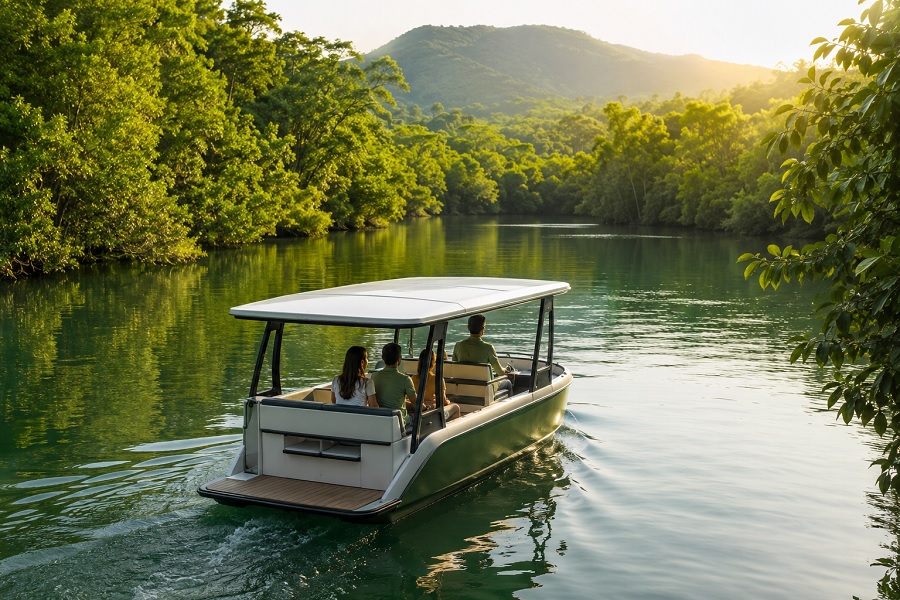
Electric Boat Ecotourism is emerging as an important part of sustainable tourism, combining water-based travel with cleaner transportation technology. Electric boats use battery-powered propulsion instead of conventional petrol or diesel engines, helping reduce direct exhaust emissions and engine noise during operation. This makes them particularly attractive for lakes, rivers, wetlands, mangroves, wildlife reserves and other environmentally sensitive destinations.
Recent projects demonstrate the growing interest in electric boats for tourism. In India, the Technology Development Board supported a project in Goa to develop a 20-passenger electric boat aimed at environment-friendly waterways and sustainable tourism. Research and tourism projects in other regions have also highlighted electric boats as a way to reduce pollution and create quieter nature experiences.
What Is Electric Boat Ecotourism?
Electric Boat Ecotourism refers to tourism experiences that use electric-powered boats to explore natural and cultural attractions while aiming to reduce the environmental impacts associated with conventional boat transportation.
These experiences can include:
Electric wildlife safaris
Electric lake cruises
River sightseeing
Mangrove tours
Birdwatching trips
Wetland exploration
Island tours
Eco-friendly sunset cruises
Nature photography tours
Sustainable fishing and leisure experiences
The concept works best when clean transportation is combined with responsible visitor management, conservation activities and community participation.
Why Electric Boats Are Important for Ecotourism
Traditional combustion-powered boats can contribute to air pollution, fuel leakage, water pollution and underwater or surface noise. These impacts can be especially significant in sensitive ecosystems where tourists come to observe wildlife.
Electric propulsion eliminates direct exhaust emissions from the boat during operation and can substantially reduce operational noise. The European Commission has highlighted these benefits in an electric-boat project at Spain's Albufera lagoon, where conventional boats were associated with fuel-related pollution and noise affecting aquatic ecosystems.
Quieter operation can also improve the visitor experience. Research into sustainable nautical tourism has found that tourists value quiet, distraction-free experiences when visiting natural environments.
Major Benefits of Electric Boat Ecotourism
1. Lower Direct Emissions
Battery-electric boats do not produce tailpipe emissions while operating. This can help improve air quality around busy tourist waterways and reduce dependence on fossil fuels.
2. Quieter Wildlife Experiences
Electric motors can operate much more quietly than combustion engines. This creates better conditions for birdwatching, wildlife photography and nature observation. Research has associated electric propulsion with reduced operational noise and less direct hydrocarbon discharge in sensitive lagoon environments.
3. Better Visitor Experience
A quieter boat allows travelers to hear natural sounds such as birds, flowing water and wind. The experience can feel more immersive than a traditional motorboat tour.
4. Reduced Risk of Fuel Pollution
Because electric boats do not require petrol or diesel for propulsion, operators can avoid routine fuel handling and the risk of fuel or oil discharge associated with combustion-powered boats.
5. Compatibility With Renewable Energy
Electric boats can be charged using renewable electricity. Solar-electric boats can combine onboard solar generation with battery storage, potentially making water-based tourism even more sustainable.
6. Support for Conservation
Electric boats can be particularly useful in protected areas where minimizing noise and direct pollution is important. A well-designed ecotourism operation can also dedicate part of its revenue to conservation and habitat protection.
Electric Boats for Wildlife Tourism
Wildlife tourism is one of the most promising applications of electric boats. Visitors can use quiet vessels to observe birds, crocodiles, aquatic mammals and other wildlife without the same level of engine noise produced by conventional boats.
For example, solar-electric boats have been promoted for wildlife tourism at India's Satpura Tiger Reserve, where the quieter operation is intended to support nature observation while reducing emissions.
However, electric propulsion alone does not automatically make wildlife tourism sustainable. Operators still need to maintain safe distances from animals, follow protected-area rules, limit visitor numbers where necessary and prevent overcrowding.
Electric Boats and Mangrove Tourism
Mangrove ecosystems are important habitats for fish, birds and other wildlife, but they can be vulnerable to pollution and excessive tourism activity.
Electric boats can provide a cleaner transportation option for guided mangrove tours. A recent project in Indonesia examined a solar-electric boat concept specifically for mangrove tourism, linking electric propulsion with renewable energy and ecotourism.
Mangrove tours can combine electric boat rides with environmental education, birdwatching, conservation demonstrations and local community experiences.
Electric Boat Tourism in India
India has significant potential for electric boat ecotourism because of its extensive network of rivers, lakes, backwaters, wetlands and coastal areas.
Potential destinations and applications include:
Kerala backwater tourism
Goa's coastal and river tourism
Assam's river and wetland tourism
Odisha's coastal ecosystems
Kashmir's lake tourism
Madhya Pradesh's wildlife and reservoir tourism
Maharashtra's lake and river destinations
Andaman and Nicobar Island tourism
Sundarbans tourism
Urban waterfront tourism
The development of a 20-passenger electric boat project in Goa, supported through India's Technology Development Board, illustrates how electric marine mobility is being explored for sustainable tourism and waterways.
Electric Boats and Sustainable Tourism Experiences
Electric boats can support several types of tourism experiences:
Birdwatching Tours: Quiet boats allow visitors to approach observation areas with less engine noise.
Sunset Cruises: Travelers can enjoy scenic waterways without the vibration and noise associated with conventional engines.
Nature Photography: Reduced noise can help photographers spend more time observing wildlife and natural landscapes.
Mangrove Tours: Electric propulsion can support guided exploration of sensitive coastal ecosystems.
Lake Tourism: Electric boats can provide sightseeing services while reducing direct emissions on the water.
Cultural River Tours: Electric boats can connect visitors with riverside villages, heritage locations and traditional communities.
Solar-Electric Boats
Solar-electric boats are another promising development within sustainable water tourism. These boats use solar panels to generate electricity, which can supplement battery power.
The concept is particularly attractive in destinations with strong sunlight and relatively predictable operating routes. Solar charging can reduce dependence on grid electricity, although the practical performance depends on boat size, passenger load, speed, weather conditions, battery capacity and available solar generation.
For this reason, operators should assess the complete energy system rather than assuming that every solar-electric boat can operate entirely from onboard solar power.
Challenges of Electric Boat Ecotourism
Despite their environmental potential, electric boats also face several challenges.
High Initial Investment
Electric boats, batteries, charging equipment and supporting infrastructure can require significant upfront investment.
Charging Infrastructure
Tourist destinations need suitable charging stations, reliable electricity connections and appropriate docking infrastructure.
Battery Range
Range depends on battery capacity, boat design, passenger load, speed, weather and operating conditions. Operators need careful route planning.
Battery Replacement and Recycling
Batteries have a finite service life and require responsible recycling or end-of-life management.
Maintenance and Technical Skills
Operators need trained personnel who understand electric propulsion, battery systems, charging equipment and marine safety.
Weather and Water Conditions
Strong currents, rough water and adverse weather can affect energy consumption and operating range.
Safety
Electric boats must comply with appropriate marine safety standards, passenger capacity requirements, emergency procedures and battery safety practices.
How Electric Boat Tourism Can Become More Sustainable
Electric propulsion should be part of a wider sustainability strategy. Operators can strengthen their ecotourism model by:
Using renewable electricity wherever practical.
Installing efficient charging systems.
Limiting passenger numbers in sensitive ecosystems.
Following designated wildlife routes.
Avoiding close approaches to animals.
Using local guides and boat crews.
Supporting nearby communities.
Reducing single-use plastics.
Providing waste collection facilities.
Monitoring environmental impacts.
Educating visitors about conservation.
Maintaining batteries and propulsion systems responsibly.
Role of Local Communities
Community participation is essential for successful ecotourism. Local residents can work as boat operators, guides, naturalists, hospitality providers and conservation partners.
Electric boat tourism can create new employment opportunities while allowing communities to participate directly in the tourism economy. When tourism revenue contributes to local conservation and community development, visitors receive a more meaningful experience and destinations can build stronger long-term sustainability.
Future of Electric Boat Ecotourism
The future of electric boat ecotourism will likely involve better batteries, more efficient electric motors, solar charging, digital navigation systems and improved charging infrastructure.
Governments, tourism authorities, boat manufacturers and local communities can work together to develop low-emission water transport systems that serve both visitors and residents.
Electric boats are particularly suitable for short, predictable tourism routes where vessels return regularly to a charging point. India's ongoing work on electric marine mobility also indicates growing interest in cleaner water transportation and tourism applications.
Conclusion
Electric Boat Ecotourism offers a promising way to make water-based tourism quieter, cleaner and more environmentally responsible. From wildlife observation and birdwatching to mangrove exploration and scenic lake cruises, electric vessels can create memorable experiences while reducing some of the environmental impacts associated with conventional boat engines.
However, the true success of electric boat ecotourism depends on more than replacing a diesel engine with an electric motor. Sustainable tourism requires responsible visitor management, conservation, renewable energy, community participation, proper waste management and strong environmental standards.
As technology and charging infrastructure continue to develop, electric boats could become an increasingly important part of the global transition toward sustainable and nature-friendly tourism.