India's energy storage scheme aims to attract $10 billion investment
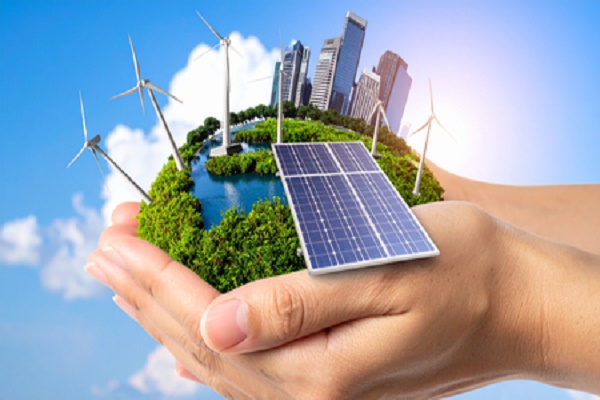
India has approved a $1.5 billion scheme to develop 92 gigawatt-hours (GWh) of grid-scale energy storage capacity over five years, as the country seeks to strengthen energy security and accelerate its transition to renewable energy, a report has said.
As per analysis of Khaleej Times, the scheme -- covering 2026-27 to 2030-31 -- will support 60 GWh of pumped hydro storage, 30 GWh of battery storage and 2 GWh through emerging technologies.
“The government expects the projects to attract around $10 billion in investments over the next five years,” it added.
Announcing the Cabinet approval, Prime Minister Narendra Modi said the Rs 14,500 crore initiative would improve power reliability, facilitate renewable energy integration and strengthen energy security.
The storage capacity envisaged under the scheme is equivalent to around 170 per cent of India's existing grid-scale storage capacity.
The initiative comes as India seeks to reduce its vulnerability to global energy disruptions while meeting rising electricity demand.
The country aims to achieve 500 GW of non-fossil fuel-based electricity capacity by 2030 and net-zero emissions by 2070, according to the report.
Despite the rapid expansion of solar and other renewable energy sources, energy storage remains a critical challenge. Solar generation peaks during daylight hours, while electricity demand often rises in the evening, when solar output declines.
Storage facilities can help bridge this gap, reduce wastage of surplus renewable electricity and limit dependence on coal-fired power plants.
“The government estimates that India will need around 411 GWh of grid-scale energy storage by 2031-32, including 236 GWh of battery storage and 175 GWh of pumped hydro storage, Khaleej Times said.
The latest scheme would also encourage domestic manufacturing of battery energy storage systems, reduce import dependence and strengthen long-term energy security.
Battery storage projects under the initiative will be required to meet a minimum domestic content threshold of 40 per cent.
Separately, the government has approved a $300 million scheme to establish four domestic processing plants for lithium and nickel, critical minerals used in batteries, energy storage systems and electronic products, the report showed.