Smart Eco-Hotels and the Future of Green Hospitality
Smart Eco-Hotels and the Future of Green Hospitality
The hospitality industry is entering a new era where technology and sustainability are becoming closely connected. Modern travelers increasingly want comfortable stays that also reduce environmental impact, while hotel operators are looking for smarter ways to manage energy, water, waste, and operating costs.
This is where smart eco-hotels are emerging as an important trend. These properties combine sustainable building design with technologies such as Internet of Things (IoT) sensors, smart room controls, artificial intelligence, renewable energy systems, water monitoring, and digital guest services. Recent research and industry developments show that sustainability is increasingly becoming part of hotel technology and operational decision-making rather than remaining a separate environmental initiative.
What Are Smart Eco-Hotels?
Smart eco-hotels are properties that use technology to improve guest comfort while reducing the consumption of natural resources.
Instead of relying only on traditional energy-saving practices, these hotels can use connected systems to monitor and automatically manage lighting, air conditioning, heating, water use, and other operations.
For example, smart sensors can detect whether a guest is inside a room and adjust temperature or lighting accordingly. Digital monitoring systems can identify unusual water consumption, while centralized software can help hotel managers understand where energy and resources are being used.
The goal is to create a balance between guest comfort, operational efficiency, and environmental responsibility.
Smart Room Technology
Smart rooms are one of the most visible features of green hospitality.
Guests may be able to control lighting, curtains, air conditioning, and other room functions through digital interfaces or mobile devices. Occupancy sensors can help prevent unnecessary energy consumption when rooms are empty.
Smart thermostats and automated building systems can also optimize heating and cooling based on room occupancy and environmental conditions.
These technologies can make rooms more comfortable while helping hotels reduce energy waste. Research published in 2026 also highlights the long-term sustainability benefits of combining sustainable building features with smart hotel management systems.
Artificial Intelligence for Sustainable Hotel Operations
Artificial intelligence is expected to play a growing role in green hospitality.
AI systems can analyze large amounts of operational data and identify patterns that humans may overlook. Hotels can use these insights to forecast energy demand, optimize equipment performance, and identify potential inefficiencies.
AI can also support food-waste reduction by analyzing kitchen consumption patterns and helping restaurants better match food preparation with actual demand. The technology may eventually contribute to more accurate sustainability planning across entire hotel operations.
Smart Energy Management
Energy is one of the most important areas for sustainable hotels.
Smart energy management systems can monitor electricity use across guest rooms, kitchens, restaurants, conference areas, pools, spas, and other facilities.
Hotels can combine these systems with:
LED lighting
Smart thermostats
Occupancy sensors
Energy-efficient appliances
Automated building management systems
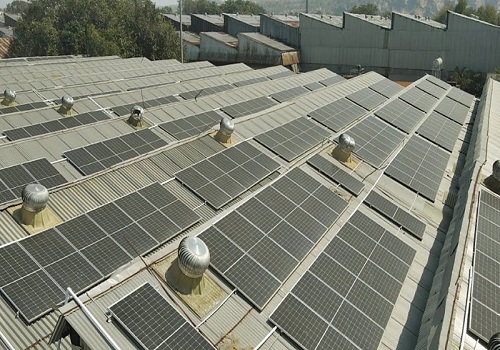
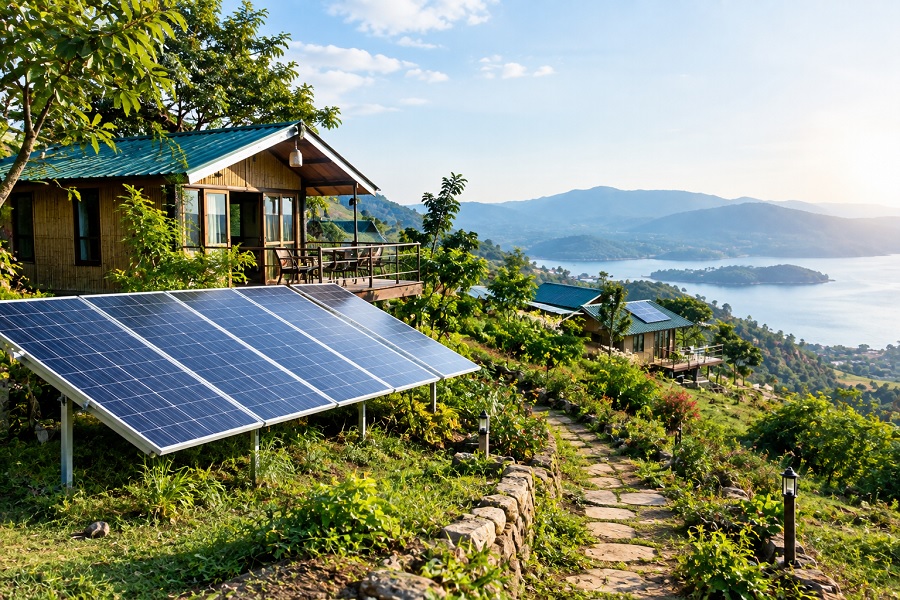
Solar power
Battery storage
Renewable electricity
Energy-efficient heating and cooling
Renewable energy is also becoming an important part of sustainable hospitality strategies, with hotels exploring technologies including solar, geothermal, and other lower-carbon energy solutions.
Water Conservation Through Smart Technology
Water management is another major priority for green hotels.
Smart water meters and leak detection systems can help properties identify unusual consumption patterns. Low-flow faucets and showerheads, efficient toilets, rainwater collection, and wastewater treatment can further reduce pressure on local water resources.
Some hospitality operators are also exploring automated monitoring systems that provide frequent water-use data and alerts when leaks occur.
Future smart hotels may use AI-powered water management systems that automatically adjust consumption according to occupancy, weather conditions, and operational requirements.
The Rise of Zero-Waste Hotels
The future of green hospitality will increasingly focus on reducing waste throughout the hotel.
Smart waste-management systems can help track the volume and type of waste generated by different departments. Hotels can use this information to improve recycling, composting, food-waste reduction, and purchasing decisions.
A circular approach to hospitality is also gaining attention. Recent 2026 research identifies energy efficiency, renewable energy, water management, waste reduction, carbon reduction, green procurement, and local supply chains as important strategies for moving hotels toward more circular operating models.
Reducing Single-Use Plastics
Smart eco-hotels are also rethinking the traditional hotel room.
Instead of individual plastic toiletry bottles, hotels can use refillable dispensers. Glass or reusable bottles can replace disposable water bottles, while digital check-in can reduce the need for printed paperwork.
Other measures may include:
Reusable food containers
Refillable bathroom products
Digital menus
Electronic invoices
Reusable shopping bags
Sustainable room accessories
Plastic-free packaging
The most effective approach is to combine visible guest-facing changes with less visible operational improvements in kitchens, laundry departments, housekeeping, and maintenance.
Sustainable Food and Smart Kitchens
Hotel restaurants are becoming an important part of green hospitality.
Smart kitchen technology can help hotels track food consumption and reduce unnecessary preparation. Better forecasting can potentially reduce food waste while maintaining menu availability.
Hotels can also support sustainability by sourcing seasonal and locally produced ingredients, offering plant-based choices, and working with local farmers and suppliers.
The result can be a dining experience that is both environmentally responsible and connected to the culture of the destination.
Eco-Friendly Buildings and Green Design
The hotel of the future may be designed sustainably from the beginning.
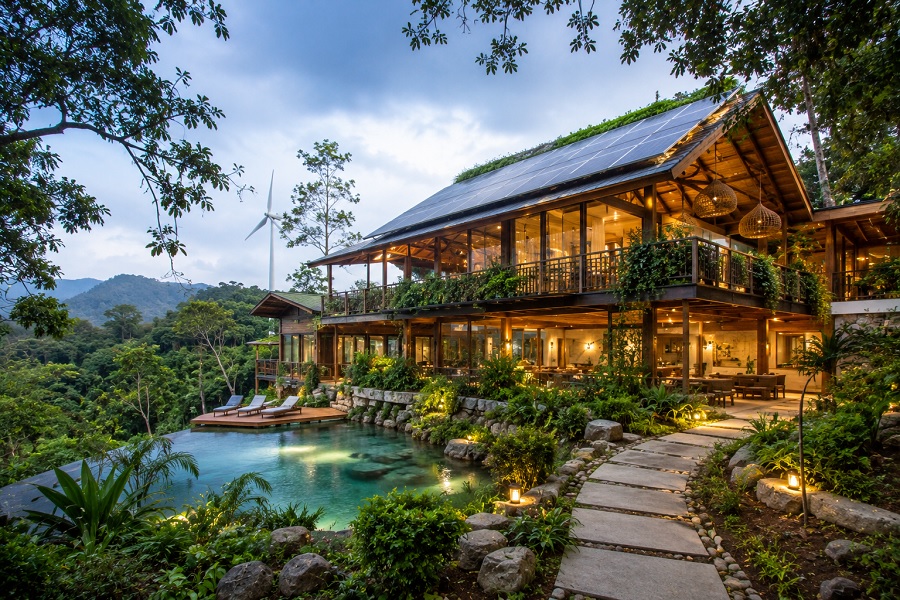
Green hotel architecture can include:
Natural ventilation
Energy-efficient insulation
Solar panels
Green roofs
Sustainable construction materials
Natural lighting
Rainwater harvesting
Native landscaping
Efficient cooling systems
The combination of sustainable architecture and smart management technology can help hotels reduce resource consumption throughout their entire lifecycle.
Smart Transportation for Hotel Guests
Green hospitality extends beyond the hotel building.
Future eco-hotels may offer electric vehicle charging stations, electric hotel shuttles, bicycles, e-bikes, and convenient access to public transportation.
Hotels can also encourage guests to explore destinations through walking tours and cycling routes.
These initiatives can reduce dependence on private vehicles while giving travelers more sustainable ways to experience local communities.
Digital Guest Experiences
Technology can help make sustainable choices easier for guests.
Mobile apps may allow visitors to control room temperature, manage lighting, request housekeeping only when needed, and access digital information without printed materials.
Hotels can also provide guests with real-time information about their sustainability initiatives. For example, a digital dashboard could show energy savings, water conservation, or waste-reduction achievements.
This creates greater transparency and helps guests understand how their choices contribute to sustainability.
Sustainable Luxury Is Becoming More Important
Luxury and sustainability are no longer necessarily opposites.
Modern luxury travelers may increasingly expect high-quality service combined with environmental responsibility. Luxury eco-hotels can offer premium experiences while using renewable energy, local materials, sustainable food, conservation programs, and low-impact design.
The concept of luxury is gradually expanding beyond physical comfort to include privacy, authenticity, wellness, nature, and responsible travel.
The Role of Local Communities
Green hospitality should benefit more than the environment.
Hotels can support local communities by hiring local employees, purchasing products from nearby businesses, sourcing food from regional producers, and partnering with local conservation organizations.
Community involvement can make sustainability more meaningful because it connects environmental goals with local economic development.
This approach is especially important in destinations where tourism depends heavily on natural resources and cultural heritage.
Challenges Facing Smart Eco-Hotels
Despite the potential benefits, smart green hospitality also faces challenges.
The initial investment required for advanced technology, renewable energy systems, water-treatment infrastructure, and sustainable construction can be significant.
Hotels also need skilled employees who understand both technology and sustainability. Connected systems create additional cybersecurity and data-management considerations, while electronic devices themselves have environmental impacts that should be considered over their full lifecycle.
There is also the risk of greenwashing, where properties promote sustainability claims without making meaningful improvements. Clear measurement, transparent reporting, credible certifications, and measurable environmental targets can help travelers distinguish genuine sustainability efforts from marketing.
The Future of Green Hospitality
The future of hospitality is likely to be increasingly connected, data-driven, and environmentally conscious.
Smart hotels may eventually use AI to predict resource consumption, IoT sensors to monitor every major system, renewable energy to power operations, and automated technology to reduce waste.
The most successful properties will likely be those that use technology not simply as a marketing feature but as part of their everyday operations.
Recent industry discussions in 2026 reflect this shift, with sustainability increasingly being integrated into technology decisions, operational planning, and hotel management.
Final Thoughts
Smart eco-hotels represent an important evolution in the hospitality industry. By combining intelligent technology with sustainable design and responsible operations, hotels can create comfortable experiences while reducing their environmental footprint.
The future of green hospitality will not be defined by a single technology. Instead, it will come from the integration of smart rooms, renewable energy, efficient water systems, waste reduction, sustainable food, eco-friendly buildings, and community engagement.
For travelers, this means the hotel of the future may offer more than a place to stay. It could become an intelligent, environmentally responsible space that actively contributes to a healthier planet and a more sustainable tourism industry.