Exploring Nature Through Educational Tourism Experiences
Nature-Based Educational Tourism: Learning Through Nature and Travel
Nature-Based Educational Tourism combines travel, environmental education, outdoor exploration, and meaningful learning experiences. It allows travelers to discover forests, wetlands, mountains, wildlife habitats, coastal ecosystems, farms, national parks, and other natural environments while learning about biodiversity, conservation, local communities, and sustainable living.
This form of tourism is becoming increasingly popular among families, students, teachers, nature enthusiasts, and travelers who want their holidays to provide more than sightseeing. Instead of simply visiting a natural destination, visitors actively learn about the environment and understand why protecting it matters.
What Is Nature-Based Educational Tourism?
Nature-based educational tourism refers to travel experiences where natural environments become the main setting for learning. Activities can include guided nature walks, wildlife observation, birdwatching, conservation workshops, forest studies, farm visits, ecological tours, and outdoor science programs.
These experiences can be informal or structured. A family visiting a national park with a naturalist guide, for example, can learn about animal behavior and ecosystems. Similarly, students can participate in field studies that involve observing plants, insects, soil, water, and wildlife.
Why Nature-Based Educational Tourism Is Important
Nature-based learning can help travelers develop a stronger understanding of the environment. Seeing an ecosystem directly can make concepts such as biodiversity, food chains, conservation, climate, and habitat protection easier to understand.
It can also encourage responsible travel behavior. When visitors understand the importance of a forest, wetland, coral reef, or wildlife habitat, they are more likely to respect local environmental guidelines.
Popular Nature-Based Educational Experiences
1. Guided Nature Walks
Naturalists and local guides can introduce visitors to native plants, trees, insects, birds, and other wildlife. These walks can be designed for beginners as well as experienced nature enthusiasts.
2. Birdwatching Tours
Birdwatching is an excellent educational activity for travelers of different ages. Participants can learn to identify bird species, understand migration patterns, and observe birds without disturbing them.
3. Wildlife Education Tours
Wildlife destinations can offer educational experiences focused on animal behavior, habitats, conservation, and ecosystem relationships. Responsible tours prioritize observation rather than direct interaction with wild animals.
4. Forest Education Programs
Forest-based programs can teach visitors about trees, medicinal plants, soil, insects, fungi, water cycles, and forest ecosystems. Guided forest walks can turn a simple hike into an engaging learning experience.
5. Marine and Coastal Education
Coastal destinations can provide lessons about marine ecosystems, mangroves, coral reefs, tides, and coastal wildlife. Visitors may participate in conservation-focused activities or guided shoreline exploration.
6. Farm and Agricultural Learning
Farm tourism gives travelers an opportunity to understand food production. Visitors can learn about organic farming, traditional agriculture, irrigation, composting, seasonal crops, and sustainable farming methods.
Nature-Based Educational Tourism for Children
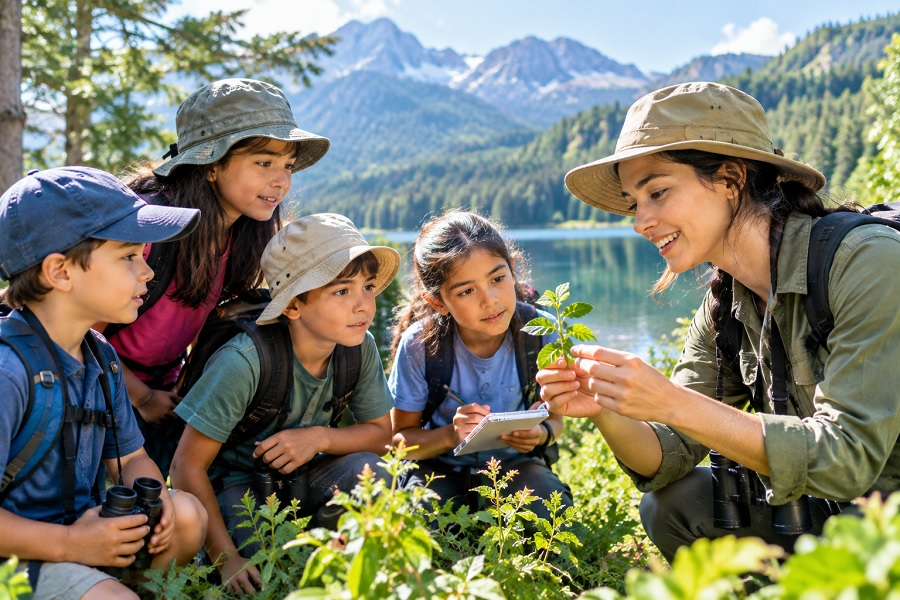
Children can benefit greatly from outdoor educational travel. Nature-based activities encourage observation, curiosity, and hands-on learning.
Instead of learning only from books or screens, children can observe insects, identify plants, examine rocks, watch birds, and understand how ecosystems function.
Family-friendly programs can include nature treasure hunts, guided walks, wildlife observation, gardening activities, and simple conservation projects.
Educational Tourism for Students
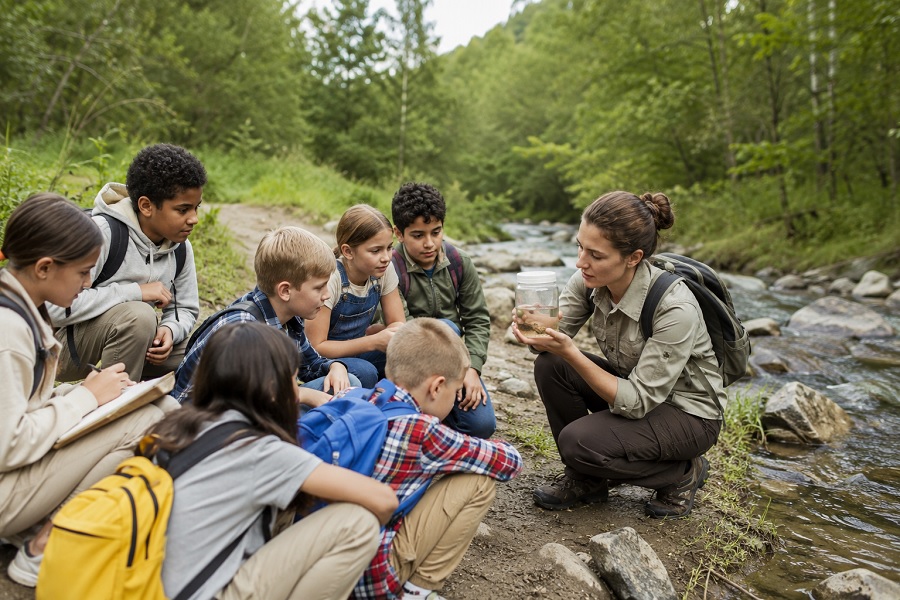
Schools and educational institutions can use nature destinations as outdoor classrooms. Field trips can support subjects such as biology, geography, environmental science, agriculture, and ecology.
Students can collect observations, maintain field journals, photograph species, study habitats, and participate in supervised conservation activities.
Such experiences can also encourage teamwork and practical problem-solving.
Role of Local Communities
Local communities play an important role in nature-based educational tourism. Local guides often possess detailed knowledge about native species, landscapes, traditional resource use, and environmental changes.
Community-led tourism can create employment while encouraging residents to protect natural resources. Tourism income can support guides, homestays, local food producers, craft workers, and conservation initiatives.
Sustainable Practices
Nature-based educational tourism should minimize its environmental impact. Visitors and tourism operators can follow simple responsible practices such as:
Avoiding littering and plastic waste.
Staying on designated trails.
Maintaining a safe distance from wildlife.
Avoiding feeding wild animals.
Respecting protected areas.
Using water and energy responsibly.
Supporting locally owned businesses.
Following photography guidelines.
Avoiding damage to plants and natural habitats.
Choosing responsible and environmentally conscious tour operators.
Technology and Nature Education
Technology is increasingly becoming part of outdoor learning. Mobile applications can help visitors identify plants, birds, insects, and other species.
Digital maps, GPS-based nature trails, audio guides, educational videos, and interactive interpretation centers can make ecological information easier to understand.
However, technology should complement direct interaction with nature rather than replace it.
Best Destinations for Nature-Based Educational Tourism
India offers many opportunities for nature-based educational travel. National parks, wildlife sanctuaries, wetlands, coastal ecosystems, forests, mountains, botanical gardens, farms, and conservation centers can all serve as learning destinations.
The Western Ghats, Himalayan regions, Northeast India, Sundarbans, Kerala's backwaters, Rajasthan's wildlife landscapes, and India's coastal regions provide diverse environments for educational nature experiences.
International destinations across Africa, Southeast Asia, Australia, Europe, and the Americas also offer wildlife, marine, forest, and conservation-focused educational tourism.
Benefits for Travelers
Nature-based educational tourism offers several benefits:
Improves environmental awareness.
Encourages outdoor activity.
Provides practical learning experiences.
Supports local communities.
Promotes responsible tourism.
Creates meaningful family experiences.
Encourages appreciation of biodiversity.
Supports conservation awareness.
Connects travelers with local environments.
Combines recreation with education.
How to Plan a Nature-Based Educational Trip
Before visiting a destination, travelers should research the ecosystem, available guided programs, seasonal conditions, and local regulations.
Families should select age-appropriate activities, while students and educational groups should look for programs that have clear learning objectives.
Hiring qualified local naturalists or guides can significantly improve the experience because they can explain ecological details that visitors might otherwise miss.
Comfortable clothing, suitable footwear, reusable water bottles, sun protection, binoculars, notebooks, and cameras can also be useful depending on the destination.
The Future of Nature-Based Educational Tourism
The future of nature-based educational tourism is closely connected with growing interest in sustainability, conservation, outdoor learning, and responsible travel.
As travelers increasingly seek meaningful experiences, destinations that combine recreation with environmental education can offer a valuable alternative to conventional sightseeing.
Well-managed nature-based tourism can also contribute to conservation by creating economic incentives to protect natural areas and by helping visitors understand the importance of biodiversity.
Conclusion
Nature-Based Educational Tourism provides a meaningful way to explore the natural world while developing knowledge about ecosystems, wildlife, conservation, and sustainable living. From forest walks and birdwatching to farm visits and marine education, these experiences can turn travel into an engaging outdoor classroom.
When planned responsibly, nature-based educational tourism benefits travelers, local communities, and the environment. It offers a balanced approach to tourism where exploration and learning go hand in hand, making it an important area of sustainable travel in 2026.