Exploring India's Artisan Villages: A Journey Through Traditional Crafts and Handmade Art
Craft Trail Tourism in India: Visiting Artisan Villages and Traditional Workshops
Introduction
India is home to a rich variety of traditional crafts, handmade products, and artistic practices passed down through generations. From colourful paintings and handwoven textiles to pottery, wood carving, metalwork, and embroidery, every region has its own distinctive creative heritage. Craft trail tourism offers travellers an opportunity to explore these traditions by visiting artisan villages, observing skilled craftspeople at work, and discovering the stories behind handmade products.
Unlike conventional sightseeing, craft trail tourism focuses on meaningful cultural experiences. Visitors can interact with local artisans, learn about traditional techniques, participate in workshops where available, and purchase authentic handmade souvenirs directly from their creators. This form of tourism also helps support rural livelihoods and preserve valuable cultural knowledge.
What Is Craft Trail Tourism?
Craft trail tourism is a cultural travel experience that connects visitors with traditional artisans, craft villages, weaving communities, and workshops. It allows travellers to understand how local materials are transformed into useful products and works of art.
A craft trail may include pottery studios, textile weaving centres, painting workshops, bamboo craft villages, traditional jewellery makers, and handicraft markets. Depending on the destination, visitors may watch demonstrations, try simple techniques under supervision, or speak with artisans about their skills and traditions.
Craft trail tourism can benefit both travellers and host communities by encouraging cultural exchange, supporting local businesses, and creating opportunities for artisans to share their work with wider audiences.
Best Craft Trail Destinations in India
1. Raghurajpur, Odisha
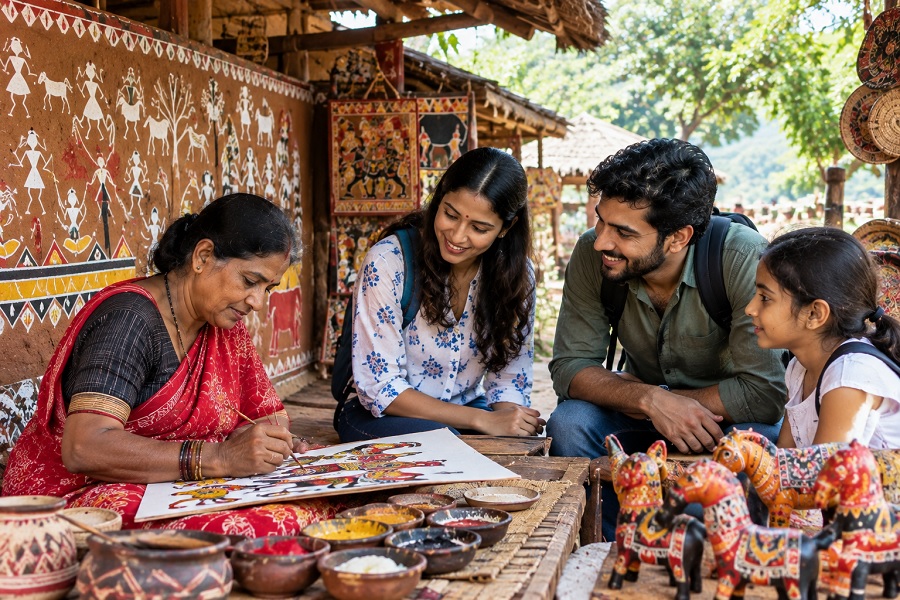
Raghurajpur is a well-known heritage crafts village near Puri, famous for its traditional Pattachitra paintings. These detailed artworks often feature mythological stories, decorative borders, and vibrant colours. Visitors can explore the village, observe artists at work, discover palm-leaf engravings, and purchase handcrafted artwork directly from local families.
2. Kutch, Gujarat
Kutch is renowned for its colourful embroidery, mirror work, traditional textiles, leather crafts, and distinctive regional handicrafts. Travellers can explore artisan communities and local craft markets to learn about the techniques, patterns, and cultural influences behind these creations. Visitors should check workshop availability before planning a hands-on experience.
3. Varanasi, Uttar Pradesh
Varanasi is an important destination for traditional silk weaving, particularly its famous Banarasi textiles. Visitors can explore weaving workshops, observe the intricate work involved in producing decorative fabrics, and learn about the skills required to create traditional sarees and brocades.
4. Jaipur, Rajasthan
Jaipur offers opportunities to discover block printing, blue pottery, gemstone crafts, jewellery making, and traditional textile design. Craft workshops and local markets allow visitors to understand how artisans combine traditional methods with contemporary designs.
5. Channapatna, Karnataka
Channapatna is known for its colourful wooden toys and lacquerware. Visitors can learn about wood shaping, polishing, colouring, and finishing techniques. The town offers an interesting experience for families, craft enthusiasts, and travellers interested in traditional manufacturing skills.
6. Pipili, Odisha
Pipili is famous for its vibrant appliqué work, which uses pieces of coloured fabric to create decorative patterns and designs. These crafts are traditionally associated with festive decorations and ceremonial objects. Visitors can explore local shops and, where available, watch artisans assemble intricate textile designs.
7. Mahabalipuram, Tamil Nadu
Mahabalipuram combines historic heritage with traditional stone carving. Visitors can discover how craftspeople shape stone into sculptures, decorative objects, and artistic creations. The destination is especially appealing to travellers interested in the connection between craftsmanship, architecture, and history.
8. Diezephe, Nagaland
Diezephe is recognised for its craft and cultural traditions, including wood carving and other locally practised handicrafts. Visiting the village can offer insights into regional craftsmanship and community heritage. Travellers should arrange visits respectfully and confirm access to workshops or cultural demonstrations in advance.
Traditional Crafts to Explore on a Craft Trail
India's craft trails offer experiences across many artistic traditions.
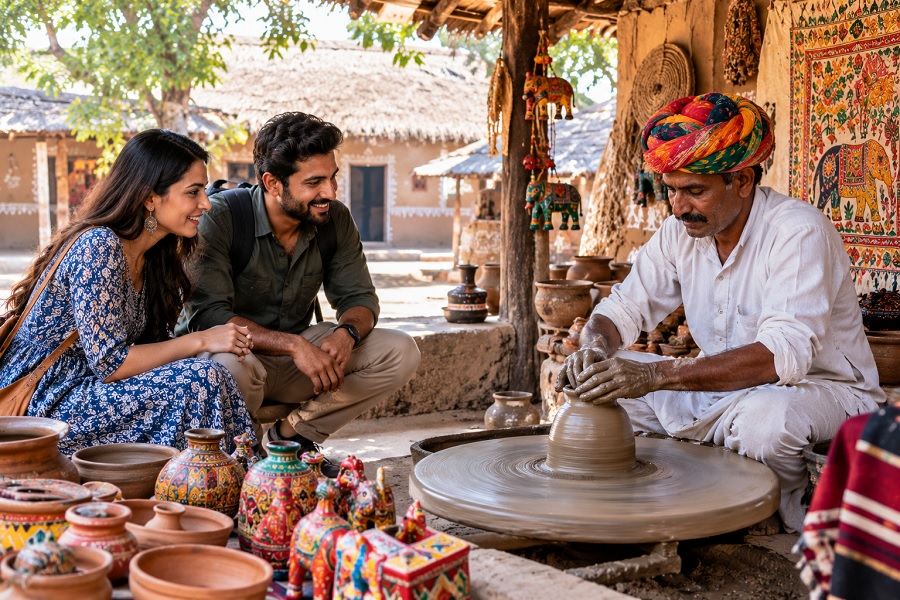
Pottery and terracotta: Discover how clay is shaped into pots, decorative pieces, and household objects.
Handloom weaving: Learn about traditional looms, yarn preparation, textile patterns, and weaving techniques.
Traditional painting: Explore regional art forms such as Pattachitra and other narrative painting traditions.
Embroidery and textiles: Understand the intricate stitching, colours, and patterns that distinguish regional clothing and fabrics.
Wood carving: Observe how artisans transform wood into toys, decorative objects, and sculptures.
Metal crafts: Discover traditional methods used to create decorative items, jewellery, and handcrafted objects.
Bamboo and natural-fibre crafts: Explore sustainable materials used to make baskets, mats, home accessories, and other useful products.
Experiences to Include in a Craft Trail
A well-planned craft trail should provide opportunities to learn about both the creative process and the people who preserve it.
Meet Local Artisans
Conversations with craftspeople help visitors understand the history, inspiration, and challenges associated with traditional crafts. These interactions also create opportunities to appreciate the time and expertise behind handmade products.
Participate in Hands-On Workshops
Some craft centres offer supervised activities such as painting, pottery, block printing, or basic weaving. Visitors can create a small item and gain a better understanding of the skills involved. Workshop availability and fees vary by location.
Explore Local Craft Markets
Village markets and artisan-owned shops offer handmade souvenirs, textiles, decorative items, and locally produced gifts. Buying directly from craftspeople can help support local incomes, especially when prices and product origins are clearly explained.
Discover Regional Food and Culture
Craft trails can be combined with traditional cuisine, local festivals, historic sites, and cultural performances. This creates a more complete travel experience and helps visitors understand the wider cultural setting in which each craft developed.
Benefits of Craft Trail Tourism
Craft trail tourism can contribute to cultural preservation and sustainable local development in several ways.
Preserving traditional knowledge: Visits and demonstrations create opportunities to pass traditional techniques to new generations and introduce them to wider audiences.
Supporting artisan livelihoods: Direct sales, paid workshops, and guided experiences can provide additional income for craftspeople and their families.
Encouraging rural tourism: Craft villages can attract visitors beyond major cities and established tourist attractions, creating opportunities for local guides, transport providers, food businesses, and accommodation providers.
Promoting cultural understanding: Travellers learn about regional identities, local materials, traditional designs, and the stories behind handmade objects.
Encouraging responsible shopping: Craft trails can help visitors appreciate the value of handmade products and make more informed choices about authenticity, materials, and production methods.
Tips for Planning a Craft Trail Holiday
Research the main craft traditions of your chosen destination before travelling.
Check workshop schedules, opening hours, entry fees, and booking requirements.
Allow sufficient time to explore artisan villages without rushing.
Ask permission before photographing artisans or their workspaces.
Follow workshop safety instructions and respect local customs.
Purchase directly from artisans when possible and ask about materials and production methods.
Avoid bargaining in ways that undervalue the time and skill required to make handmade products.
Consider hiring a knowledgeable local guide to learn more about the area's cultural heritage.
Check transport options and seasonal travel conditions before departure.
Choose locally owned accommodation and food businesses when practical.
The Future of Craft Trail Tourism in India
Craft trail tourism has the potential to become an increasingly valuable part of India's cultural and rural tourism offerings. Better visitor facilities, digital storytelling, online workshop bookings, local guide networks, and responsible tourism practices can make artisan destinations easier to discover.
Craft villages and heritage workshops can also benefit from digital marketing and improved access to wider markets. However, tourism development should respect community priorities, protect traditional knowledge, and avoid turning cultural practices into performances without the consent of the people who maintain them.
The most successful craft trails are those that create meaningful experiences for visitors while allowing artisans to retain control over their work, cultural traditions, and livelihoods.
Conclusion
Craft trail tourism in India provides a wonderful opportunity to discover the country's artistic diversity through authentic encounters with artisan communities. From Pattachitra painting in Raghurajpur and silk weaving in Varanasi to wooden toys in Channapatna and stone carving in Mahabalipuram, each destination reveals a different aspect of India's cultural heritage.
By visiting traditional workshops, learning about handmade products, and supporting local craftspeople, travellers can enjoy a more meaningful cultural journey. With thoughtful planning and respect for local traditions, craft trail tourism can help preserve India's living heritage while creating valuable opportunities for sustainable tourism and rural development.