Bamboo Craft Tourism in Northeast India: Exploring Traditional Handicrafts and Artisan Villages
Bamboo Craft Tourism in Northeast India: Discovering Sustainable Artisan Traditions
Introduction
Bamboo Craft Tourism in Northeast India offers travellers an opportunity to explore traditional handicrafts, indigenous cultures, artisan villages, and sustainable ways of living. The region is known for its rich bamboo resources and diverse communities that transform bamboo into useful household products, decorative items, furniture, baskets, mats, and traditional structures.
States such as Assam, Tripura, Meghalaya, Mizoram, Nagaland, Manipur, Arunachal Pradesh, and Sikkim have distinctive craft traditions shaped by local materials, cultural practices, and generations of craftsmanship. Bamboo craft tourism allows visitors to experience these traditions through artisan workshops, village visits, cultural exhibitions, and local handicraft markets.
As interest in sustainable and experiential travel grows, bamboo crafts provide an important connection between cultural preservation, environmental awareness, and rural economic development.
Cultural Significance of Bamboo Crafts in Northeast India
Bamboo has played an important role in the everyday lives of many communities in Northeast India for generations. Its versatility makes it suitable for constructing houses, creating storage containers, producing fishing equipment, making furniture, and crafting decorative objects.
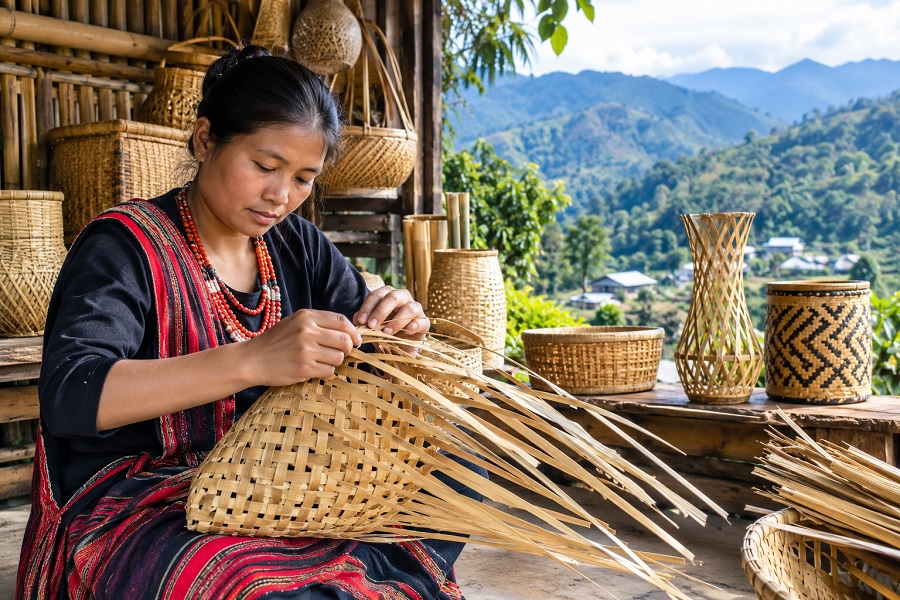
Traditional bamboo craftsmanship reflects the knowledge and creativity of local artisans. Many techniques are passed from one generation to another through observation, practice, and hands-on learning. Patterns, weaving styles, and product designs often differ between communities, giving each region its own artistic identity.
Bamboo crafts also demonstrate how communities adapt locally available materials to their practical needs. Through cultural tourism, visitors can understand the historical importance of these products and appreciate the skills required to create them.
Popular Destinations for Bamboo Craft Tourism
1. Assam
Assam is an important destination for exploring bamboo and cane handicrafts. Traditional products include baskets, mats, household containers, decorative objects, and the Jaapi, a distinctive traditional hat associated with Assamese culture.
Visitors can explore local handicraft markets, artisan workshops, and rural communities to learn about bamboo preparation and weaving techniques. Craft experiences also provide opportunities to discover the relationship between Assamese traditions, rural livelihoods, and locally available natural materials.
2. Tripura
Tripura is known for its bamboo and cane handicraft traditions. Artisans produce baskets, furniture, lampshades, decorative products, and everyday household items using a variety of weaving and shaping methods.
Tourists interested in handmade products can explore craft exhibitions, local markets, and artisan communities. These experiences introduce visitors to traditional craftsmanship while demonstrating how bamboo products can be adapted to contemporary lifestyles.
3. Meghalaya
Meghalaya offers opportunities to discover traditional bamboo products and community-based craft practices. Bamboo is used in household items, woven products, traditional structures, and various practical applications.
Visitors can learn about local materials, artisan skills, and the role of bamboo in rural life. Combining craft visits with village tourism and nature-based experiences can provide a broader understanding of Meghalaya's cultural heritage.
4. Nagaland
Nagaland's handicraft traditions include bamboo and cane baskets, household objects, and decorative products. These crafts reflect the skills and cultural knowledge of different communities across the state.
Visitors can explore local craft centres, exhibitions, and traditional markets to discover the variety of handmade products. Artisan demonstrations can also help travellers understand how traditional methods are maintained while new designs are introduced.
5. Arunachal Pradesh
Arunachal Pradesh has diverse indigenous craft traditions, including bamboo and cane weaving. Depending on the community, artisans create baskets, carrying containers, household products, and other useful objects.
Craft tourism offers opportunities to learn about regional variations in materials, weaving patterns, and traditional uses. Responsible visits to artisan communities can also support cultural exchange and help promote local craftsmanship.
6. Mizoram and Manipur
Mizoram and Manipur also have bamboo-related craft traditions that contribute to local livelihoods and cultural identity. Handmade baskets, mats, furniture, and other woven products demonstrate the versatility of bamboo.
Visitors can discover these traditions through local markets, craft exhibitions, and community-led tourism experiences. Such activities can help promote regional handicrafts and encourage appreciation of traditional skills.
Traditional Bamboo Products and Their Uses
Bamboo artisans create a wide range of products that combine practical functionality with artistic design.
- Bamboo baskets: Used for carrying, storing, and organising everyday items.
- Bamboo mats: Traditional woven products used in homes and community settings.
- Bamboo furniture: Chairs, stools, tables, shelves, and decorative furnishings.
- Decorative handicrafts: Lampshades, wall decorations, flower holders, and souvenirs.
- Traditional hats: Regionally significant products such as the Assamese Jaapi.
- Kitchen and household items: Containers, trays, and other practical accessories.
- Bamboo structures: Traditional building components and structures suited to local needs.
- Contemporary bamboo products: Eco-conscious gift items, home décor, and lifestyle accessories.
These products demonstrate how traditional knowledge can remain relevant in modern markets while preserving the distinctive character of regional handicrafts.
The Traditional Bamboo Craft-Making Process
Bamboo craft production requires patience, precision, and practical knowledge. Although techniques vary by product and community, the process generally includes several stages.
Selection of Bamboo
Artisans choose bamboo according to the intended product, considering its thickness, strength, flexibility, and condition. Suitable material is important for producing durable and attractive handicrafts.
Cutting and Preparation
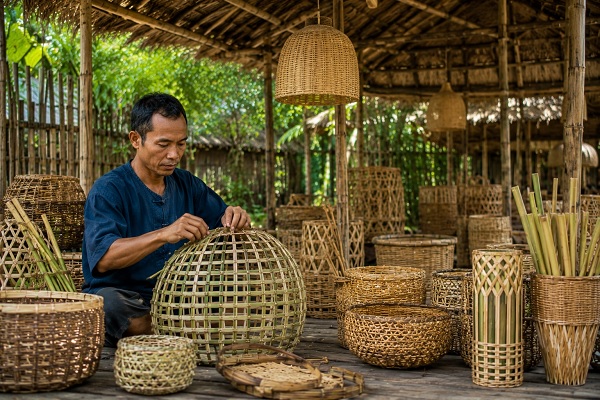
The bamboo is cut into appropriate lengths and split into strips or pieces. Artisans prepare the material carefully to achieve the dimensions required for weaving, shaping, or joining.
Weaving and Shaping
Prepared bamboo strips are woven into baskets, mats, and other products. Different patterns and techniques are used depending on the design and intended function of the item.
Finishing and Quality Checking
The finished product is trimmed, shaped, and inspected. Depending on its purpose, it may receive additional finishing, decorative elements, or protective treatment before being sold.
For tourists, observing these stages offers insight into the time, skill, and experience involved in traditional bamboo craftsmanship.
Bamboo Craft Workshops and Cultural Experiences
Hands-on workshops are an important part of experiential cultural tourism. Instead of simply purchasing finished products, visitors can learn directly from skilled artisans and discover how traditional crafts are created.
Possible visitor experiences include watching bamboo weaving demonstrations, learning basic basket-making techniques, understanding traditional tools, exploring craft exhibitions, and visiting local handicraft markets.
Some community-based tourism initiatives may also arrange opportunities to interact with artisan families and learn about the cultural significance of their work. Visitors should confirm workshop availability in advance, as not every village or craft centre offers activities for tourists.
These experiences create opportunities for cultural exchange while helping artisans share their knowledge with a wider audience.
Sustainable Tourism and Environmental Benefits
Bamboo craft tourism connects cultural heritage with environmental awareness. Bamboo is a renewable plant resource that can grow relatively quickly under suitable conditions. Responsibly managed bamboo cultivation can contribute to rural livelihoods and provide materials for a variety of products.
The use of bamboo in handicrafts can also encourage interest in reusable, repairable, and locally produced goods. When bamboo is sourced responsibly and processed with appropriate methods, it can be a useful material for sustainable product development.
However, bamboo products are not automatically environmentally friendly. Their overall impact depends on harvesting practices, transport, processing, durability, coatings, and end-of-life disposal.
Sustainable bamboo craft tourism should therefore promote responsible sourcing, reduce unnecessary waste, support durable products, and encourage visitors to make informed purchasing decisions.
Supporting Local Artisans Through Tourism
Local artisans are central to the success of bamboo craft tourism. Tourism can provide additional income opportunities by connecting craft producers with visitors who value authentic handmade products.
Purchasing directly from artisans, visiting local exhibitions, and participating in paid workshops can help support craft-based livelihoods. Tourism can also encourage younger generations to learn traditional techniques and explore opportunities in product design, entrepreneurship, and online marketing.
Partnerships between artisans, local tourism organisations, craft cooperatives, and responsible tour operators can help improve market access. Fair compensation and respect for traditional knowledge are essential to ensuring that communities benefit from tourism activities.
By choosing authentic handmade products, visitors can contribute to preserving traditional craftsmanship and strengthening local economies.
Role of Digital Platforms in Promoting Bamboo Craft Tourism
Digital platforms can help introduce Northeast India's bamboo craft traditions to a wider audience. Websites, travel blogs, social media, online catalogues, and virtual craft demonstrations can showcase artisan skills and provide information about craft destinations.
Online platforms can also help visitors identify local markets, contact workshop organisers, understand regional craft traditions, and purchase products from participating artisans.
High-quality photographs, accurate descriptions, and stories shared with the permission of craftspeople can make traditional handicrafts more accessible to potential visitors. Digital promotion should accurately represent communities and ensure that artisans receive appropriate recognition for their work.
Challenges Facing Bamboo Craft Tourism
Despite its potential, bamboo craft tourism faces several challenges. Artisans may have limited access to larger markets, modern equipment, business training, and reliable distribution networks. Competition from inexpensive mass-produced goods can also reduce demand for traditional handmade products.
Other challenges include maintaining consistent product quality, securing responsibly sourced raw materials, improving transport access, and ensuring that tourism income reaches local communities.
Solutions can include skills development, fair-trade partnerships, improved marketing, responsible product innovation, and collaboration between craft organisations and tourism providers.
Tourism development should also respect local customs and avoid presenting cultural traditions as staged attractions without meaningful community participation.
Best Time to Explore Bamboo Craft Tourism
The best time to visit bamboo craft destinations depends on the specific state, weather conditions, local festivals, and availability of artisan workshops. The cooler months, generally from October to April, can be convenient for exploring many parts of Northeast India, although climate conditions vary by destination.
Travellers should check local weather forecasts, road conditions, accommodation availability, and workshop schedules before planning their journey. Visiting during a local festival or craft exhibition may offer additional opportunities to explore regional culture, provided the event is open to visitors.
Tips for Responsible Bamboo Craft Tourism
Travellers can make their craft-focused journeys more rewarding by following a few simple practices:
1. Purchase handmade products directly from artisans whenever possible.
2. Ask about the origin of bamboo products and how the materials are sourced.
3. Pay fair prices that reflect the time and skill involved in craftsmanship.
4. Seek permission before photographing artisans, homes, or workshops.
5. Respect local customs and community guidelines.
6. Choose durable products and avoid unnecessary packaging.
7. Support community-led workshops and responsible tourism operators.
8. Learn about the cultural significance of crafts instead of treating them only as souvenirs.
Responsible tourism can help ensure that cultural experiences benefit both visitors and the communities they visit.
Future of Bamboo Craft Tourism in Northeast India
The future of bamboo craft tourism depends on combining traditional skills with responsible innovation. Growing interest in sustainable living, handmade décor, cultural experiences, and locally produced goods may create new opportunities for artisans and rural tourism businesses.
Product development, digital marketing, craft workshops, cultural trails, and community-based tourism can help connect traditional craftsmanship with modern audiences. Training programmes and fair market access can further encourage young people to participate in the craft sector.
At the same time, preserving the authenticity of regional designs and respecting the intellectual and cultural knowledge of artisan communities should remain priorities.
With careful planning, bamboo craft tourism can become a valuable part of Northeast India's cultural tourism offering, supporting heritage preservation and sustainable livelihoods.
Conclusion
Bamboo Craft Tourism in Northeast India provides an enriching opportunity to discover traditional craftsmanship, indigenous cultures, and sustainable artisan practices. From Assam's bamboo products to the weaving traditions of Tripura, Meghalaya, Nagaland, Arunachal Pradesh, Mizoram, and Manipur, the region offers diverse experiences for travellers interested in culture and handmade art.
Artisan workshops, village visits, craft markets, and community-led experiences allow visitors to appreciate the knowledge and creativity behind bamboo products. At the same time, responsible tourism can support local livelihoods, encourage younger generations to learn traditional skills, and promote awareness of sustainable materials.
By combining cultural exploration with fair purchasing and environmental responsibility, bamboo craft tourism can help preserve Northeast India's artisan heritage while creating meaningful experiences for visitors.