Exploring India’s Classical Dance Heritage Through Kathak Tourism
Kathak Cultural Tourism: Exploring India’s Classical Dance Heritage
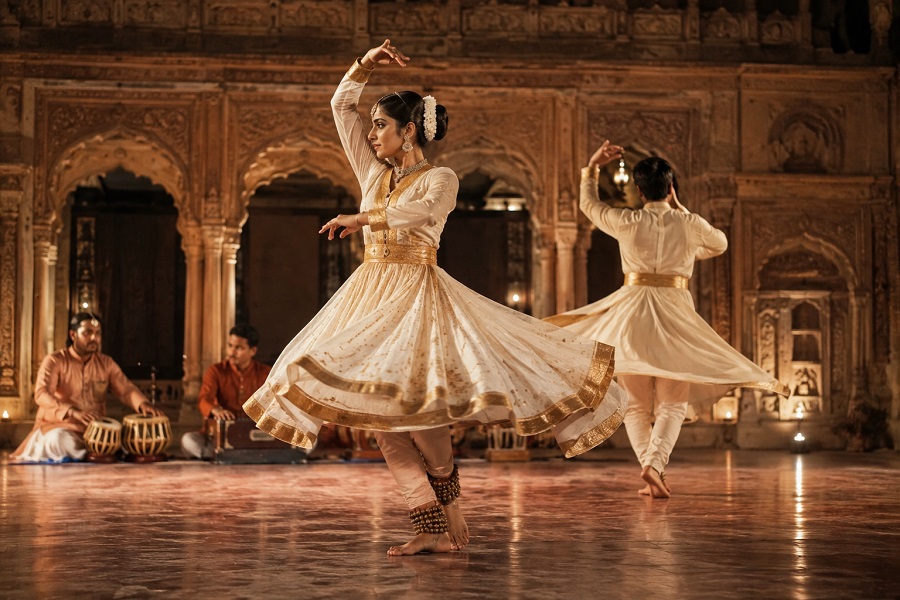
Kathak Cultural Tourism offers travelers an opportunity to experience one of India's most expressive classical dance traditions through live performances, workshops, festivals, cultural institutions, and heritage experiences. Known for rhythmic footwork, graceful spins, expressive storytelling, and close interaction with Hindustani music, Kathak can provide visitors with a deeper understanding of India's performing-arts heritage.
The Sangeet Natak Akademi, an autonomous institution under India's Ministry of Culture, identifies Kathak Kendra in New Delhi as one of its leading institutions for Kathak education and preservation.
What Is Kathak Cultural Tourism?
Kathak cultural tourism involves traveling to experience, learn about, or participate in Kathak and the cultural traditions surrounding it.
Travelers can experience Kathak through:
Classical dance performances
Kathak festivals
Dance workshops
Guru-led demonstrations
Cultural institutions
Heritage performances
Music and dance events
Artist interactions
Dance photography
Traditional costume experiences
Performing-arts education
This form of tourism combines entertainment with cultural learning.
Understanding the Heritage of Kathak
The word Kathak is associated with storytelling. Over time, the dance developed through different historical and cultural settings and became one of India's major classical dance traditions.
The development of modern Kathak has been strongly associated with different gharanas, particularly the Lucknow and Jaipur traditions. Kathak Kendra's official history notes that the institution became an important platform where ideas from the Lucknow and Jaipur gharanas could interact and influence experimentation in presentation.
Kathak and Storytelling
Storytelling is one of the most fascinating aspects of Kathak. Dancers use movement, facial expressions, gestures, rhythm, and musical interpretation to communicate stories and emotions.
For tourists, watching a Kathak performance can therefore be more than simply watching a dance. It can provide insight into Indian mythology, poetry, music, devotional traditions, and theatrical expression.
Rhythmic Footwork and Spins
Kathak is particularly recognized for its sophisticated rhythmic patterns and energetic footwork. Dancers often perform intricate sequences while interacting with percussion and melodic accompaniment.
Spins, known for their visual elegance, are another feature that attracts audiences. The combination of rhythm, movement, music, and expression makes Kathak especially engaging for cultural travelers.
Kathak and Hindustani Music
Kathak performances are closely connected with North Indian musical traditions. Depending on the performance, audiences may encounter instruments and vocal styles associated with Hindustani classical music.
This makes Kathak tourism particularly valuable for travelers interested in both Indian dance and Indian classical music.
Kathak Kendra in New Delhi
For travelers interested in learning more about Kathak, Kathak Kendra in New Delhi is an important cultural institution. It was established in 1964 as part of the Sangeet Natak Akademi and is described by the Akademi as the National Institute of Kathak Dance. It provides training in Kathak as well as courses connected with Hindustani vocal music, Pakhawaj, and Tabla.
The institution has played a significant role in training dancers and developing Kathak presentation for contemporary stage audiences.
Lucknow and Kathak Tourism
Lucknow is an important destination for travelers interested in the Lucknow gharana of Kathak. The city's association with Awadh's cultural history, music, dance, poetry, cuisine, and architecture makes it particularly suitable for a broader cultural itinerary.
Tourists can combine dance-related experiences with heritage walks, traditional food experiences, historic architecture, museums, and local arts.
Jaipur and Kathak Tourism
Jaipur is another important destination associated with Kathak, particularly the Jaipur gharana.
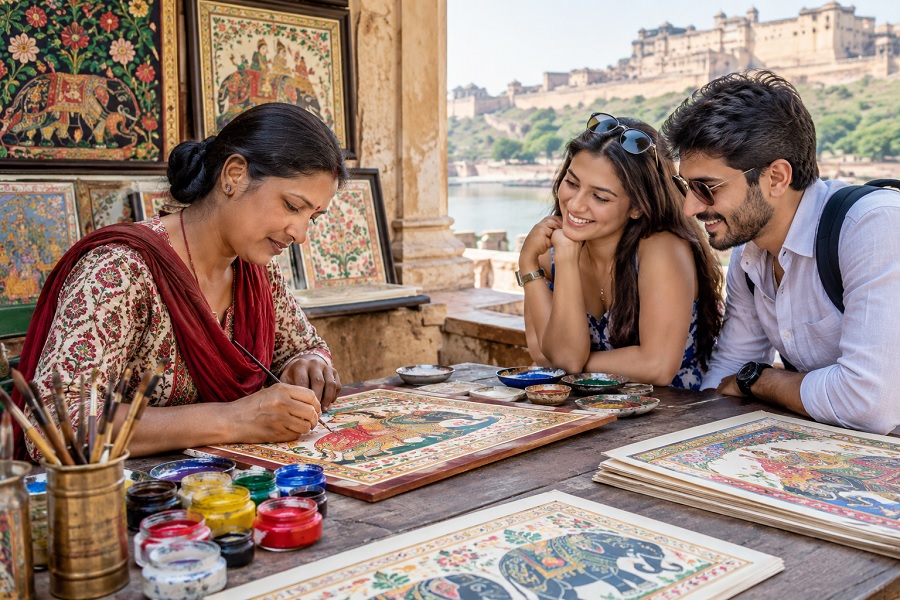
A cultural trip can combine Kathak experiences with visits to forts, palaces, museums, traditional markets, handicraft centers, and other elements of Rajasthan's cultural heritage.
This combination allows visitors to understand dance as part of a larger regional cultural environment.
Kathak Festivals and Performances
Festivals can provide excellent opportunities for cultural tourists to experience Kathak. Performances may feature solo dancers, groups, established artists, young performers, musicians, and experimental productions.
Kathak Kendra's history notes that it began organizing national-level Kathak festivals in 1982, including the Kalka Bindadin Festival and Sharad Chandrika Festival.
Travelers interested in attending a particular event should check the current organizer's schedule before planning their trip.
Kathak Workshops for Tourists
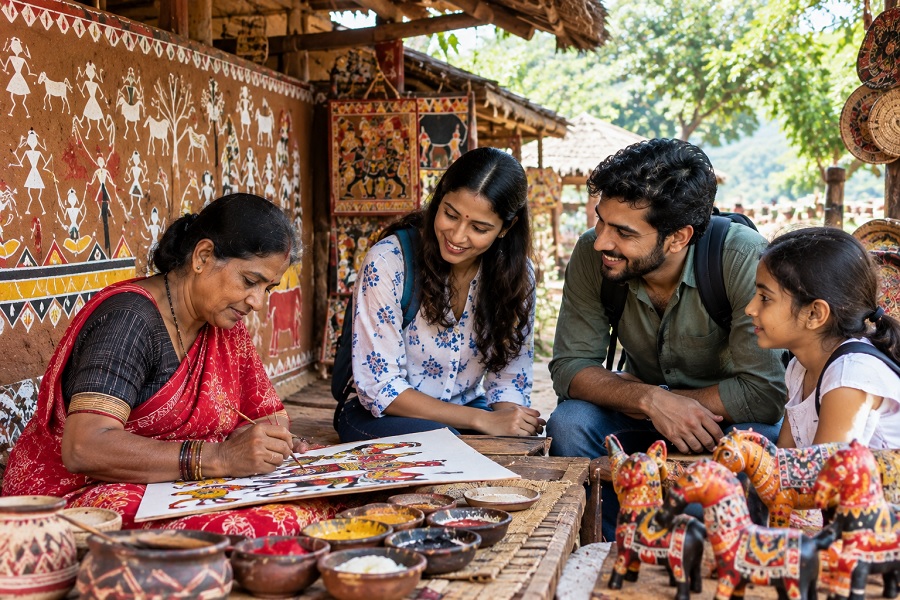
A workshop can make cultural travel more interactive. Instead of simply watching a performance, visitors can learn basic movements, rhythm patterns, hand gestures, or introductory concepts from an experienced teacher.
Short workshops can be particularly appealing to international visitors and travelers who want a hands-on introduction to Indian performing arts.
Kathak and Cultural Education
Kathak tourism can contribute to cultural education by introducing visitors to India's intangible heritage.
The Ministry of Culture describes India's intangible cultural heritage as encompassing living traditions such as songs, dances, rituals, languages, and crafts. National institutions including the Sangeet Natak Akademi work toward preserving and promoting these traditions.
Kathak for International Tourists
International travelers can use Kathak performances as an introduction to Indian culture. A performance can be combined with an explanation of the dance's history, musical structure, costumes, storytelling traditions, and regional influences.
Providing context before a performance can make the experience more accessible to audiences unfamiliar with Indian classical dance.
Kathak and Heritage Travel
Kathak experiences can be incorporated into heritage tourism itineraries.
For example, a traveler visiting Lucknow could combine:
Kathak performances
Heritage architecture
Awadhi cuisine
Traditional music
Local handicrafts
Historic markets
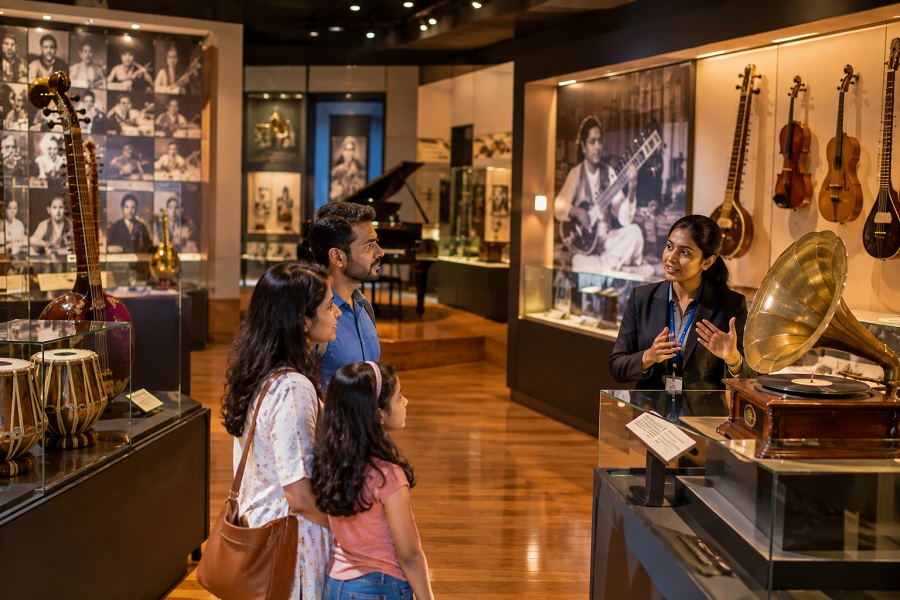
Cultural museums
Similarly, a Jaipur itinerary could combine Kathak with palace tourism, handicrafts, textiles, folk arts, and Rajasthani cuisine.
Kathak Costume and Cultural Experiences
Traditional costumes are an important visual element of Kathak performances. Costumes, jewelry, makeup, and stage presentation contribute to the overall artistic experience.
Cultural tourism programs can offer educational demonstrations explaining how costumes and accessories complement movement and performance.
Photography and Kathak Tourism
Kathak performances can provide interesting opportunities for cultural photography. Photographers can capture movement, expressions, costumes, stage lighting, rhythmic footwork, and dramatic poses.
However, visitors should always follow venue rules regarding photography and recording. Some performances may restrict flash photography or video recording.
Kathak for Families
Kathak performances can be an educational travel experience for families. Children can learn about Indian dance, music, storytelling, costumes, and cultural traditions while watching a live performance.
Parents can make the experience more engaging by explaining the basic concepts before attending a show.
Kathak Tourism for Students
Students of dance, music, theatre, history, anthropology, and cultural studies can benefit from specialized Kathak travel experiences.
Educational trips can include:
Dance performances
Artist interactions
Workshops
Institutional visits
Costume demonstrations
Music sessions
Heritage walks
Cultural documentation
Such experiences can provide practical exposure beyond classroom learning.
Responsible Kathak Cultural Tourism
Responsible cultural tourism should respect artists, teachers, institutions, and local communities.
Travelers should:
Follow performance etiquette.
Avoid disturbing performers.
Follow photography rules.
Support legitimate cultural institutions.
Purchase authentic cultural products where possible.
Respect traditional practices.
Avoid treating sacred or cultural expressions merely as entertainment.
Learn about the cultural context before making assumptions.
Supporting India's Performing Arts
Cultural tourism can help create audiences for traditional performing arts. Ticket purchases, workshops, cultural programs, and responsible cultural travel can contribute to the wider ecosystem surrounding artists and institutions.
The Ministry of Culture and Sangeet Natak Akademi continue to support preservation, documentation, training, and promotion of India's performing arts. In 2026, the Ministry also highlighted initiatives for documenting and sustaining traditional, folk, and tribal performing arts.
Best Destinations for Kathak Cultural Tourism
Travelers interested in Kathak can consider:
New Delhi for major Kathak institutions and performances
Lucknow for Awadh's cultural connection and the Lucknow gharana
Jaipur for the Jaipur gharana and Rajasthan's broader cultural heritage
Mumbai for major performing-arts events and cultural programming
Varanasi for broader North Indian music and cultural experiences
Availability of performances varies, so travelers should check official event schedules before making specific plans.
The Future of Kathak Cultural Tourism
Kathak tourism has significant potential as travelers increasingly seek immersive cultural experiences rather than conventional sightseeing.
Future opportunities may include:
Interactive Kathak workshops
Cultural exchange programs
Heritage dance festivals
Digital dance archives
Educational tourism
International Kathak workshops
Artist-led cultural tours
Dance and heritage packages
Performing-arts photography tours
Virtual cultural experiences
Digital platforms can also help introduce Kathak to audiences around the world while live performances remain essential for experiencing the energy and atmosphere of the art form.
Conclusion
Kathak Cultural Tourism provides a meaningful way to explore India's performing-arts heritage through dance, music, storytelling, history, and cultural interaction. From the institutions of New Delhi to the cultural traditions of Lucknow and Jaipur, travelers can discover how Kathak has developed and continues to evolve.
For visitors, the most rewarding experience is not simply watching a performance. Learning about the dance, meeting artists, attending a workshop, exploring related heritage, and respecting the traditions behind the art can transform a short cultural visit into a deeper travel experience.