Exploring Historical Libraries: A Journey Through India’s Cultural Heritage
Historical Libraries and Cultural Tourism: Exploring India's Living Heritage
Historical libraries are more than repositories of old books. They preserve manuscripts, languages, art, historical records and intellectual traditions that help travelers understand how societies evolved. For cultural tourists, visiting an old library can provide a deeper connection with a destination's history and heritage.
India has several remarkable libraries where centuries-old manuscripts, rare books, paintings, calligraphy and historical documents are preserved. The Ministry of Culture lists institutions such as the Rampur Raza Library, Khuda Bakhsh Oriental Public Library and other major heritage libraries as important repositories of India's intellectual and cultural heritage.
What Is Historical Library Tourism?
Historical library tourism is a form of cultural travel focused on visiting libraries and archival institutions that have significant historical, architectural or literary importance.
Instead of simply viewing monuments, travelers can explore the written heritage of a region through:
Ancient and medieval manuscripts
Rare printed books
Historical maps
Traditional calligraphy
Paintings and illustrations
Religious and philosophical texts
Local-language literature
Historical documents
Cultural exhibitions
Conservation and digitization projects
These experiences make libraries valuable destinations for history enthusiasts, students, researchers, photographers and cultural travelers.
Why Historical Libraries Matter to Cultural Tourism
Libraries preserve knowledge that may not be visible in conventional tourist attractions. A historic building can tell travelers about architecture, while its collections can reveal the languages, beliefs, scientific knowledge and artistic traditions of earlier generations.
The Asiatic Society Library in Kolkata, established in 1784, is an important example. Its collections cover subjects including history, archaeology, art, architecture, philosophy, religion, literature and travel, with materials in numerous European, Indian and Asian languages.
This combination of architecture, literature and scholarship creates a distinctive cultural tourism experience.
Notable Historical Libraries to Explore in India
Rampur Raza Library, Uttar Pradesh
The Rampur Raza Library is one of India's significant repositories of Indo-Islamic learning and arts. Founded in 1774 by Nawab Faizullah Khan, it contains approximately 17,000 manuscripts along with paintings, palm-leaf manuscripts and around 60,000 printed books in different Indian and foreign languages.
Its collections cover subjects including history, philosophy, religion, science, literature, art and architecture. For visitors interested in manuscript traditions and Indo-Islamic culture, the library provides an important window into India's intellectual history.
Khuda Bakhsh Oriental Public Library, Patna
Located near the Ganges in Patna, the Khuda Bakhsh Oriental Public Library was opened to the public in 1891. It began with a private collection and developed into a major institution preserving Oriental manuscripts and printed works.
The library holds thousands of Arabic, Persian, Urdu and other manuscripts, along with a large collection of printed books. Its heritage value is strengthened by conservation, research, publications, lectures and scholarly programmes.
The Asiatic Society Library, Kolkata
Founded in 1784, the Asiatic Society is one of India's oldest institutions devoted to learning and research. Its library contains rare manuscripts and scholarly collections related to Asian history, languages, archaeology, literature and culture.
The institution also connects library tourism with museums, exhibitions, research and digitization. Its ongoing digitization work helps make portions of its manuscript heritage accessible to a wider audience.
Connemara Public Library, Chennai
Connemara Public Library in Chennai is another important destination for literary and cultural tourism. The Ministry of Culture identifies it as one of India's oldest libraries and one of the country's four National Depository Libraries.
Its role in receiving published material makes it particularly significant for travelers interested in India's modern publishing and literary history.
Sarasvati Mahal Library, Thanjavur
Thanjavur Maharaja Serfoji's Sarasvati Mahal Library is another important name for travelers exploring India's manuscript and literary heritage. Its connection with the historic royal traditions of Thanjavur makes it especially relevant to cultural tourism.
The library experience can be combined with visits to Thanjavur's temples, traditional arts, music and architecture, creating a broader cultural itinerary.
Architecture as Part of the Experience
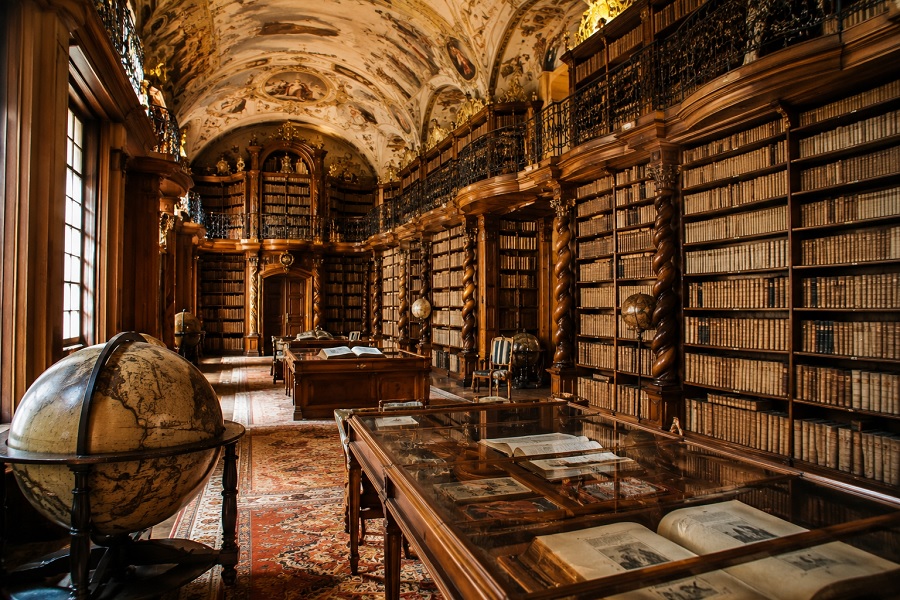
Historical libraries themselves can be architectural attractions. Their halls, reading rooms, courtyards, gardens, decorative details and historic buildings can reveal the cultural influences of different periods.
Rampur Raza Library, for example, is housed in the historic Hamid Manzil within the Rampur Fort complex, combining library collections with heritage architecture and cultural objects.
For tourists, this makes a library visit more than a literary activity. It becomes an opportunity to experience architecture, history and collections together.
Manuscripts as Cultural Treasures
Manuscripts are among the most valuable attractions in historical libraries. They can preserve centuries-old knowledge about literature, religion, medicine, astronomy, mathematics, philosophy and political history.
The Khuda Bakhsh Oriental Public Library preserves manuscripts written on different materials, while its collections represent several languages and cultural traditions.
Rampur Raza Library similarly preserves manuscripts in Arabic, Persian, Pashto, Sanskrit, Urdu, Hindi and Turkish, reflecting the multicultural character of its intellectual collections.
Cultural Tourism Through Languages
Historical libraries are also destinations for travelers interested in India's linguistic diversity.
A single collection can include Sanskrit, Hindi, Bengali, Urdu, Persian, Arabic, Tamil and other languages. The Asiatic Society's collection, for example, includes materials across European, Indian and Asian languages.
This makes library tourism particularly valuable for understanding how languages interacted through trade, scholarship, religion, administration and literature.
Art and Calligraphy Experiences
Many historic libraries preserve artistic traditions alongside books.
Visitors may encounter:
Illustrated manuscripts
Miniature paintings
Decorative book covers
Islamic calligraphy
Traditional illustrations
Historical maps
Palm-leaf manuscripts
Engravings and other visual materials
Rampur Raza Library is particularly notable for its collections of miniature paintings and Islamic calligraphy.
These collections demonstrate how books themselves became works of art.
Digital Preservation and Modern Cultural Tourism
Historical libraries are increasingly combining traditional preservation with modern technology. Digitization allows rare materials to be catalogued, preserved and accessed without requiring constant physical handling.
The Asiatic Society, for example, has ongoing digitization and cataloguing projects involving its manuscript collections.
Khuda Bakhsh Oriental Public Library has also digitized many manuscripts while undertaking conservation work.
This creates opportunities for digital cultural tourism, online exhibitions and educational experiences alongside physical visits.
Who Can Enjoy Historical Library Tourism?
Historical libraries can appeal to a wide range of travelers.
History lovers can explore primary sources and historical documents.
Literature enthusiasts can discover rare books, regional writing and literary traditions.
Students and researchers can learn about academic collections and manuscript preservation.
Architecture enthusiasts can study heritage buildings and interiors.
Art lovers can explore miniature paintings, calligraphy and illustrated manuscripts.
Families can introduce children to books, history and cultural heritage through age-appropriate exhibitions and guided experiences.
How to Plan a Historical Library Visit
Before visiting, travelers should check the institution's official visitor information, opening hours and access rules. Some libraries primarily serve researchers and may have specific procedures for viewing manuscripts or entering reading rooms.
Photography may also be restricted in certain sections because rare materials require careful preservation. Visitors should follow all instructions regarding cameras, mobile phones and handling of collections.
The Asiatic Society, for example, provides structured access to reading rooms and scholarly resources, while its facilities include dedicated sections for manuscripts and reference collections.
Best Way to Combine Library Tourism With a Trip
A historical library can become the centrepiece of a larger cultural itinerary.
For example:
Kolkata: Combine a library visit with heritage architecture, museums, historic neighborhoods and Bengali literary culture.
Patna: Combine the Khuda Bakhsh Oriental Public Library with museums, historic sites and nearby Buddhist heritage destinations.
Rampur: Explore the Raza Library along with palace and regional heritage attractions.
Thanjavur: Combine Sarasvati Mahal Library with temple architecture, classical music, traditional art and local cuisine.
This approach turns a single library visit into a complete cultural tourism experience.
Responsible Historical Library Tourism
Visitors should remember that many library collections contain fragile and irreplaceable materials. Responsible tourism is therefore essential.
Travelers should:
Follow library rules.
Avoid touching manuscripts unless permitted.
Keep food and drinks away from collections.
Maintain silence in reading areas.
Follow photography restrictions.
Avoid using flash where prohibited.
Respect researchers and library staff.
Support conservation initiatives where possible.
Learn about the cultural context of collections.
Responsible behavior helps ensure that these resources remain available to future generations.
Future of Historical Library Tourism
Historical libraries have significant potential to become stronger cultural tourism destinations through guided tours, exhibitions, storytelling programmes, manuscript displays, digital archives, educational workshops and heritage walks.
Their greatest strength is that they connect travelers directly with the intellectual life of earlier generations. Instead of only seeing monuments from the outside, visitors can discover the ideas, stories, languages and artistic traditions preserved inside them.
Conclusion
Historical libraries offer a unique form of cultural tourism that combines history, literature, architecture, art, language and knowledge. From the Rampur Raza Library and Khuda Bakhsh Oriental Public Library to the Asiatic Society in Kolkata and other heritage institutions across India, these places preserve extraordinary records of the country's diverse cultural traditions.
As cultural travelers increasingly look for meaningful and educational experiences, historical libraries can become important additions to India's heritage tourism landscape. A visit to one of these institutions is not simply a journey into the past. It is an opportunity to understand how knowledge, creativity and culture have shaped India over centuries.