Cultural Tourism Through Street Food
Cultural Tourism Through Street Food
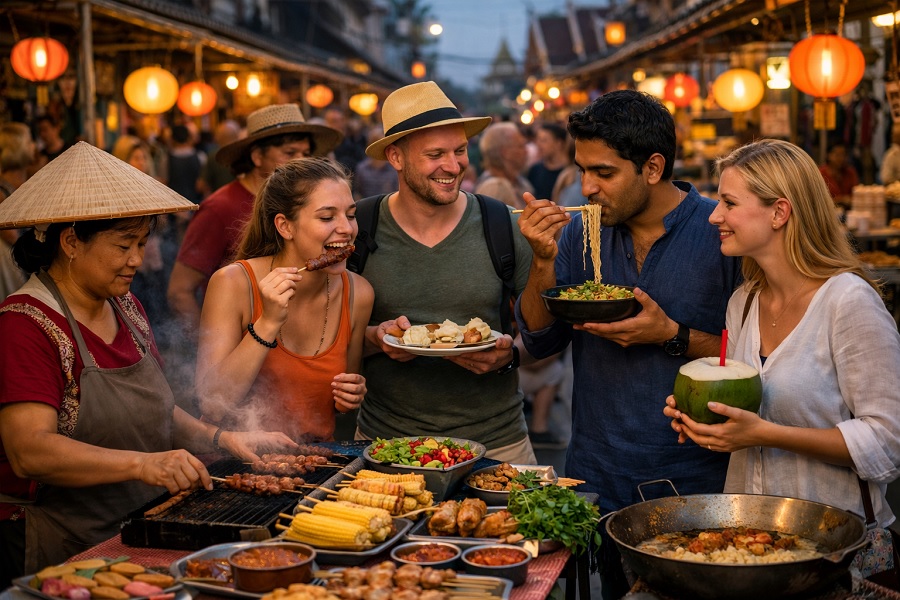
Street food is more than just a quick bite — it is a living expression of culture, history, and community. Across the world, bustling food streets, roadside stalls, and local markets offer travelers an authentic taste of a destination’s traditions. From spicy chaats in India to tacos in Mexico and satay in Indonesia, street food has become one of the most exciting ways to experience cultural tourism.
Cultural tourism through street food allows travelers to connect directly with local people, flavors, and lifestyles. Unlike luxury restaurants, street food reflects the everyday culinary habits of a region. Recipes are often passed down through generations, preserving unique cooking techniques and regional ingredients. Every dish tells a story about the local culture, climate, trade history, and traditions.
In India, cities like Delhi, Mumbai, Kolkata, Hyderabad, and Ahmedabad are famous for vibrant street food scenes. Travelers enjoy pani puri, pav bhaji, kebabs, vada pav, jalebi, and countless regional delicacies while exploring crowded bazaars and historic streets. These experiences create unforgettable memories and offer insight into local traditions and social life.
Street food tourism also supports small vendors and local economies. Many street food sellers are family-run businesses that rely on tourism for income. By eating at local stalls, travelers contribute directly to communities while encouraging the preservation of traditional recipes and culinary heritage.
Modern travelers increasingly seek authentic and immersive experiences rather than conventional sightseeing. Food walks, night markets, cooking demonstrations, and culinary tours have become popular attractions worldwide. Tourists now travel specifically to experience famous food districts such as Bangkok’s night markets, Istanbul’s bazaars, Singapore’s hawker centers, and Marrakech’s food squares.
Street food tourism also promotes cultural exchange. Travelers learn about ingredients, cooking styles, local customs, and even language through food interactions. Sharing meals creates emotional connections and fosters understanding between cultures.
However, hygiene and sustainability are becoming important considerations in street food tourism. Many cities are now improving food safety standards, eco-friendly packaging, and waste management to make street food experiences cleaner and more sustainable for visitors.
In 2026, cultural tourism through street food continues to grow rapidly as travelers seek meaningful, affordable, and flavor-rich experiences. Social media, food influencers, and travel bloggers have further increased global interest in local food cultures. For many travelers, discovering a city now begins not with monuments or museums, but with its streets, aromas, and local flavors.
Street food remains one of the most powerful ways to experience the soul of a destination — one delicious bite at a time.
Article Information:
Category: Cultural Tourism
Topic: Cultural Tourism Through Street Food
Word Count: Approximately 550 words
Language: English
Target Audience: Travel enthusiasts, food lovers, cultural travelers, bloggers
SEO Keywords: street food tourism, cultural tourism, food travel, local cuisine, culinary tourism, travel experiences, traditional food, food culture, tourism trends 2026