Culinary Cultural Tourism: Exploring Heritage, Traditions and Authentic Local Cuisine
Food Tourism for Cultural Exploration: Discovering Destinations Through Local Flavors
Food Tourism for Cultural Exploration
Introduction
Food tourism has become an important way for travelers to understand the culture, history, traditions, and everyday life of a destination. Instead of simply visiting famous monuments and attractions, travelers can explore a place through its traditional dishes, local markets, cooking methods, ingredients, food festivals, and family recipes.
Food tourism can include food walks, cooking classes, farm visits, tea and coffee experiences, local markets, food festivals, and other activities connected with regional cuisine.
In 2026, culinary heritage is receiving greater attention within tourism, with the World Food Travel Association's annual report focusing specifically on "The Changing Role of Culinary Heritage in Tourism."
What Is Food Tourism for Cultural Exploration?
Food Tourism for Cultural Exploration means traveling with the purpose of discovering a destination's culture through its food and beverage traditions.
Local cuisine can reveal:
Historical influences
Traditional cooking techniques
Agricultural practices
Religious and community traditions
Migration and cultural exchange
Local ingredients
Family customs
Festival celebrations
Regional identities
Traditional hospitality
A traditional meal can therefore become more than a dining experience. It can provide travelers with a direct connection to the people and history of a destination.
Why Food Is an Important Part of Culture
Food is closely connected with cultural identity. Recipes are often passed from one generation to another, while particular dishes may be associated with festivals, weddings, religious occasions, harvest seasons, or community celebrations.
For travelers, tasting these foods can provide an introduction to local traditions that may not be easily understood through sightseeing alone.
Research published in 2026 found that culinary heritage experiences can strengthen perceptions of cultural uniqueness, cultural pride, and cultural identity, while perceived authenticity can deepen these relationships.
Popular Food Tourism Experiences
1. Traditional Food Walks
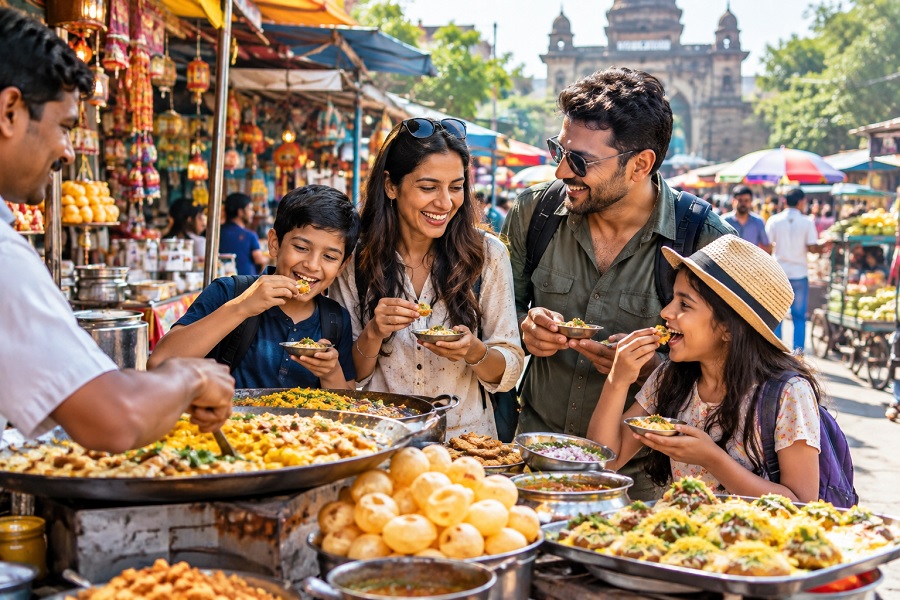
Food walks allow visitors to explore neighborhoods while tasting several local dishes. They can combine food with stories about architecture, markets, communities, and historical landmarks.
2. Local Market Tours
Markets offer an opportunity to discover regional vegetables, fruits, spices, grains, sweets, snacks, seafood, and other ingredients.
Travelers can learn how local residents shop, cook, and select seasonal products.
3. Cooking Classes
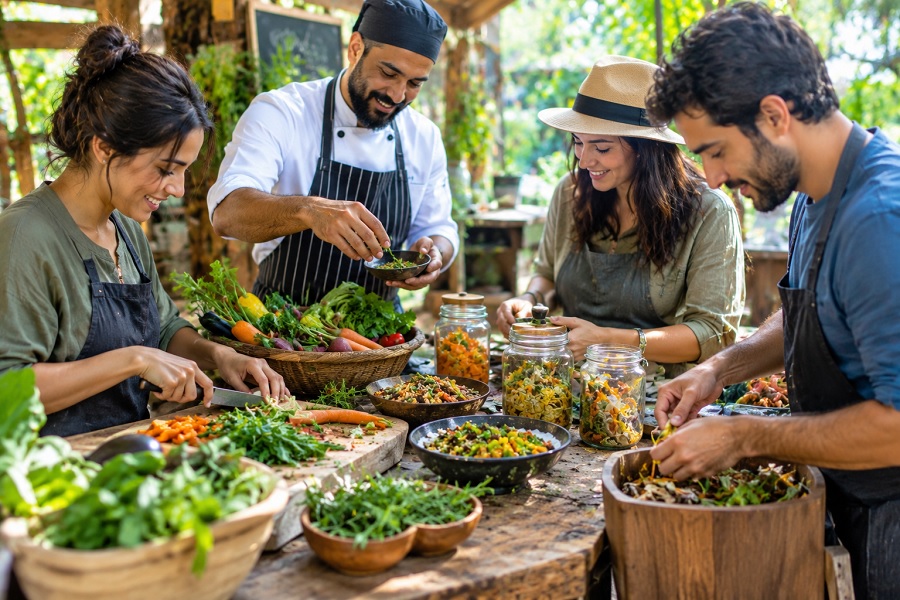
Cooking classes provide a hands-on cultural experience. Visitors can learn traditional recipes directly from local cooks or chefs.
A cooking class may include:
Ingredient selection
Traditional preparation
Spice blending
Cooking techniques
Local food history
Shared meals
4. Village Food Experiences
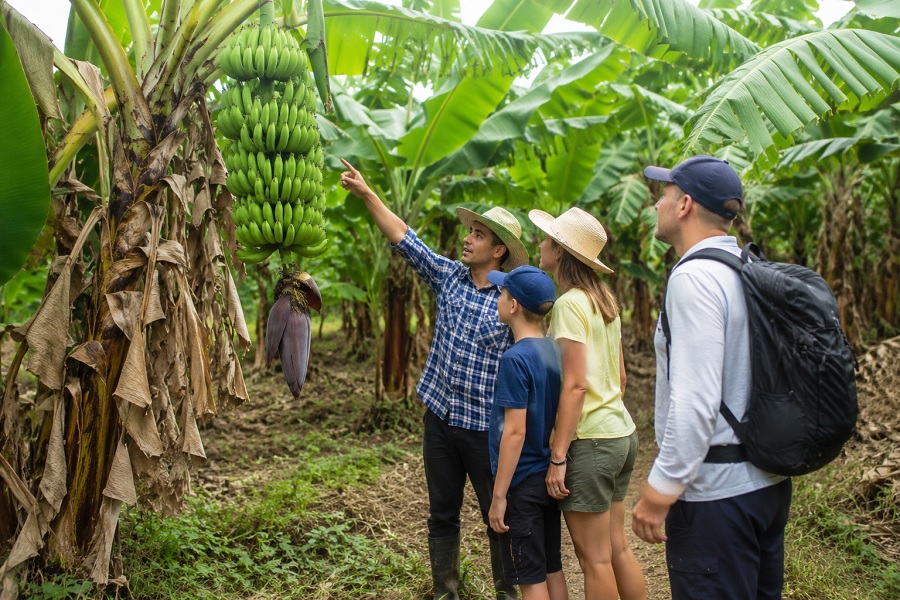
Rural food tourism allows travelers to experience traditional food preparation in villages and agricultural communities.
Visitors may participate in farming, harvesting, cooking, or eating traditional meals with local families and community hosts.
5. Food Festivals
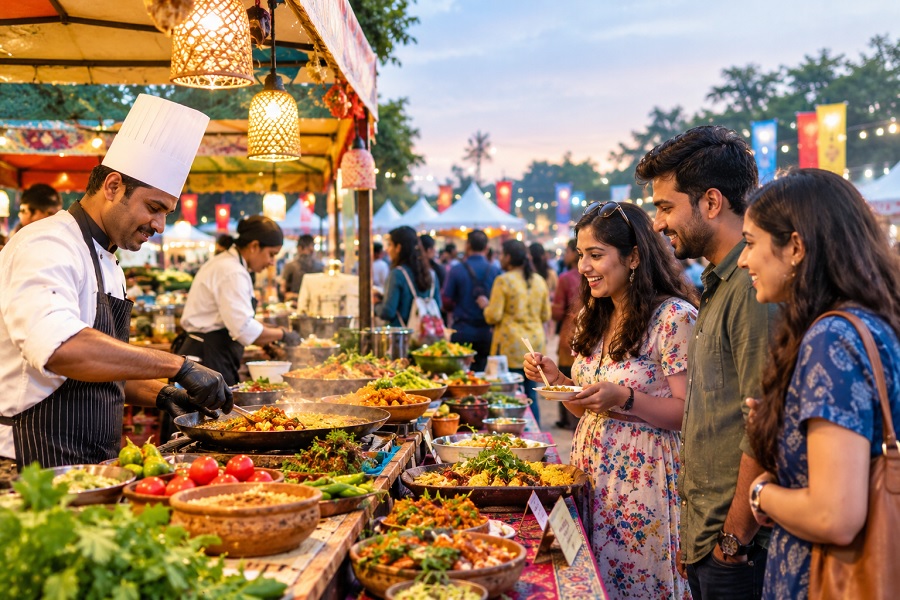
Food festivals bring together cuisine, music, crafts, performances, traditions, and community celebrations.
For example, India's 2026 Monsoon Food & Culture Festival in the Andaman and Nicobar Islands combined traditional cuisine, seafood, agricultural produce, handicrafts, folk music, and cultural performances.
Exploring Indian Culture Through Food Tourism
India is particularly suitable for cultural food tourism because every region has distinctive culinary traditions.
Rajasthan
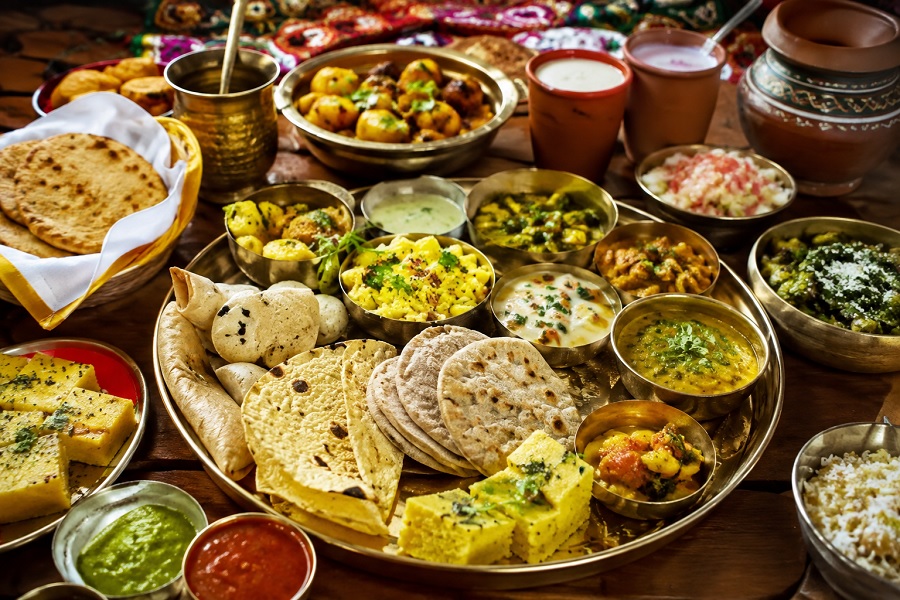
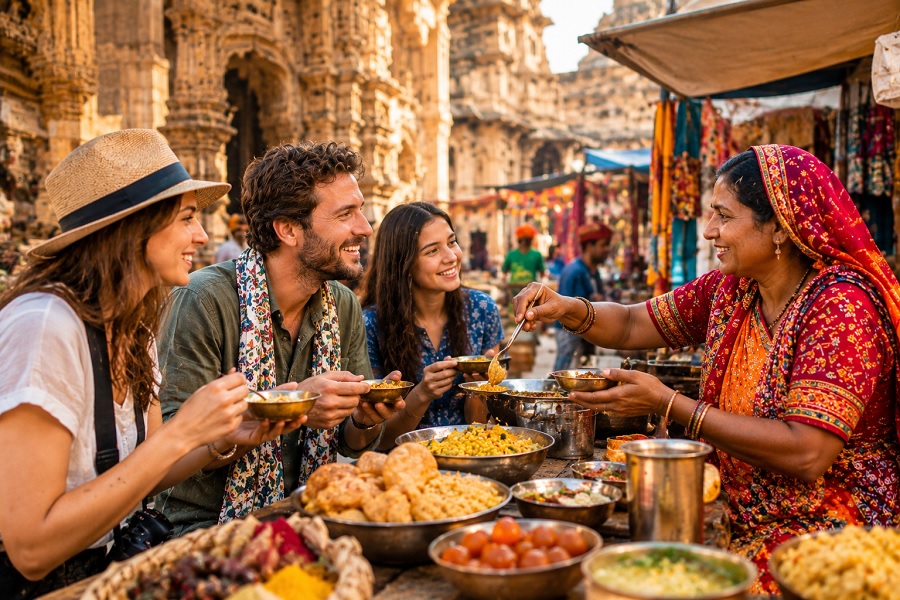
Travelers can explore dishes such as dal baati churma, gatte ki sabzi, ker sangri, and traditional sweets while learning about desert lifestyles and Rajasthani hospitality.
Maharashtra
Maharashtrian food tourism can include regional dishes, snacks, sweets, traditional beverages, and local market experiences.
Recent research on Pune's food walks highlighted how traditional food, local stories, heritage, and tourism can come together to create immersive visitor experiences.
Kerala
Kerala offers opportunities to explore traditional vegetarian meals, seafood, coconut-based cuisine, spices, tea, and plantation-related food experiences.
Goa
Goan culinary tourism can introduce travelers to coastal food traditions, seafood, local spices, traditional sweets, and Portuguese-influenced culinary heritage.
Punjab
Punjab offers food experiences centered around traditional breads, dairy products, vegetables, tandoor cooking, and community-style meals.
Bengal
Bengali food tourism can introduce travelers to regional fish preparations, rice dishes, sweets, festive cuisine, and traditional cooking practices.
Northeast India
The Northeast offers highly distinctive ingredients, cooking techniques, fermented foods, rice-based dishes, herbs, and community food traditions.
Food, Heritage and Storytelling
One of the most valuable aspects of food tourism is storytelling.
A local guide, chef, farmer, artisan, or family member can explain:
Where a recipe originated
Why particular ingredients are used
How a dish is traditionally prepared
When the food is served
How recipes have changed
What the dish means to the community
This transforms a simple meal into a cultural experience.
Recent research has also found that authenticity and food-related sensory experiences can influence tourists' destination preferences and travel intentions.
Traditional Recipes as Cultural Heritage
Traditional recipes can preserve knowledge about a community's past.
A recipe may reflect:
Local agriculture
Climate
Available ingredients
Historical trade
Religious practices
Family traditions
Seasonal celebrations
For this reason, documenting traditional recipes and supporting the people who continue to prepare them can be an important part of responsible food tourism.
Farm-to-Table Cultural Experiences
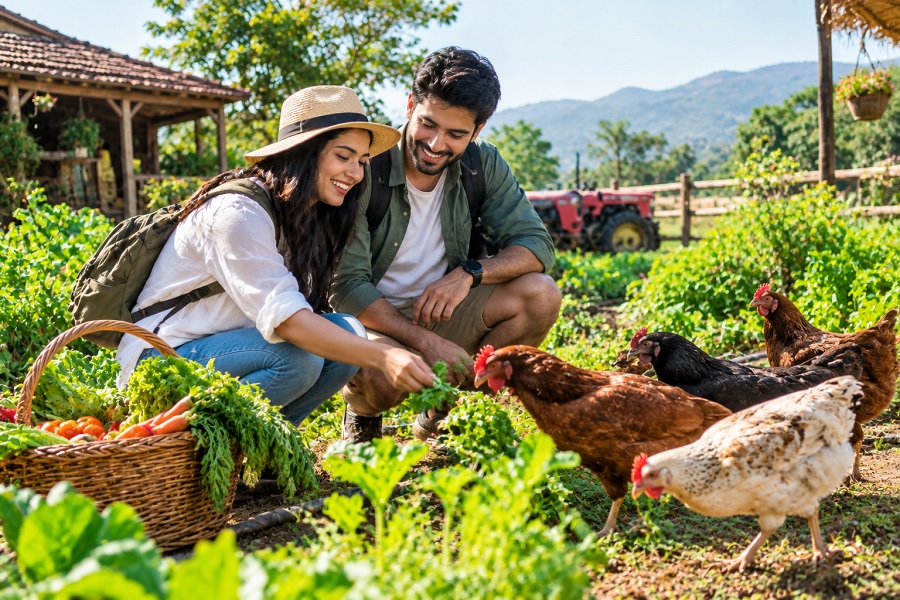
Farm-to-table tourism connects travelers with the agricultural side of cuisine.
Visitors may:
Visit a farm.
Learn about local crops.
Meet farmers.
Harvest seasonal produce.
Learn traditional preparation methods.
Cook with local ingredients.
Enjoy a freshly prepared meal.
This type of experience helps travelers understand the relationship between agriculture, food, and local culture.
Food Tourism and Cultural Festivals
Festivals provide an excellent opportunity to experience food within its cultural context.
A destination's food festival may combine:
Traditional cuisine
Local music
Dance
Handicrafts
Cultural performances
Agricultural products
Cooking demonstrations
Local businesses
Community celebrations
The 2026 International Cities of Gastronomy Fest in Macao brought together UNESCO Creative Cities of Gastronomy and other cultural participants to explore foodways, cultural exchange, creativity, and sustainable urban development.
The Role of Authenticity
Authenticity is becoming increasingly important in cultural food tourism.
Travelers often want to experience food that reflects the destination rather than standardized dishes designed exclusively for tourists.
Authentic experiences can include:
Family-run restaurants
Traditional food stalls
Local markets
Community kitchens
Heritage recipes
Regional ingredients
Local cooking methods
Seasonal foods
However, authenticity should not mean rejecting innovation. Destinations can preserve traditional food heritage while allowing chefs and local businesses to introduce responsible modern interpretations.
Food Tourism and Local Communities
Food tourism can create opportunities for local communities by supporting:
Farmers
Fishermen
Food producers
Street vendors
Restaurants
Home cooks
Bakers
Artisans
Local guides
Small tourism businesses
When visitors spend money with locally owned businesses, more of the tourism value can remain within the destination.
The 2026 Andaman food and culture festival, for example, specifically highlighted support for local entrepreneurs and street-food vendors as part of its tourism objectives.
Sustainable Food Tourism
Responsible food tourism should consider environmental and social impacts.
Travelers can support sustainability by choosing:
Seasonal ingredients
Local restaurants
Small producers
Regional food products
Low-waste food experiences
Community-based tours
Responsible seafood
Sustainable farms
Tourism businesses can reduce food waste, use local suppliers, minimize unnecessary packaging, and communicate the origin of ingredients.
Food Tourism for Solo Travelers
Solo travelers can use food experiences as a way to meet people and discover local culture.
Useful experiences include:
Guided food walks
Cooking classes
Market tours
Café-hopping tours
Street-food experiences
Food festivals
Community dining
These activities can provide both culinary discovery and opportunities for cultural interaction.
Food Tourism for Families
Families can make food tourism educational and entertaining.
Children can learn about:
Fruits and vegetables
Spices
Farming
Traditional cooking
Local festivals
Regional recipes
Food history
Farm visits and cooking workshops can be particularly engaging because they allow children to participate rather than simply observe.
Food Tourism for Couples
Couples can explore a destination through:
Romantic local restaurants
Sunset food experiences
Traditional cooking classes
Vineyard or plantation visits
Dessert tours
Night food markets
Regional tasting menus
These experiences can create memorable travel moments while introducing couples to local traditions.
Food Tourism and Destination Branding
Food can become an important part of a destination's identity.
A destination known for distinctive cuisine can attract visitors specifically interested in experiencing its food culture.
Research published in 2026 indicates that culinary heritage experiences can contribute to destination brand engagement by strengthening perceptions of cultural uniqueness and identity.
This makes food tourism useful not only for travelers but also for destination marketing organizations and local tourism businesses.
Technology and Food Tourism
Technology is changing how travelers discover food destinations.
Travelers increasingly use:
Online reviews
Food blogs
Social media
Digital maps
Short-form videos
Restaurant apps
Online cooking classes
AI-assisted travel planning
However, digital discovery should be combined with local knowledge. Local guides, chefs, farmers, and residents can provide cultural context that online platforms cannot always capture.
Gastro-Nostalgia and Cultural Exploration
Food can also trigger memories and emotions.
A familiar dish may remind travelers of childhood meals, family gatherings, festivals, or their cultural background.
A 2026 study on culinary tourism found that food quality, preparation, presentation, and authenticity can influence gastro-nostalgia, which in turn can contribute to revisit and recommendation intentions.
This emotional connection makes food particularly powerful as a cultural tourism experience.
How to Plan a Food-Culture Travel Experience
Travelers can create a meaningful culinary itinerary by following these steps:
Step 1: Research the destination's traditional cuisine.
Step 2: Identify local markets and food neighborhoods.
Step 3: Find authentic local restaurants and community-run experiences.
Step 4: Include a cooking class or food walk.
Step 5: Visit a farm, plantation, bakery, or local producer.
Step 6: Check for seasonal food festivals.
Step 7: Talk with local residents and food producers.
Step 8: Try regional specialties instead of only familiar dishes.
Step 9: Respect local dining customs.
Step 10: Support small and locally owned food businesses.
Tips for Responsible Food Travelers
Respect local food traditions.
Ask before photographing people or kitchens.
Avoid wasting food.
Support local businesses.
Follow food-safety recommendations.
Be open to unfamiliar flavors.
Learn a few local food-related words.
Respect religious and cultural dietary practices.
Choose responsible tourism operators.
Avoid treating traditional communities simply as tourist attractions.
Future of Food Tourism for Cultural Exploration
Food tourism is moving toward deeper cultural engagement rather than simple restaurant visits.
Future experiences are likely to emphasize:
Culinary heritage
Local storytelling
Community participation
Traditional recipes
Farm experiences
Food festivals
Sustainable gastronomy
Hands-on cooking
Authentic regional cuisine
Cultural exchange
The 2026 global food-tourism research landscape is placing particular attention on culinary heritage and the people and producers who keep food traditions alive.
Conclusion
Food Tourism for Cultural Exploration offers travelers a delicious and meaningful way to understand destinations. Local cuisine can reveal stories about history, agriculture, migration, festivals, family traditions, craftsmanship, and community identity.
From a street-food walk in an old neighborhood to a cooking class in a village, a farm visit, a traditional market, or a regional food festival, culinary experiences can transform ordinary travel into cultural discovery.
As travelers increasingly seek authentic and memorable experiences, food is likely to remain one of the strongest connections between people, place, culture, and tourism.