Temple Food Tourism India
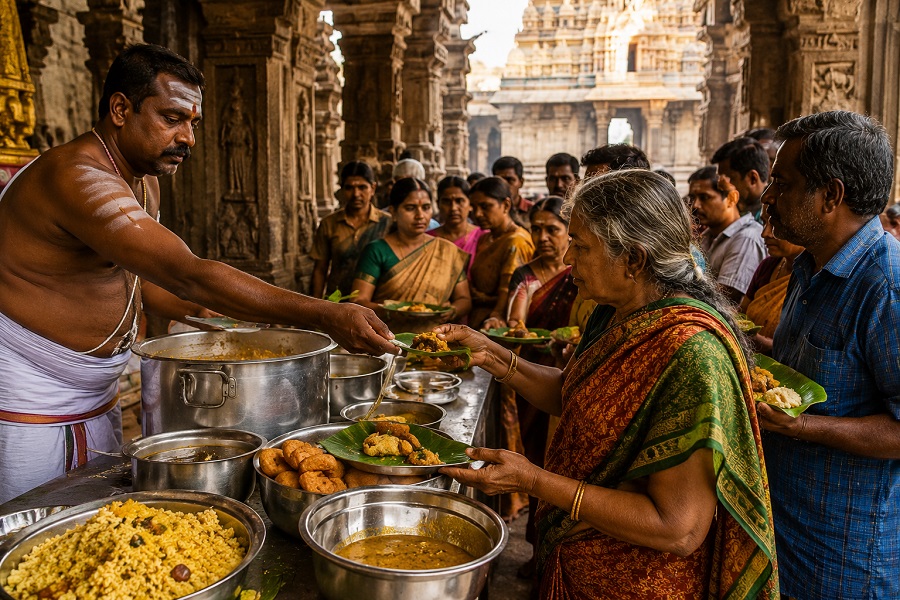
Temple Food Tourism in India: A Sacred Culinary Journey
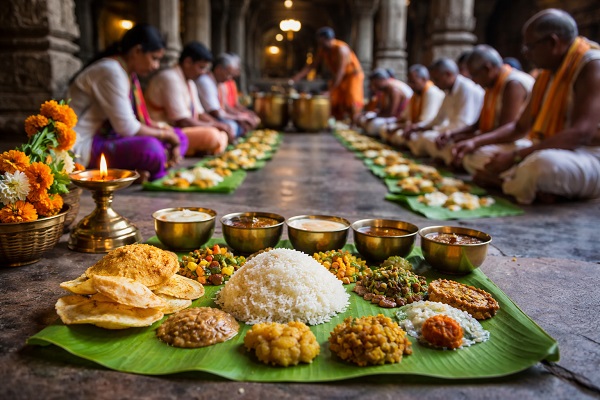
India’s temple food tourism is a unique blend of spirituality, tradition, and regional cuisine. Known as prasadam, temple food is not just nourishment but a sacred offering prepared for deities and then shared with devotees as a blessing. Across India, this practice has evolved into a powerful cultural attraction that draws millions of pilgrims and food lovers every year.
From simple rice-based offerings in South India to elaborate multi-dish feasts in the east, temple food reflects India’s deep diversity. Each temple kitchen follows strict rituals of purity, often avoiding onion, garlic, and processed ingredients, focusing instead on sattvic cooking methods that emphasize balance and devotion.
In places like the Jagannath Temple in Puri, the famous Mahaprasad is cooked in earthen pots over wood-fired ovens and offered in massive quantities as part of a centuries-old tradition. In the south, the Tirumala Venkateswara Temple is globally known for its iconic laddus, prepared under strict quality control and distributed to millions of devotees daily. In Kerala, temple offerings like pal payasam and aravana payasam highlight how local ingredients are transformed into sacred dishes.
Temple food tourism is not only about taste; it is about experience. Pilgrims often travel long distances not just for darshan but also to receive prasadam, which is believed to carry divine blessings. Many temples also run annadanam (free food service), feeding thousands daily and reinforcing the idea of equality and service.
In recent years, this tradition has gained attention from travelers and food enthusiasts. Culinary tours, pilgrimage circuits, and cultural tourism initiatives now highlight temple kitchens as living heritage sites. These sacred kitchens are among the oldest continuous food systems in the world, preserving ancient recipes and cooking methods.
Temple food tourism in India ultimately represents a powerful intersection of faith, culture, sustainability, and community bonding.