Kerala Food Tourism: Discover Authentic Coastal Flavours and Traditional Vegetarian Cuisine
Kerala Food Tourism: Exploring Coastal Cuisine and Traditional Vegetarian Dishes
Introduction
Kerala food tourism offers travellers an opportunity to explore the rich culinary traditions, coastal flavours, and diverse vegetarian dishes of God's Own Country. Located along India's southwestern coast, Kerala is famous for its coconut-based curries, fresh seafood, aromatic spices, traditional rice dishes, and delicious vegetarian meals served on banana leaves.
Food tourism in Kerala goes beyond eating at restaurants. It allows visitors to discover local markets, traditional kitchens, spice plantations, village food experiences, and regional cooking methods that have been passed down through generations. From the famous Kerala Sadya to crispy banana chips and soft appam, the state's cuisine provides a memorable experience for food lovers.
Whether travellers prefer traditional vegetarian food, coastal specialities, or authentic home-cooked meals, Kerala offers a wide variety of culinary experiences for families, couples, and international visitors.
What Is Kerala Food Tourism?
Kerala food tourism involves exploring the state's traditional dishes, regional ingredients, culinary heritage, and local food culture. Travellers can visit restaurants, family-run eateries, village kitchens, spice gardens, and local markets to understand how Kerala's food traditions developed.
The state's location along the Arabian Sea, fertile landscapes, and tropical climate have influenced its cuisine. Rice, coconut, curry leaves, black pepper, cardamom, ginger, and other spices are commonly used in many regional dishes.
Kerala's culinary traditions also vary by district and community, giving visitors opportunities to discover different flavours during their journey.
Famous Coastal Cuisine of Kerala
1. Kerala Fish Curry
Kerala fish curry is one of the state's best-known coastal dishes. It is commonly prepared with fish, spices, curry leaves, and ingredients such as tamarind or kudampuli, a souring fruit used in some regional recipes.
The flavour and preparation method vary across Kerala. Some versions are spicy and tangy, while others use coconut milk for a milder, creamier taste.
2. Karimeen Pollichathu
Karimeen pollichathu is a traditional Kerala preparation featuring pearl spot fish marinated with spices, wrapped in a banana leaf, and cooked until flavourful.
It is associated particularly with the backwater regions of Kerala, including areas around Alappuzha and Kumarakom. Travellers interested in coastal cuisine can often find it on menus at regional restaurants.
3. Prawn Roast
Kerala-style prawn roast combines prawns with onions, tomatoes, curry leaves, and aromatic spices. Depending on the recipe, coconut oil and other regional ingredients contribute to its distinctive flavour.
It is popular in many coastal restaurants and is often served with rice, appam, or other local accompaniments.
4. Kerala Crab Curry
Crab curry is another coastal speciality found in parts of Kerala. Recipes may use coconut milk, roasted spices, curry leaves, and regional seasoning.
The taste varies between locations and households, making it an interesting dish for travellers who enjoy discovering local culinary differences.
5. Coconut-Based Seafood Dishes
Coconut is a defining ingredient in many Kerala recipes. Grated coconut, coconut milk, and coconut oil contribute to the flavour of several coastal dishes.
Seafood preparations vary according to the availability of local fish and shellfish, seasonal conditions, and family traditions.
Traditional Vegetarian Dishes of Kerala
1. Kerala Sadya
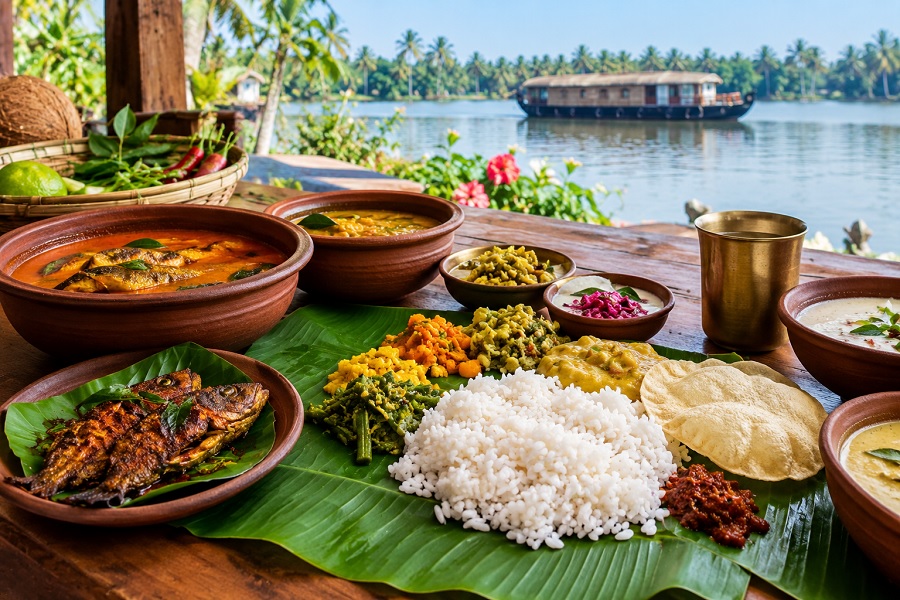
Kerala Sadya is a traditional vegetarian feast usually served on a banana leaf. It is especially associated with festivals, weddings, and special occasions.
A Sadya may include rice, sambar, parippu, avial, thoran, olan, pachadi, kichadi, pickles, papad, and different preparations of payasam. The exact menu varies according to the occasion and local tradition.
Experiencing a traditional Sadya is one of the best ways to understand Kerala's vegetarian culinary heritage.
2. Avial
Avial is a traditional mixed-vegetable dish prepared with coconut, curry leaves, and a seasoning that commonly includes coconut oil. Vegetables vary by recipe and season.
It is an important part of many Kerala Sadya meals and is valued for its combination of vegetables and coconut-based flavour.
3. Olan
Olan is a mild vegetarian preparation often made with ash gourd, cowpeas, and coconut milk. Its gentle flavour provides a contrast to the spicier dishes served in a traditional Sadya.
4. Thoran
Thoran is a dry vegetable preparation made with finely chopped vegetables, grated coconut, mustard seeds, and curry leaves. Cabbage, beans, carrots, and other vegetables may be used.
It is commonly served with rice and forms part of everyday home cooking in Kerala.
5. Kerala Sambar
Kerala sambar is a lentil-based vegetable curry prepared with spices and tamarind. Regional recipes may differ in their use of roasted spices and coconut.
It is often served with rice, idli, dosa, or a traditional vegetarian meal.
6. Puttu and Kadala Curry
Puttu is a steamed preparation made with rice flour and coconut, traditionally shaped in a cylindrical mould. Kadala curry is a black chickpea curry commonly served alongside it.
This combination is a popular breakfast choice in Kerala and offers travellers a taste of everyday local food culture.
7. Appam and Vegetable Stew
Appam is a soft, fermented rice pancake with a light centre and delicate edges. It is often served with vegetable stew prepared with coconut milk, vegetables, and mild spices.
This combination is particularly appealing to visitors who prefer a gentle, coconut-rich vegetarian meal.
8. Kerala Vegetable Pulao and Rice Dishes
Rice is a staple in Kerala cuisine. Travellers can discover several rice preparations, including vegetable pulao, lemon rice variations, and regional meals served with seasonal vegetable curries.
Traditional rice varieties and preparation styles differ across the state, adding diversity to the food tourism experience.
Famous Food Tourism Destinations in Kerala
1. Kochi
Kochi is an excellent starting point for a culinary journey through Kerala. Visitors can explore local markets, traditional eateries, cafés, and restaurants serving regional vegetarian and coastal dishes.
The city's historic trading connections have also influenced its diverse food culture.
2. Alappuzha
Alappuzha is known for its backwaters, houseboat experiences, and local cuisine. Travellers can combine scenic waterways with traditional meals and regional coastal specialities.
Visitors should select responsible houseboat operators and confirm food options before booking.
3. Kumarakom
Kumarakom offers lakeside experiences, village visits, and opportunities to explore regional cuisine around Vembanad Lake. Local restaurants and resorts may feature traditional vegetarian meals and seafood dishes.
4. Kozhikode
Kozhikode, also known as Calicut, is famous for its distinctive Malabar food traditions. Travellers can explore local eateries, traditional snacks, and regional desserts while learning about the area's historic trading heritage.
5. Thiruvananthapuram
Kerala's capital offers opportunities to discover traditional vegetarian restaurants, local markets, South Indian breakfasts, and regional sweets.
Visitors can combine culinary experiences with cultural attractions and heritage sightseeing.
6. Wayanad
Wayanad offers a different food tourism experience through its green landscapes, spice cultivation, plantations, and local food traditions. Visitors can explore regional ingredients and enjoy meals prepared with locally available produce.
Kerala's Traditional Snacks and Desserts
Kerala's food culture also includes a wide range of snacks and sweets that travellers can discover at bakeries, local markets, and traditional eateries.
Banana chips: Thin slices of banana fried until crisp, traditionally often prepared using coconut oil.
Unniyappam: Small sweet fritters generally made with rice, jaggery, banana, and other ingredients depending on the recipe.
Ada: A traditional preparation made with rice dough and a sweet filling, often involving coconut and jaggery, wrapped in a leaf and cooked.
Pazham pori: Ripe banana slices coated in batter and fried until golden.
Palada payasam: A traditional milk-based dessert prepared with rice ada and sugar.
Parippu payasam: A sweet dish made with lentils and commonly jaggery and coconut milk.
Ela ada: A leaf-wrapped preparation with a rice-based covering and sweet coconut filling.
These dishes offer visitors a delicious introduction to Kerala's home-style cooking and festive food traditions.
Spice Tourism and Local Food Markets
Kerala's culinary identity is closely linked to its spice-growing heritage. Black pepper, cardamom, cinnamon, cloves, ginger, and turmeric feature in many local dishes.
Travellers can explore spice markets and, where visits are available, spice plantations to learn about cultivation, harvesting, drying, and the role of spices in regional cuisine.
Local markets also provide opportunities to discover fresh vegetables, coconuts, bananas, rice varieties, and traditional snacks. Purchasing products from responsible local businesses can help support farmers, artisans, and small traders.
Best Time for Kerala Food Tourism
Kerala can be visited throughout the year, although weather conditions influence travel comfort and outdoor activities.
The cooler months, generally from October to March, are often preferred for sightseeing and culinary trips. The monsoon season can offer lush landscapes and a different regional atmosphere, but heavy rainfall may affect travel plans and access to some destinations.
Food experiences are available throughout the year, while specific dishes and ingredients may vary by season. Travellers should check local weather conditions and confirm restaurant or plantation tour timings before visiting.
Benefits of Kerala Food Tourism
1. Preserving Culinary Heritage
Food tourism helps introduce traditional recipes, cooking methods, and regional ingredients to new audiences.
2. Supporting Local Communities
Visits to family-run restaurants, local markets, spice farms, and homestays can create income opportunities for small businesses and local producers.
3. Promoting Cultural Exchange
Food allows travellers to understand Kerala's traditions, celebrations, hospitality, and regional diversity.
4. Encouraging Local Agriculture
Interest in traditional ingredients can support local farmers and encourage appreciation for seasonal produce.
5. Creating Memorable Travel Experiences
Cooking demonstrations, traditional meals, food walks, and market visits allow visitors to experience a destination beyond its famous tourist attractions.
Tips for Planning a Kerala Food Tour
Research regional specialities before selecting destinations.
Try a traditional Sadya at a reputable restaurant or during a suitable local event.
Ask about ingredients if you have food allergies or dietary restrictions.
Check whether a restaurant's vegetarian dishes are prepared separately from meat or seafood if strict vegetarian practices are important to you.
Choose hygienic eateries and drink safe water.
Visit spice markets and plantations that offer responsible, educational experiences.
Support local restaurants, home cooks, and small food businesses.
Confirm food availability and prices before booking a guided tour or homestay.
Respect local customs when visiting homes, religious sites, or community kitchens.
Future of Kerala Food Tourism
Kerala food tourism has strong potential to grow through culinary trails, vegetarian food experiences, village-based tourism, spice plantation visits, and cooking classes.
Digital travel platforms can help visitors discover regional dishes, compare food experiences, and find local guides. At the same time, responsible tourism practices can help protect culinary heritage and support small businesses.
Experiences that combine traditional cooking, local sourcing, cultural storytelling, and environmental awareness can make Kerala an appealing destination for travellers interested in authentic food and sustainable travel.
Conclusion
Kerala food tourism offers an exciting journey through coastal cuisine, traditional vegetarian dishes, regional snacks, and aromatic spices. From enjoying a banana-leaf Sadya to discovering seafood specialities along the coast, visitors can experience the rich diversity of Kerala's culinary traditions.
Destinations such as Kochi, Alappuzha, Kumarakom, Kozhikode, and Wayanad provide different ways to explore local food culture. By choosing hygienic eateries, supporting local producers, and respecting regional traditions, travellers can enjoy memorable culinary experiences while contributing to sustainable tourism.
For food lovers, Kerala is more than a holiday destination. It is a place where food, culture, agriculture, and hospitality come together to create a truly distinctive travel experience.










Top News
India?s economic catch-up over past decade worth celebrating: Top Economist