Essential Travel Apps for a Smooth and Stress-Free Solo Journey
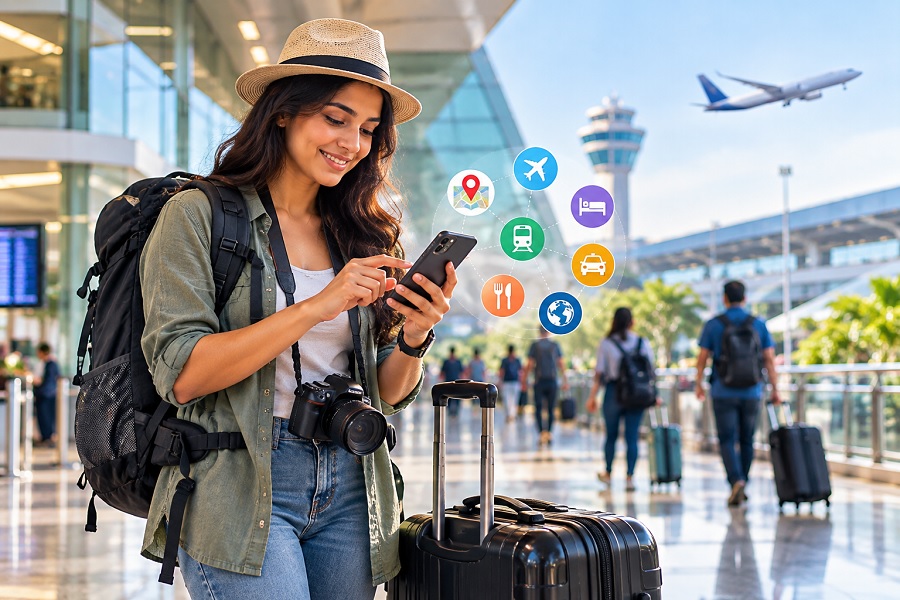
Smart Travel Apps Every Solo Traveler Should Use
Introduction
Solo travel offers freedom and flexibility, but traveling alone also means handling navigation, bookings, transportation, communication, money, and trip planning independently. The right travel apps can make these tasks easier and help solo travelers stay organized throughout a journey.
From offline maps and translation tools to itinerary organizers, currency converters, hiking apps, and communication platforms, smartphones can act as a compact travel toolkit. The key is to install important apps before departure and prepare offline information in case mobile data or Wi-Fi is unavailable.
1. Google Maps for Navigation
Google Maps is one of the most useful apps for solo travelers because it helps with directions, places, restaurants, attractions, transportation information, and saved locations. It also supports offline maps in supported regions.
Travelers can download the map of their destination before leaving home. When offline, Google Maps can still provide driving navigation when the complete route is covered by the downloaded area, although offline public-transport, cycling, and walking directions are not available.
Solo travelers should download important areas such as the airport, hotel neighborhood, city center, and planned day-trip locations before their journey.
2. TripIt for Organizing Travel Plans
TripIt can bring flight, hotel, transportation, restaurant, and activity information together in one itinerary. Travelers can forward confirmation emails to TripIt, which can then organize the information into a single travel schedule.
The app also supports document storage, calendar synchronization, trip sharing, airport maps, nearby places, and offline access to travel plans. Some advanced features, including real-time flight alerts and additional travel guidance, are part of TripIt Pro.
For solo travelers, sharing an itinerary with family or friends can also make it easier for someone at home to know the planned schedule.
3. Google Translate for Communication
Language barriers can make solo travel more complicated, particularly when visiting places where travelers do not speak the local language.
Google Translate can translate text, handwriting, photos, and speech across a large range of languages. Travelers can also download supported languages for offline translation before leaving an area with reliable internet access.
The camera translation feature can be particularly useful for reading menus, signs, instructions, and basic travel information.
4. XE for Currency Conversion
A currency-conversion app can help solo travelers understand prices and manage spending when visiting another country.
XE provides currency conversion, live exchange-rate information, rate alerts, and international money-transfer services.
Even when using a bank card, a currency converter can help travelers understand hotel prices, transportation costs, shopping expenses, and restaurant bills in their own currency.
5. Rome2Rio for Transportation Planning
Rome2Rio is useful when a journey involves several transportation methods. The service can show options for getting between destinations, helping travelers compare combinations such as trains, buses, flights, ferries, and other forms of transport.
In September 2026, Rome2Rio introduced a Trip Planner that lets users save journeys and create itineraries across multiple locations. Its Trip Planner is currently available through desktop and mobile web browsers rather than its smartphone apps.
This can be especially useful for solo travelers planning multi-city trips.
6. AllTrails for Hiking and Nature Trips
Solo travelers who enjoy hiking, walking trails, or outdoor adventures can use AllTrails to research routes and prepare for areas with limited connectivity.
AllTrails Plus and Peak members can download maps for offline use and navigate using the phone's GPS without a data signal. In 2026, AllTrails also added the ability to download custom geographic areas for offline use.
The app can therefore be useful for travelers visiting national parks, mountain destinations, forests, and other nature-focused locations.
7. Hotel and Accommodation Apps
Hotel-booking apps allow solo travelers to compare accommodation options, locations, room types, facilities, cancellation conditions, and guest reviews.
Before booking, travelers should pay attention to practical details such as:
Distance from public transportation
24-hour reception
Check-in and check-out times
Neighborhood location
Wi-Fi availability
Luggage storage
Airport transfer options
Recent guest reviews
For solo trips, location and ease of access can be just as important as room price.
8. Airline Apps
Installing the official airline app can help travelers manage flight-related information from their phones. Depending on the airline, the app may provide mobile check-in, boarding passes, flight-status updates, baggage information, and notifications.
Solo travelers should enter their booking information and check notification permissions before departure so that important updates are not missed.
9. Public Transportation Apps
Local transport apps can be highly useful in large cities. Depending on the destination, travelers may be able to check metro routes, buses, trains, arrival information, tickets, or service disruptions.
Having the official local transport app installed before arriving can reduce dependence on finding a ticket office or asking for directions after reaching a busy station.
10. Messaging and Location-Sharing Apps
Communication apps can provide an easy way to stay connected with family, friends, hotels, tour operators, and local contacts.
Solo travelers can use messaging services to share arrival information, hotel details, meeting locations, or changes to their plans. Location-sharing features can also be useful when meeting someone in an unfamiliar destination.
Travelers should avoid sharing live location publicly and instead share sensitive travel information only with trusted people.
11. Weather Apps
Weather can significantly affect solo travel plans, particularly for outdoor activities, hiking, road trips, and beach holidays.
A weather app can help travelers monitor temperature, rainfall, wind, and severe-weather alerts. Checking the forecast each morning can make it easier to decide whether to continue with an outdoor activity or change the day's plans.
12. Travel Expense and Budget Apps
Managing a budget is important when traveling alone because the traveler is responsible for all expenses.
Expense-tracking apps can be used to record:
Accommodation
Transport
Food
Attractions
Shopping
Local transfers
Activities
Emergency expenses
Keeping a daily record can help travelers understand how much they are spending and avoid unpleasant surprises near the end of the trip.
13. Digital Wallet and Banking Apps
Banking and digital-wallet apps can make it easier to monitor transactions while traveling. Travelers can review purchases, check balances, receive payment notifications, and manage cards from their phones.
Before an international trip, it is useful to confirm that cards are enabled for overseas use and that the bank has current contact details.
A backup payment method should also be kept separately from the primary card.
14. Cloud Storage Apps
Cloud storage can provide a digital backup for important travel documents.
Solo travelers can store copies of:
Passport
Visa documents
Travel insurance
Hotel reservations
Flight confirmations
Emergency contact details
Driving permits
Important medical or prescription information where appropriate
Sensitive documents should be protected with strong account security, and travelers should understand the privacy settings of the service they use.
15. Translation, Maps and Documents Should Work Offline
One of the biggest mistakes solo travelers can make is relying entirely on mobile internet.
Before departure, travelers should download:
Offline city maps
Translation languages
Hotel addresses
Travel confirmations
Important phone numbers
Transport information
Hiking maps where relevant
TripIt supports offline access to stored travel plans, while Google Maps and supported versions of Google Translate provide offline functionality that can be prepared ahead of time.
16. Use Apps Without Overdependence
Travel apps are useful tools, but they should not become the only source of information.
Solo travelers should also keep essential details available in another form, particularly:
Hotel address
Emergency contacts
Flight information
Passport details
Travel insurance information
Local transportation information
A screenshot, downloaded document, or offline note can be useful when a phone loses connectivity or battery power.
17. Keep Your Phone Travel-Ready
Before leaving for a trip, travelers should update important apps, install operating-system updates, charge their devices, and make sure there is enough storage for offline maps and documents.
A portable power bank can be useful during long sightseeing days, particularly when using GPS navigation for several hours.
It is also worth checking roaming, local SIM, eSIM, or Wi-Fi options before departure.
18. Smart App Strategy for First-Time Solo Travelers
First-time solo travelers do not need dozens of apps. A small collection covering the most important tasks can be more useful than filling the phone with multiple overlapping services.
A practical setup can include:
Navigation: Google Maps
Itinerary: TripIt
Language: Google Translate
Currency: XE
Transport planning: Rome2Rio
Outdoor navigation: AllTrails
Accommodation: a trusted hotel-booking app
Communication: a messaging app
Payments: official banking and digital-wallet apps
Weather: a reliable weather app
The exact combination can vary according to destination and travel style.
Tips for Using Travel Apps Safely
Travel apps often contain personal information, booking details, location data, or payment information. Solo travelers should therefore use sensible digital-security practices.
Use strong passwords and two-factor authentication where available. Avoid logging into sensitive accounts on unknown public computers. Be careful when connecting to unfamiliar Wi-Fi networks, and keep device-lock protection enabled.
Travelers should also verify important information with the airline, hotel, transport provider, or official government source when a change could affect their journey.
Conclusion
Smart travel apps can make solo travel more organized, flexible, and manageable. Navigation apps can help travelers find their way, itinerary apps can organize reservations, translation tools can reduce language barriers, currency apps can simplify international spending, and offline services can provide backup when connectivity is limited.
The most effective approach is to prepare before departure rather than downloading apps only after reaching the destination. With essential maps, documents, translations, bookings, contacts, and payment tools ready in advance, solo travelers can focus more on exploring and enjoying their journey.