Temple Festival Tourism: Exploring India’s Sacred Celebrations and Cultural Traditions
Temple Festival Tourism in India: Exploring Faith, Culture and Living Traditions
Temple Festival Tourism is an important part of India's cultural and spiritual tourism landscape. Across the country, temples become vibrant centres of devotion, music, dance, traditional arts, processions, food and community celebrations during annual festivals. These events allow travellers to experience India's living traditions while exploring historic temples and the communities surrounding them.
India's Ministry of Tourism describes festivals and fairs as major attractions for experiencing the country's regional traditions, while its Utsav platform showcases festivals, events and live darshan across India's states and union territories.
What Is Temple Festival Tourism?
Temple Festival Tourism refers to travelling to a destination specifically to experience festivals and celebrations associated with temples and religious traditions.
These experiences can include:
Temple rituals and ceremonies
Religious processions
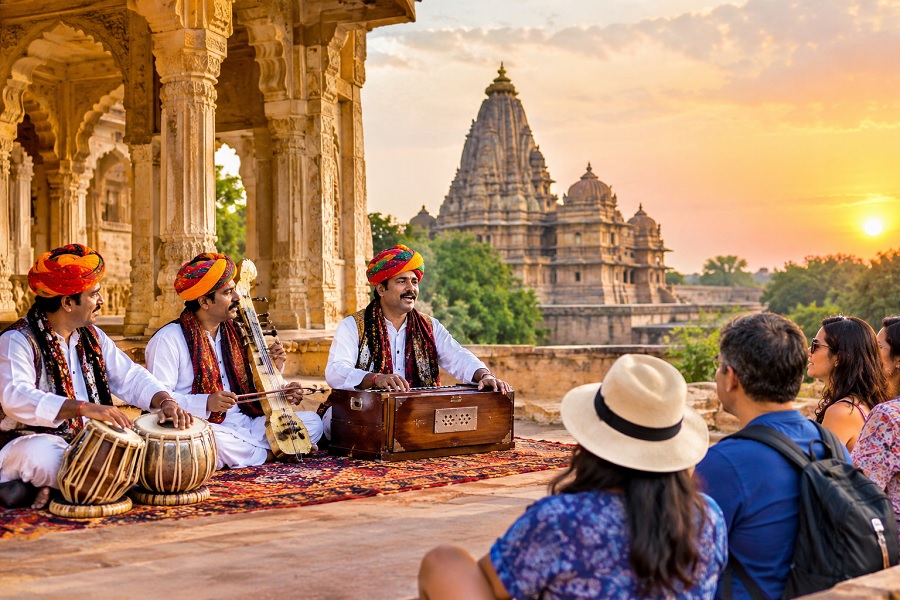
Traditional music and devotional performances
Classical and folk dance
Temple decorations
Traditional arts and crafts
Local food and festive cuisine
Cultural performances
Pilgrimage experiences
Heritage sightseeing
Local markets and fairs
The experience varies considerably between regions because India's temple traditions are closely connected with local history, languages, architecture, customs and community life.
India's Rich Temple Festival Heritage
India has thousands of temples representing different architectural styles and regional traditions. The Ministry of Culture notes that the Archaeological Survey of India safeguards more than 3,600 protected monuments, forts and temples, giving travellers opportunities to explore India's architectural and spiritual heritage.
Several important temple and religious heritage traditions are also connected with India's internationally recognized cultural heritage. UNESCO's Intangible Cultural Heritage list includes traditions such as Kumbh Mela, Durga Puja in Kolkata, Ramlila, Ramman and Mudiyettu.
This demonstrates how festivals can preserve not only religious practices but also music, performance, storytelling, craftsmanship and community knowledge.
Popular Temple Festival Experiences
1. Thrissur Pooram
Kerala's Thrissur Pooram is famous for its grand processions, traditional percussion performances and elaborate ceremonial displays. It provides visitors with an opportunity to experience Kerala's distinctive festival culture.
2. Rath Yatra
The Rath Yatra tradition associated with Jagannath in Odisha is one of India's best-known religious processions. The festival combines devotion, elaborate chariots and large-scale community participation.
3. Mahashivratri Celebrations
Temples dedicated to Lord Shiva become major pilgrimage centres during Mahashivratri. Visitors can experience prayers, devotional music, temple decorations and special ceremonies.
4. Janmashtami Temple Celebrations
Krishna temples across India celebrate Janmashtami with devotional singing, decorations, performances and religious ceremonies. Mathura and Vrindavan are particularly associated with Krishna-related cultural traditions.
5. Navratri Temple Celebrations
Navratri brings together religious ceremonies, music, dance and community celebrations across many parts of India. Different regions have developed their own distinctive forms of celebration.
6. Temple Festivals of Tamil Nadu
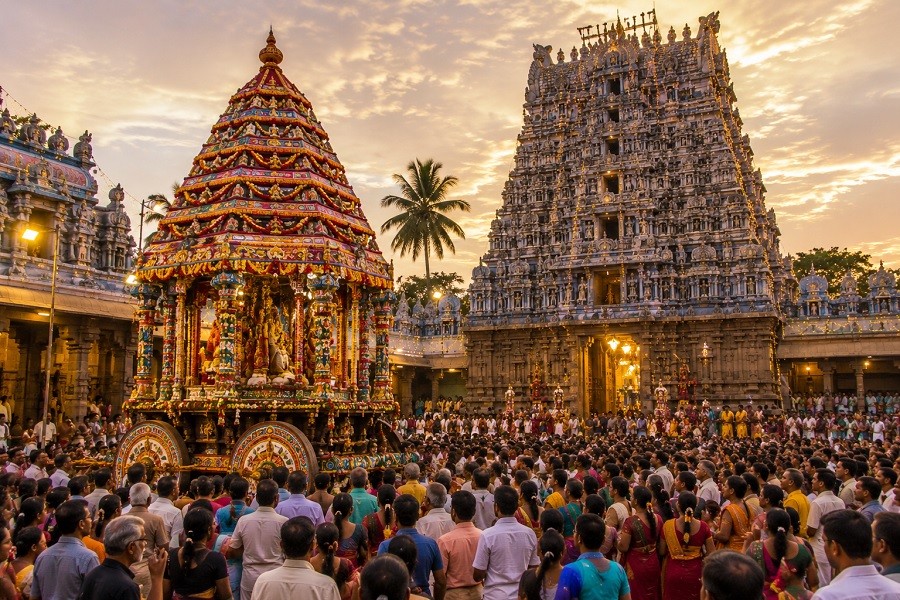
Tamil Nadu has a rich tradition of temple festivals featuring processions, chariot festivals, classical arts, traditional music and elaborate temple rituals. The state's temple heritage is also connected with major historical monuments such as the Great Living Chola Temples, which are UNESCO World Heritage sites.
Temple Architecture and Festival Tourism
Temple festivals provide an opportunity to experience architecture in a different context. Historic temples can become especially visually impressive when decorated with flowers, lamps, traditional fabrics and ceremonial objects.
India's UNESCO-listed temple heritage includes the Great Living Chola Temples, Mahabalipuram, Pattadakal, Ramappa Temple and the Sacred Ensembles of the Hoysalas.
Visitors interested in architecture can combine festival attendance with heritage walks, museum visits and exploration of historic neighbourhoods.
Traditional Music and Dance
Music and dance are important components of many Indian temple festivals.
Depending on the destination, visitors may encounter:
Classical music
Devotional singing
Traditional percussion
Folk dance
Ritual theatre
Processional performances
Storytelling traditions
These performances make temple festivals valuable cultural tourism experiences because visitors can see traditions being practiced within their original community settings.
Local Food and Temple Festivals
Food is another important part of temple festival tourism. Festival periods can bring special sweets, snacks, vegetarian meals and regional dishes.
Travellers may discover:
Temple prasadam
Traditional festive meals
Regional sweets
Seasonal dishes
Local snacks
Community feasts
Traditional beverages
Food experiences can add another dimension to a temple festival journey while supporting local restaurants, vendors and small businesses.
Temple Festivals and Local Communities
Temple festivals are often deeply connected with local communities. Residents may participate in organizing processions, preparing food, creating decorations, performing music, maintaining traditional crafts and welcoming visitors.
This community participation makes temple festivals different from conventional tourist attractions. Travellers are often observing a living tradition rather than a performance created exclusively for tourists.
Economic Benefits of Temple Festival Tourism
Well-managed religious and cultural tourism can create economic opportunities for destinations.
Visitors can contribute to:
Hotels and homestays
Restaurants
Local transport providers
Guides
Handicraft sellers
Traditional artisans
Food vendors
Cultural performers
Local tourism businesses
The Government of India has also supported the development of spiritual tourism infrastructure. The Ministry of Tourism states that its Swadesh Darshan programme has included thematic circuits such as Spiritual, Buddhist, Krishna, Ramayana and Tirthankar circuits, while the revamped Swadesh Darshan 2.0 focuses on sustainable and responsible tourism destinations.
Temple Festival Tourism and Heritage Preservation
Tourism can help increase awareness of India's cultural heritage, but responsible management is essential. Large crowds can place pressure on historic buildings, roads, waste-management systems and local communities.
A successful temple festival destination should focus on:
Heritage conservation
Crowd management
Cleanliness
Waste reduction
Safe pedestrian movement
Emergency services
Responsible photography
Protection of religious traditions
Respect for local customs
Recent incidents involving a temple gathering in Bihar have also highlighted the importance of crowd management and safety planning at major religious events.
Responsible Temple Festival Travel
Visitors should remember that temples and festivals are primarily places of worship and community life.
Travellers should:
Follow temple dress codes.
Respect photography restrictions.
Follow instructions from temple authorities.
Avoid blocking processions.
Keep public areas clean.
Avoid disturbing religious ceremonies.
Respect local customs.
Use designated visitor areas.
Be considerate of elderly pilgrims and families.
Support local businesses responsibly.
Best Way to Plan a Temple Festival Trip
Planning ahead can make the experience much more comfortable.
Before travelling, research:
Festival dates
Temple opening hours
Entry arrangements
Accommodation availability
Local transportation
Weather conditions
Crowd levels
Dress requirements
Photography rules
Local attractions
Emergency facilities
The Ministry of Tourism's Utsav platform can also help travellers discover festivals, events and live darshan opportunities across India.
Temple Festival Photography
Temple festivals can offer excellent opportunities for cultural photography. Colourful decorations, architecture, traditional clothing, processions and artistic performances create distinctive visual experiences.
However, photographers should always follow local rules and ask for permission when photographing individuals in situations where consent is appropriate.
Photography should never interfere with religious ceremonies or obstruct devotees.
Combining Temple Festivals With Other Tourism
A temple festival can be the centrepiece of a broader itinerary.
Travellers can combine festival visits with:
Heritage tourism
Food tourism
Rural tourism
Nature tourism
Photography tours
Local craft experiences
Museum visits
Cultural walks
Wellness experiences
For example, a temple festival trip can include a heritage walk during the day, local cuisine in the afternoon and festival activities in the evening.
The Future of Temple Festival Tourism
India's growing focus on spiritual and heritage tourism is creating new opportunities for temple destinations. Recent tourism initiatives are increasingly presenting spirituality, culture, heritage and experiences together rather than treating pilgrimage as a standalone activity. Delhi's 2026 Spiritual and Heritage Tourism Conclave, for example, promoted new tourism circuits focused on spirituality, heritage and visitor experiences.
Digital platforms can also make it easier for travellers to discover festival dates, cultural events and live darshan opportunities before planning their trips.
The future of temple festival tourism will depend on balancing visitor access with cultural authenticity, community participation, safety and heritage conservation.
Conclusion
Temple Festival Tourism offers travellers an opportunity to experience India's spirituality, architecture, food, music, dance and community traditions in a single journey. From grand processions and temple rituals to traditional performances and regional cuisine, these festivals provide a deeper understanding of India's diverse cultural heritage.
The most rewarding temple festival experiences are those where travellers approach the destination with curiosity and respect. By supporting local communities, following cultural guidelines and protecting historic and religious spaces, visitors can enjoy meaningful journeys while contributing to the preservation of India's living traditions.