History Behind Braj Ki Holi Celebrations
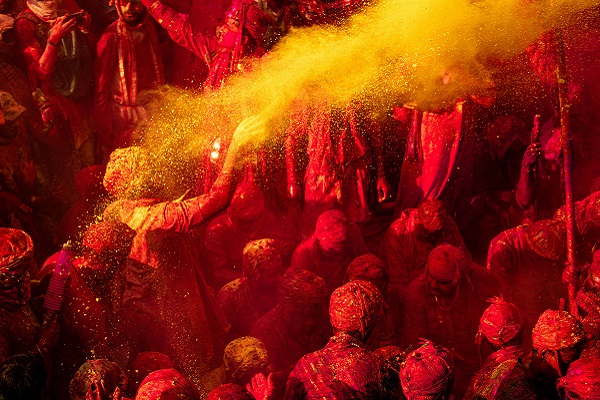
Braj Ki Holi, celebrated in the Braj region of Uttar Pradesh, is unlike any other Holi festival in India. Its roots trace back to ancient Hindu mythology and the divine love of Lord Krishna and Radha. Braj, encompassing towns like Vrindavan, Mathura, Barsana, and Nandgaon, is considered the playground of Lord Krishna, where his childhood and youthful exploits unfolded.
The festival symbolizes the playful pranks, devotion, and eternal love shared between Krishna and Radha. According to legends, Krishna, known for his mischievous nature, would playfully smear colors on Radha and the gopis (cowherd girls) of Braj. These divine tales have inspired centuries of vibrant Holi celebrations in the region.
Braj Ki Holi is unique for its variety and enthusiasm. In Barsana, the famous Lathmar Holi sees women playfully hitting men with sticks while the men defend themselves, reenacting Krishna and Radha’s playful interactions. In Vrindavan and Mathura, processions, singing of bhajans, and smearing of colors carry a deeply devotional undertone. Traditional musical instruments like the dhol, nagada, and kartal create an electrifying atmosphere, enhancing the festive spirit.
The celebration spans over more than a week in some towns, incorporating rituals, performances, and local traditions. Each village has its own way of honoring the legacy of Krishna, making Braj Ki Holi a blend of devotion, art, culture, and joy. Visitors from across the globe come to experience the energy, colors, and unique customs that make this Holi festival truly extraordinary.
In essence, Braj Ki Holi is not just a festival of colors; it is a living tradition that connects devotees with mythology, love, and community spirit. Celebrating it is to relive the stories of Krishna’s playful pastimes and witness the cultural heritage of Braj in its full glory.