Exploring India's Rich Heritage Through Traditional Woodcarving Tourism
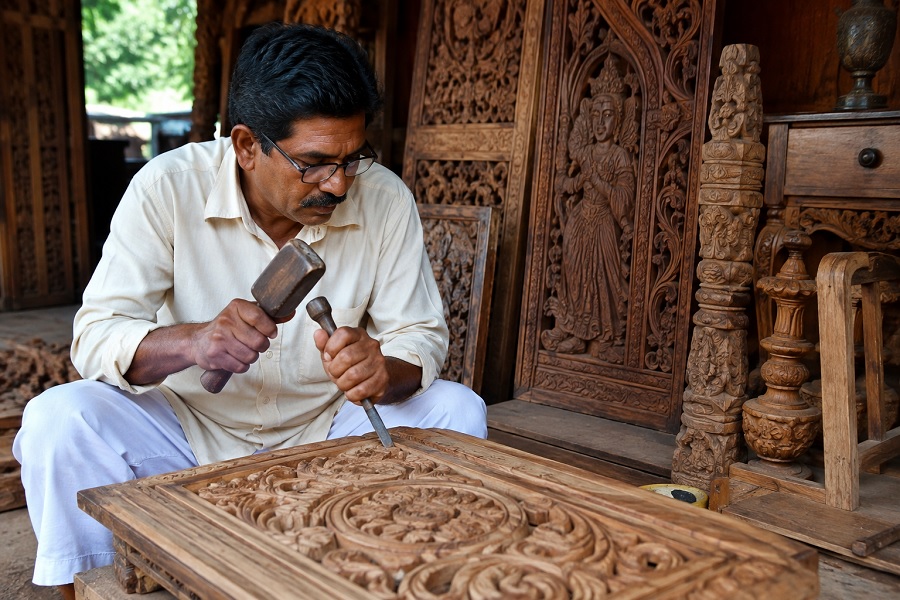
Traditional Woodcarving Tourism in India: Exploring Craft, Culture and Living Heritage
Traditional Woodcarving Tourism in India offers travelers an opportunity to experience one of the country's most detailed and culturally rich craft traditions. From intricately carved temple doors and architectural panels to furniture, decorative objects, toys, masks, and religious figures, Indian woodcarving reflects centuries of artistic knowledge passed from one generation to another.
India's official handicrafts portal classifies wood carving as a major woodcraft category, with traditions including Kashmir Walnut Wood Carving, Arumbavur Wood Carvings, Banaras Wood Carving, Uttarakhand Likhai, and Pethapur wooden block making.
What Is Traditional Woodcarving Tourism?
Traditional Woodcarving Tourism is a cultural travel experience centered around visiting artisan communities, workshops, craft villages, markets, museums, and heritage sites associated with woodcraft.
Travelers can watch artisans select and prepare wood, draw patterns, use chisels and mallets, carve detailed motifs, polish finished pieces, and explain the cultural meaning behind their work.
This type of tourism combines:
Craft tourism
Cultural tourism
Heritage tourism
Rural tourism
Community tourism
Art tourism
Photography tourism
Educational travel
Responsible shopping
Why Indian Woodcarving Is Special
Indian woodcarving varies significantly from one region to another. Designs, materials, tools, techniques, and motifs often reflect local culture and architecture.
Traditional Indian wood carving has long been associated with temple architecture, doors, pillars, ceilings, furniture, decorative panels, religious objects, and household items. Commonly used woods include teak, rosewood, sandalwood, and other regionally available varieties.
Motifs may include flowers, animals, birds, mythological figures, geometric patterns, folk scenes, and elements of everyday life.
Major Woodcarving Experiences for Travelers
1. Artisan Workshop Visits
Visiting a working artisan workshop is one of the most engaging ways to experience traditional woodcarving.
Travelers can observe artisans using traditional hand tools and learn how a simple piece of wood gradually becomes a detailed artistic object.
In Banaras, for example, visitors can experience woodcarving in the historic lanes around Dashashwamedh Ghat and Kashi Vishwanath Temple. Incredible India describes the craft as a labor-intensive process involving cutting, chiseling, carving, and polishing.
2. Woodcarving Demonstrations
Live demonstrations allow visitors to understand the patience and precision required to create carved objects.
A demonstration may include:
Selecting the wood
Preparing the surface
Drawing the design
Cutting the basic shape
Chiseling details
Creating depth and texture
Smoothing the surface
Polishing or finishing the object
3. Traditional Architecture Tours
Architecture-focused travelers can explore buildings featuring carved doors, pillars, beams, ceilings, balconies, and wall panels.
Himachal Pradesh, for example, is known for finely carved wooden elements in temples and traditional buildings, including pillars, wall panels, roof ceilings, beams, and doors.
4. Craft Village Tourism
Craft villages provide an opportunity to meet several artisans in one destination and understand how craft traditions contribute to local economies.
Visitors can combine workshop visits with local food, village walks, cultural performances, and shopping.
5. Hands-On Woodcarving Workshops
Some cultural tourism experiences can include supervised workshops where visitors learn basic carving techniques.
These activities are particularly attractive for families, students, artists, photographers, and travelers looking for interactive experiences.
6. Traditional Woodcraft Markets
Craft markets allow travelers to discover carved furniture, decorative panels, toys, utensils, religious objects, masks, boxes, and other handmade products.
Government tourism resources highlight Shilparamam in Hyderabad as a craft-focused destination where visitors can encounter wood carving alongside numerous other Indian handicrafts.
Important Woodcarving Destinations and Traditions
India has many regional woodcraft traditions.
Kashmir
Kashmir is renowned for walnut wood carving, recognized as one of India's distinctive woodcraft traditions. The craft features detailed ornamental patterns and is associated with furniture and decorative objects.
Uttar Pradesh
Banaras wood carving combines intricate craftsmanship with themes inspired by mythology, animals, birds, and rural life. The craft has developed into a distinctive part of the city's living cultural heritage.
Himachal Pradesh
Traditional wooden architecture in Himachal Pradesh showcases carved temples and houses featuring detailed wooden elements. Important areas include Chamba, Kullu, Karsog, Sarahan, and Kinnaur.
Odisha
Kalahandi has a distinctive woodcraft tradition combining folk and classical influences. India's National Portal describes the area's woodcarving as having a long history and notes the use of locally available teak.
Tamil Nadu
Wooden handicrafts in Tamil Nadu include decorative panels, carved shrines, figurines, household objects, and other artistic pieces.
Karnataka and Other Regions
Indian government handicraft resources also document wooden artware traditions from Karnataka, Rajasthan, Uttar Pradesh, Kashmir, Bastar, Arunachal Pradesh, Maharashtra, Uttarakhand, and other regions.
Traditional Woodcarving and Local Communities
Woodcarving tourism can provide opportunities for artisans to earn income directly from their skills.
The Development Commissioner (Handicrafts), Ministry of Textiles, maintains artisan and craft initiatives designed to support India's handicraft sector, including training, marketing, craft clusters, events, and artisan-focused programmes.
When tourists purchase directly from artisans or participate in responsible craft experiences, tourism can contribute to preserving traditional skills and supporting local livelihoods.
Sustainable Woodcarving Tourism
Sustainability is an important consideration for wood-based crafts.
Responsible tourism should encourage:
Appropriate sourcing of wood
Avoidance of illegally harvested timber
Use of suitable locally available materials
Efficient use of raw materials
Preservation of traditional skills
Support for local artisans
Reduced packaging waste
Responsible craft purchasing
Travelers should ask sellers about the origin and materials of products when purchasing larger wooden objects.
Responsible Travel Tips
Visitors exploring woodcarving destinations should:
Ask before photographing artisans.
Respect workshop safety rules.
Avoid interrupting artisans while they work.
Purchase directly from legitimate craft sellers.
Ask about the materials used.
Avoid products made from questionable or protected materials.
Support genuine handmade products.
Respect local cultural traditions.
Avoid bargaining excessively with individual artisans.
Choose reusable packaging where possible.
Follow photography rules at heritage sites.
Never touch fragile architectural carvings without permission.
Learn the story behind the craft.
Consider attending a demonstration or workshop.
Share information about the craft to encourage responsible tourism.
Woodcarving Tourism for Families
Woodcarving experiences can be educational for families. Children can see how raw materials are transformed into artistic objects and learn about traditional tools, patience, creativity, and cultural heritage.
Interactive demonstrations and supervised craft workshops can make the experience especially memorable.
Woodcarving Tourism for Solo Travelers
Solo travelers can explore craft markets, artisan workshops, heritage neighborhoods, and museums at their own pace.
Photography-focused solo travelers can also document the tools, textures, patterns, workshops, and finished pieces while respecting the privacy and preferences of artisans.
Woodcarving Tourism for Art Lovers
Art enthusiasts can explore the relationship between carving, sculpture, architecture, mythology, religion, and everyday life.
Comparing regional styles can reveal how geography and cultural traditions influence motifs and techniques.
The Future of Traditional Woodcarving Tourism
Digital platforms are making it easier for travelers to discover artisans, craft clusters, workshops, exhibitions, and cultural experiences.
India's official handicrafts ecosystem now includes digital artisan discovery and databases, while government-supported initiatives continue to promote craft clusters and artisan development.
Future woodcarving tourism can combine traditional workshops with digital storytelling, craft trails, heritage walks, interactive demonstrations, responsible shopping, and community-based tourism.
Conclusion
Traditional Woodcarving Tourism in India provides a meaningful way to explore the country's artistic heritage while meeting the artisans who keep these traditions alive.
From the detailed woodwork of Himalayan temples and homes to Banaras carving, Kalahandi craft, Kashmir walnut carving, and traditional wooden artware across different states, each regional tradition tells a unique story.
For travelers, these experiences offer more than souvenirs. They provide a closer understanding of craftsmanship, culture, architecture, community life, and India's living heritage.
With responsible tourism, ethical purchasing, sustainable material practices, and stronger support for artisan communities, Traditional Woodcarving Tourism can help ensure that these valuable skills continue to inspire future generations.