Best Winter Wildlife Photography Tours for Nature and Adventure Lovers
Winter Wildlife Photography Tours: Capturing Wildlife in Snowy Landscapes
Introduction
Winter Wildlife Photography Tours offer travelers a unique opportunity to observe and photograph animals against dramatic snowy landscapes. From snow-covered forests and frozen lakes to mountain valleys and icy coastlines, winter creates a completely different environment for wildlife photography.
These tours combine wildlife tourism, outdoor adventure, nature photography, and seasonal travel. They are ideal for photographers, nature enthusiasts, families, and travelers looking for memorable experiences away from traditional sightseeing.
What Are Winter Wildlife Photography Tours?
Winter Wildlife Photography Tours are guided or self-planned trips designed around observing wildlife during the colder months. Depending on the destination, travelers may photograph animals such as deer, elk, foxes, wolves, moose, bears in suitable locations, mountain goats, birds, seals, and other winter-adapted species.
Professional guides can help visitors understand animal behavior, locate suitable viewing areas, and follow wildlife-safety regulations while photographers concentrate on capturing high-quality images.
Why Winter Is Special for Wildlife Photography
Winter provides several photography advantages:
Snow creates clean and dramatic backgrounds.
Lower winter sunlight can produce beautiful lighting.
Animal tracks are easier to identify in fresh snow.
Some wildlife becomes easier to spot against white landscapes.
Frozen lakes and snow-covered forests create striking compositions.
Winter conditions can reveal interesting animal behavior.
Fewer tourists may be present in some destinations.
The season also encourages photographers to experiment with contrast, silhouettes, reflections, footprints, and environmental portraits.
Best Wildlife for Winter Photography
1. Deer and Elk
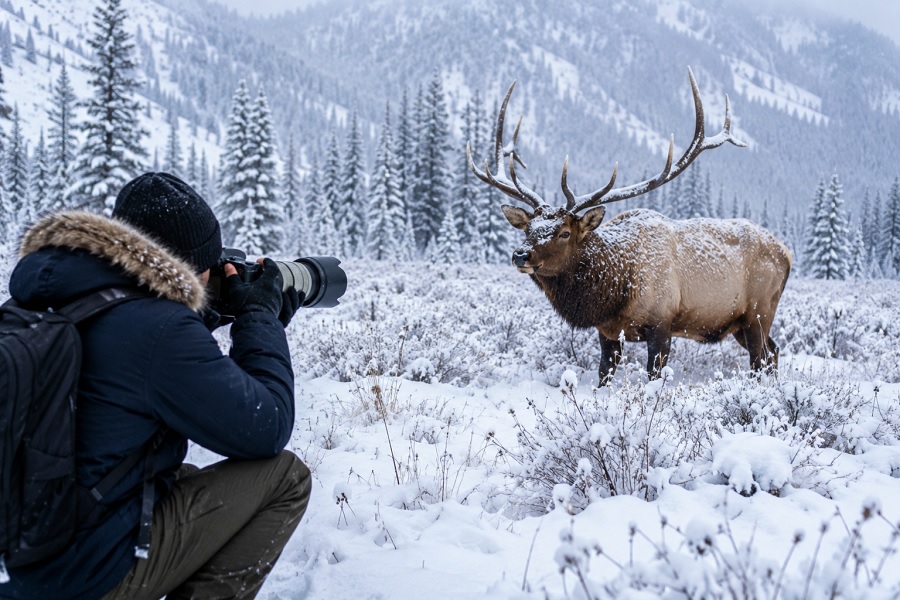
Deer and elk are popular subjects in winter destinations. Their movement through snowy forests and open meadows can create excellent environmental photographs.
2. Red Foxes
Red foxes provide strong visual contrast against snow. Their movement, hunting behavior, and interaction with winter landscapes can produce memorable images.
3. Wolves
Wolf photography requires patience and careful planning. Guided wildlife tours can provide opportunities to photograph wolves from safe distances while minimizing disturbance.
4. Moose
Moose are impressive winter subjects, especially when surrounded by snow-covered forests and mountain scenery.
5. Winter Birds
Bird photography becomes particularly interesting during winter. Depending on the destination, photographers may encounter owls, eagles, hawks, waterfowl, woodpeckers, and other species.
6. Mountain Wildlife
Mountain destinations can provide opportunities to photograph mountain goats, bighorn sheep, ibex, and other cold-weather species.
7. Arctic and Coastal Wildlife
In colder regions, travelers may encounter seals, seabirds, polar species, and other wildlife adapted to icy environments. These destinations require additional preparation because of extreme weather.
Popular Destinations for Winter Wildlife Photography
Yellowstone National Park, USA
Yellowstone offers dramatic winter scenery and opportunities to photograph bison, elk, wolves, foxes, and other wildlife. Snow-covered landscapes can transform the park into an extraordinary photography environment.
Grand Teton National Park, USA
Grand Teton combines mountain scenery with winter wildlife photography opportunities. The combination of snow-covered peaks and wildlife creates excellent landscape-and-animal compositions.
Rocky Mountain National Park, USA
Colorado's Rocky Mountain region offers winter photography opportunities involving elk, moose, bighorn sheep, and mountain landscapes.
Alaska, USA
Alaska provides spectacular winter scenery and opportunities for photographing wildlife in expansive wilderness environments.
Scandinavia
Countries such as Norway, Sweden, and Finland are popular for winter wildlife experiences, including reindeer, Arctic wildlife, and winter bird photography.
Canada
Canada offers diverse winter wildlife destinations featuring moose, elk, wolves, foxes, birds, and other species.
Japan
Northern Japan provides distinctive winter photography opportunities, including wildlife and snowy landscapes around Hokkaido.
Essential Photography Equipment
A successful winter wildlife photography trip benefits from appropriate equipment.
Camera
A weather-sealed mirrorless or DSLR camera can be useful in cold and snowy conditions.
Telephoto Lens
A telephoto lens allows photographers to capture animals without approaching them too closely.
Wide-Angle Lens
A wide-angle lens is useful for environmental wildlife images that show animals within their surrounding landscape.
Extra Batteries
Cold temperatures can reduce battery performance. Carrying spare batteries is highly recommended.
Memory Cards
Bring sufficient memory cards because wildlife photography can involve shooting many frames during brief moments of activity.
Tripod or Monopod
A tripod or monopod can provide additional stability when using long lenses.
Camera Protection
Rain covers and protective equipment can help shield cameras from snow, moisture, and changing weather conditions.
Winter Clothing for Photography Tours
Photographers often spend long periods outdoors waiting for wildlife, so clothing is just as important as camera equipment.
Recommended items include:
Thermal base layers
Insulated jackets
Waterproof outer layers
Warm gloves
Winter boots
Wool or thermal socks
Warm hats
Neck protection
Hand warmers
Snow or waterproof trousers
Comfortable clothing allows photographers to remain outdoors longer without becoming distracted by cold conditions.
Wildlife Photography Techniques
Use the Environment
Instead of photographing only close-up portraits, include snow, mountains, forests, rivers, or frozen lakes to tell a broader story.
Capture Animal Behavior
Photographs showing movement, feeding, interaction, walking, hunting, or communication can be more compelling than static portraits.
Use Fast Shutter Speeds
Wildlife can move suddenly, so a fast shutter speed can help freeze action.
Watch the Light
Winter sunlight can create soft and atmospheric conditions. Early morning and late afternoon often provide attractive natural light.
Look for Tracks
Animal tracks in snow can provide clues about where wildlife has recently traveled.
Experiment With Composition
Use leading lines, negative space, reflections, silhouettes, and natural framing to create more interesting photographs.
Wildlife Safety and Responsible Tourism
Wildlife photography should always prioritize the well-being of animals.
Travelers should:
Maintain a safe distance.
Never chase or corner wildlife.
Never feed wild animals.
Avoid disturbing nesting or resting animals.
Follow park and local regulations.
Use designated viewing areas when available.
Keep noise levels low.
Follow instructions from professional guides.
Avoid blocking animal movement.
Respect seasonal closures and protected habitats.
The best wildlife photograph is one that does not negatively affect the animal.
Best Time for Winter Wildlife Photography
The ideal period depends on the destination. In many northern regions, winter photography opportunities are strongest from December through March, while some destinations may have snow and winter wildlife conditions earlier or later.
Early mornings can be particularly rewarding because wildlife may be active and fresh snow can provide clean photographic backgrounds.
Family-Friendly Winter Wildlife Photography
Winter wildlife tours can also be adapted for families. Shorter excursions, wildlife observation centers, guided nature walks, and scenic drives can provide children with opportunities to learn about animals and conservation.
Parents should choose activities based on children's age, weather conditions, walking ability, and tolerance for cold temperatures.
Benefits of Winter Wildlife Photography Tours
Winter wildlife photography travel offers several benefits:
Encourages outdoor exploration
Supports nature tourism
Develops photography skills
Provides educational wildlife experiences
Creates opportunities for unique travel memories
Encourages appreciation of conservation
Connects travelers with seasonal landscapes
Supports local guides and tourism businesses
Tips for Planning a Winter Wildlife Photography Tour
Research the destination's winter conditions.
Check wildlife-viewing regulations.
Book experienced guides when appropriate.
Carry extra batteries and memory cards.
Dress in layers.
Protect camera equipment from snow and moisture.
Avoid approaching wildlife for a better photograph.
Check road and trail conditions before traveling.
Allow plenty of time for unexpected wildlife sightings.
Keep safety and conservation ahead of photography.
Future of Winter Wildlife Photography Tourism
Winter wildlife photography is becoming an increasingly attractive form of experiential tourism. Travelers are looking for meaningful outdoor activities rather than simply visiting popular attractions.
The combination of wildlife observation, photography, conservation education, and dramatic winter scenery can make these tours particularly appealing to international travelers and adventure photographers.
Destinations that provide responsible wildlife experiences, knowledgeable guides, conservation programs, and sustainable visitor management are well positioned to benefit from this growing tourism interest.
Conclusion
Winter Wildlife Photography Tours combine adventure, nature, photography, and seasonal travel into one memorable experience. Snow-covered landscapes provide dramatic backgrounds while winter wildlife offers photographers opportunities to capture behavior, movement, and environmental portraits.
Whether exploring a national park, mountain region, Arctic landscape, forest, or frozen lakeside environment, travelers can enjoy an unforgettable photography experience while learning about wildlife and conservation.
The key is to photograph responsibly, respect wildlife, prepare carefully for cold conditions, and allow nature to determine the experience.