Zinc trading range for the day is 355.1-372.9 - Kedia Advisory

Gold
Gold prices settled higher by 0.54% at 159401 as investors monitored potential progress in resolving the Iran conflict. Market sentiment improved after reports suggested the United States may ease sanctions on Iranian oil exports, while Iran could agree to a long-term freeze on its nuclear program. However, gains remained limited as stronger U.S. inflation data continued to support the dollar and Treasury yields, reducing expectations for Federal Reserve rate cuts this year and even reviving speculation of a possible rate hike before year-end. Support for bullion remained firm due to continued strong central bank buying. Goldman Sachs revised its estimate of central bank gold purchases higher to around 60 tonnes per month through 2026, citing persistent diversification demand amid geopolitical uncertainty. JPMorgan lowered its 2026 average gold price forecast to $5,243 per ounce from $5,708 but maintained a longer-term bullish outlook, expecting prices to approach $6,000 per ounce by the end of 2026 as investment demand recovers. In India, gold demand remained weak after import duties on gold and silver were increased to 15% from 6%, leading to record discounts of up to $207 an ounce over official domestic prices. Meanwhile, China maintained firm premiums between $15 and $20 per ounce due to stable investment demand. World Gold Council data showed India’s investment demand surged 52% year-on-year to 82 tonnes during the March quarter, while global gold demand rose 2% to 1,230.9 tonnes. Technically, the market is under short covering as open interest declined by 4.12% to 6929 while prices gained 854 rupees. Gold is getting support at 157875, below which prices may test 156350 levels. Resistance is seen at 160595, and a move above this could push prices toward 161790.
Trading Ideas:
* Gold trading range for the day is 156350-161790.
* Gold gains as investors focused on potential progress in resolving the Iran conflict
* Goldman says central bank gold – buying stronger than thought, to reaccelerate
* JPMorgan lowers 2026 average gold price forecast to $5,243/oz from $5,708/oz
Silver
Silver prices settled higher by 1.75% at 276651 as a weaker U.S. dollar and softer crude oil prices eased inflation concerns and supported precious metals sentiment. However, gains remained partially capped due to elevated U.S. bond yields after stronger-than-expected inflation data reduced expectations of Federal Reserve rate cuts this year and increased speculation of a possible rate hike before year-end. Investors also closely monitored developments surrounding the Middle East conflict, with reports suggesting a potential diplomatic breakthrough between the United States and Iran through possible sanctions relief and a long-term freeze on Iran’s nuclear program. Market sentiment was further influenced by revised demand projections from UBS, which reduced its full-year silver investment demand forecast to 300 million ounces from above 400 million ounces earlier. The bank also lowered its estimate for the global silver market deficit to around 60–70 million ounces compared with earlier projections near 300 million ounces, reflecting softer industrial demand and improving supply conditions. Despite this, physical demand from China remained exceptionally strong. China’s silver imports surged to a record 836 metric tons in March, nearly triple the long-term seasonal average, supported by strong retail investment demand and aggressive stockpiling by the photovoltaic industry ahead of export tax rebate changes. Chinese domestic silver premiums remained significantly above international benchmarks, encouraging global shipments into China through arbitrage channels, mainly via Hong Kong. India also introduced restrictions on imports of silver bars and semi-manufactured silver products to curb record import levels and reduce pressure on the rupee. The move is expected to tighten domestic supply and potentially increase local premiums. India spent a record $12 billion on silver imports during FY2025-26, while April imports jumped 157% year-on-year. Technically, the market is under fresh buying as open interest increased by 4.53% to 8638 while prices gained 4765 rupees. Silver is getting support at 267600, below which prices may test 258550 levels. Resistance is seen at 283050, and a move above this could push prices toward 289450.
Trading Ideas:
* Silver trading range for the day is 258550-289450.
* Silver rose as a weaker U.S. dollar and lower crude oil prices eased some inflation concerns.
* India restricts most silver imports to cut import bill, support rupee
* HSBC raises average silver price forecasts to $75 for 2026
Crude oil
Crude oil prices settled higher by 2.47% at 9924 as uncertainty surrounding U.S.-Iran negotiations continued to fuel concerns over disruptions in the Strait of Hormuz, a critical global energy shipping route. Market sentiment turned bullish after optimism regarding a quick agreement faded, raising fears that restrictions on energy flows through the strait could persist. Additional support came after U.S. Energy Secretary Chris Wright stated that every barrel released from the Strategic Petroleum Reserve would be replenished with at least 1.2 barrels, signaling a longer-term commitment to rebuilding emergency reserves. Geopolitical developments remained closely watched after U.S. President Donald Trump and Chinese President Xi Jinping agreed that the Strait of Hormuz should remain open for the free flow of energy. Iraq also highlighted the region’s importance, reporting exports of 10 million barrels through the strait during April. Iraq’s oil minister stated that the country plans to work with OPEC to increase production and export capacity, targeting output capacity of 5 million barrels per day. Fundamentally, U.S. inventory data provided additional support to prices. U.S. crude oil inventories fell by 4.306 million barrels to 452.9 million barrels, significantly exceeding expectations for a 2.1 million barrel decline. Stocks at the Cushing hub dropped by 1.702 million barrels, while gasoline inventories declined sharply by 4.084 million barrels, reflecting firm fuel demand. Refinery runs also increased by 370,000 barrels per day, with utilization rates rising by 0.5 percentage points. Meanwhile, OPEC reduced its 2026 global oil demand growth forecast to 1.17 million barrels per day from 1.38 million bpd previously, citing the impact of the Iran conflict on global consumption trends. However, the group raised its 2027 demand growth outlook to 1.54 million bpd. Technically, the market is under fresh buying as open interest surged by 53.27% to 15318 while prices gained 239 rupees. Crude oil is getting support at 9620, below which prices may test 9317 levels. Resistance is seen at 10112, and a move above this could push prices toward 10301.
Trading Ideas:
* Crudeoil trading range for the day is 9317-10301.
* Crude oil gains as uncertainty deepened over US Iran negotiations aimed at reopening the key Strait of Hormuz.
* The US will replenish every barrel of oil it releases from the Strategic Petroleum Reserve, Energy Secretary Chris Wright said.
* Iraq exported 10 million barrels of oil in April through Strait of Hormuz
Natural gas
Natural gas prices settled higher by 2.99% at 292.5 following supportive storage data and a continued decline in U.S. production levels. The Energy Information Administration reported an 85 billion cubic feet injection into storage for the week ended May 8, matching market expectations and remaining below the 109 bcf build recorded during the same period last year. The injection was also close to the five-year average increase of 84 bcf, indicating balanced supply-demand conditions. Market sentiment was supported by falling production as several U.S. energy companies, including EQT, reduced output in response to persistently weak spot prices. Daily natural gas production declined to a 15-week low, reflecting reduced activity across major producing regions. However, gains were partially limited as flows to major LNG export facilities eased from a record 18.8 bcfd in April to around 17.0 bcfd so far in May due to seasonal maintenance work at facilities such as Golden Pass and Freeport LNG. Weather forecasts calling for mostly normal temperatures through late May also reduced expectations for a sharp increase in cooling demand. Storage fundamentals remained comfortable, with total U.S. stockpiles rising to 2.290 trillion cubic feet, approximately 2.3% higher than the same period last year and 6.5% above the five-year seasonal average. Meanwhile, the U.S. Energy Information Administration projected natural gas production to rise to record levels in coming years, forecasting output at 110.6 bcfd in 2026 and 115 bcfd in 2027, compared to 107.7 bcfd in 2025. Domestic consumption is expected to decline slightly in 2026 before recovering in 2027. Production growth is expected to be driven mainly by expansion in the Permian and Haynesville regions. Technically, the market is under short covering as open interest declined by 3.88% to settle at 22866 while prices gained 8.5 rupees. Natural gas is getting support at 287.3, below which prices may test 282.1 levels. Resistance is seen at 297.5, and a move above this could push prices toward 302.5.
Trading Ideas:
* Naturalgas trading range for the day is 282.1-302.5.
* Natural gas climbed following a near-normal storage report and a continued decline in output.
* The EIA reported an injection of 85 bcf of gas into storage, matching forecasts, below the 109 bcf build a year earlier.
* Production continued to fall as some energy companies, such as EQT, scaled back activity in response to persistently weak spot prices.
Copper
Copper prices settled higher by 0.5% at 1348.25 supported by tightening inventories and improving import demand from China. Copper stocks in warehouses monitored by the Shanghai Futures Exchange continued to decline, while the Yangshan copper premium has surged nearly 260% since February, reflecting strong physical demand and tighter spot availability. Market sentiment also remained supported by concerns over constrained mine supply, low inventories, and robust demand linked to power grid expansion, electrification, and artificial intelligence infrastructure, particularly in China. China’s refined copper imports are expected to rise in the second quarter due to firm domestic demand and lower local output caused by smelter maintenance. After six consecutive months of contraction, China’s unwrought copper imports increased 3.2% year-on-year in April to a seven-month high of 452,000 metric tons. Demand has been driven mainly by aggressive investment in high-voltage power infrastructure, with power grid spending rising 37% year-on-year during January-March 2026. At the same time, imports of copper concentrate fell sharply by 20% year-on-year in April to 2.35 million metric tons, signaling tightening raw material availability. Supply concerns also persisted globally. Copper production in Chile declined around 6% during the first quarter of 2026, while Freeport-McMoRan maintained its expectation that full production at the Grasberg mine would resume by the end of 2027 despite lower recovery guidance for the second half of 2026. The International Copper Study Group projected the refined copper market to shift into a surplus of 96,000 metric tons in 2026 due to slower demand growth and increased secondary production, although geopolitical risks could still affect market balances. Technically, the market is under short covering as open interest declined by 3.39% to settle at 9286 while prices gained 6.65 rupees. Copper is getting support at 1331, below which prices may test 1313.6 levels. Resistance is seen at 1359.9, and a move above this could push prices toward 1371.4.
Trading Ideas:
* Copper trading range for the day is 1313.6-1371.4.
* Copper gained as copper stocks in warehouses monitored by the Shanghai Futures Exchange are falling.
* The Yangshan copper premium is up 260% since February.
* Freeport-McMoRan pushed back against reports that full production at its Grasberg mine in Indonesia could be delayed until 2028
Zinc
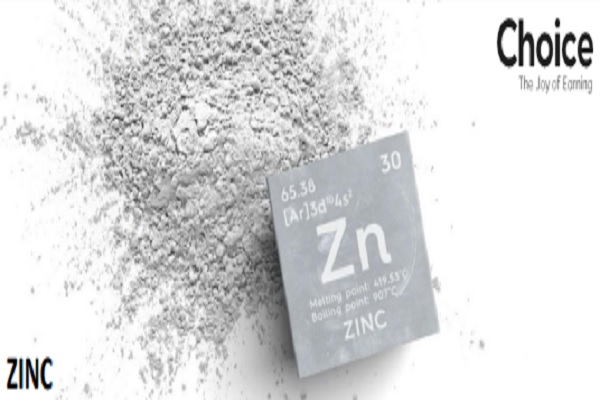
Zinc yesterday settled up by 0.54% at 365.15, supported by tightening global supply conditions after multiple production disruptions raised concerns over refined metal availability. Sentiment improved after Nexa Resources temporarily suspended operations at its 344,400-ton-per-year Cajamarquilla zinc smelter in Peru following a fire incident, while Glencore-owned Kazzinc continued operating at reduced capacity after an explosion at its Kazakhstan facilities. Even before these disruptions, the International Lead and Zinc Study Group had projected a 19,000-ton refined zinc market deficit for 2026, reinforcing bullish sentiment. Further support came from declining zinc concentrate treatment charges and falling port inventories in China, signaling tighter raw material availability. SMM data showed zinc concentrate inventories at Chinese ports declined by 12,100 mt week-on-week. LME zinc inventories remained extremely low at 110,875 tons, equivalent to less than three days of global consumption. China’s central bank also reiterated its commitment to maintaining accommodative monetary policy and supporting domestic demand and industrial activity, aiding sentiment across base metals. However, upside remained limited as Swedish miner Boliden announced the resumption of production at its Garpenberg zinc mine during the second quarter. The International Lead and Zinc Study Group also reported that the global zinc market shifted to a surplus of 9,200 metric tons in January. Goldman Sachs expects a marginal global surplus in 2026 due to improving mine supply, although it anticipates tighter conditions returning during 2027-28. Technically, the market is under fresh buying as open interest increased by 1.3% to 2174 while prices gained 1.95 rupees. Zinc is getting support at 360.1, below which prices could test 355.1 levels, while resistance is seen at 369, with a move above likely to test 372.9.
Trading Ideas:
* Zinc trading range for the day is 355.1-372.9.
* Zinc prices rose supported by tightening supply conditions following recent disruptions.
* Nexa Resources said operations at its 344,400 ton per year Cajamarquilla zinc smelter in Peru, had been temporarily suspended.
* ILZSG had expected there to be a 19,000-ton deficit in the refined zinc market this year.
Aluminium
Aluminium yesterday settled up by 0.62% at 381.2, supported by prolonged supply disruptions linked to the escalating Middle East conflict. The ongoing US-Iran standoff and continued restrictions on vessel movement through the Persian Gulf have intensified concerns over global aluminium availability. Gulf countries accounted for nearly 9% of global aluminium supply and around 25% of non-Chinese production before the conflict. Supply concerns deepened after direct attacks on major refining facilities in the region, with Bahrain’s ALBA operations suspended and Emirates Global Aluminium’s flagship plant expected to take nearly a year to fully restore capacity. Strong backwardation in the aluminium market continued to reflect tight nearby supplies, with the premium for cash aluminium over the three-month contract climbing to 19-year highs near $84 per ton. Japanese buyers agreed to pay premiums of $350-$353 per ton for second-quarter shipments, the highest level in 11 years. JP Morgan expects a 1.9 million ton primary aluminium deficit in 2026 due to a projected 2.4 million ton disruption in Middle East supply, while BOFA advanced its $4,000 per ton price target to the fourth quarter of 2026. China’s aluminium imports rose 6.9% year-on-year in March, while exports surged 15% in April as overseas supply concerns boosted global demand. China’s aluminium production also remained strong, rising 3.1% in April to 3.87 million tons, supported by healthy producer margins. Meanwhile, inventories in Shanghai warehouses increased 3.3%, limiting further upside momentum. Technically, the market is under short covering as open interest dropped by 5.86% to settle at 2780 while prices gained 2.35 rupees. Aluminium is getting support at 377.7, below which prices could test 374.1 levels, while resistance is seen at 383.7, with a move above likely to test 386.1.
Trading Ideas:
* Aluminium trading range for the day is 374.1-386.1.
* Aluminium gained amid prolonged supply disruptions from the Middle East.
* China aluminium production up 3.1 % to 3.87 mln metric tons in April – stats bureau
* Global aluminium prices are expected to be above $4,000 between the third quarter of 2026 and the second quarter of 2027.
Turmeric
Turmeric prices settled lower by 1.01% at 15,752 amid increased arrivals and aggressive profit booking in key producing regions. Farmers in Maharashtra and Telangana accelerated stock liquidation to raise liquidity for upcoming Kharif sowing activities, leading to a temporary supply glut in local mandis. Higher arrivals of late-harvested, high-moisture turmeric also triggered discounting in average-quality lots, weighing on overall market sentiment. Export demand remained cautious as ongoing Middle East tensions continued disrupting logistics, prompting some overseas buyers to delay fresh commitments. The absence of new weather-related disruptions during the post-harvest phase further reduced the weather risk premium in prices. Despite the decline, downside remained limited due to tight availability of premium-quality turmeric. Arrivals in key mandis across Maharashtra and Telangana continued to stay below normal for the peak arrival season, while moisture-related rhizome rot issues reduced the supply of “Double Polished” export-grade turmeric. In Sangli and Nizamabad, farmers and stockists continued holding back quality stocks in anticipation of prices moving above Rs18,000 per quintal. Premium “Salem Fali” turmeric varieties were reportedly trading near Rs20,000 per quintal in major markets. Industry estimates also indicated carry-forward stocks at around 15 lakh bags, significantly lower than last season’s 20 lakh bags, supporting long-term price sentiment. Export demand remained supportive, especially from Bangladesh and EU buyers seeking finger variety and IPM-certified turmeric. During Apr-Feb 2026, turmeric exports rose 1% year-on-year to 163,336 tonnes, while imports declined sharply by 40% to 12,476 tonnes. Technically, the market remained under fresh selling as open interest increased by 2.98% to 20,015 while prices declined by 160 rupees. Turmeric is getting support at 15,664, below which prices may test 15,578 levels, while resistance is seen at 15,880, with a move above potentially testing 16,010 levels.
Trading Ideas:
* Turmeric trading range for the day is 15578-16010.
* Turmeric dropped as arrivals have remained lower than normal for this peak season, creating an immediate supply squeeze.
* Ongoing quality issues due to moisture in low-lying fields have reduced the availability of "Double Polished" export-quality turmeric.
* In regions like Sangli and Nizamabad, farmers and stockists are holding back supplies, anticipating prices to cross the Rs18,000 mark.
* In Nizamabad, a major spot market, the price ended at 15534.85 Rupees gained by 0.16 percent.
Jeera
Jeera prices settled lower by 1.49% at 19,465 amid rising arrivals of the fresh crop from major Rajasthan producing regions, easing concerns over earlier supply tightness. Favorable weather conditions across North-West India enabled farmers to complete harvesting faster than anticipated, resulting in a sharp supply spike instead of staggered arrivals. Farmers also continued aggressive stock liquidation to generate liquidity ahead of the Kharif sowing season, increasing selling pressure in the market. Daily arrivals at the Unjha mandi remained elevated at around 28,500 bags, creating a visible supply glut and weighing on prices. However, downside remained limited due to concerns over crop quality and lower production estimates. Recent thunderstorms and hailstorms in Rajasthan reportedly damaged standing crops during harvesting, raising fears over reduced availability of premium “A-grade” cumin. Unseasonal rains also delayed drying and processing activities, temporarily tightening quality supplies. Carry-forward stocks of high-quality “Sortex” grade jeera are reportedly lower than last year, supporting premium pricing in physical markets. Gujarat production is estimated to decline nearly 27% this season due to lower acreage and reduced yields, while blight disease in key producing pockets further impacted crop quality and output. Market sentiment continued to receive support from expectations of stronger Chinese demand for inventory replenishment. National cumin production for the current season is estimated at 90-92 lakh bags compared to 1.10 crore bags last year. Jeera exports during Apr-Feb 2026 declined 15% year-on-year to 166,536 tonnes, although February exports increased 39% compared to January levels, indicating improving export activity. Technically, the market remained under fresh selling as open interest increased by 6.14% to settle at 10,938 while prices declined by 295 rupees. Jeera is getting support at 19,360, below which prices may test 19,260 levels, while resistance is seen at 19,610, with a move above potentially testing 19,760 levels.
Trading Ideas:
* Jeera trading range for the day is 19260-19760.
* Jeera dropped as fresh crop arrivals have increased, effectively neutralizing the supply tightness feared earlier in the month.
* Favorable weather conditions across North-West India allowed farmers to complete harvesting faster than expected.
* Farmers are actively offloading stocks this week to generate liquidity for the upcoming Kharif planting season.
* In Unjha, a major spot market, the price ended at 19789.25 Rupees dropped by -0.35 percent.h
Views express by all participants are for information & academic purpose only. Kindly read disclaimer before referring below views