ISRO working on tech to extend lunar lander life up to 200 days: Chairman V. Narayanan
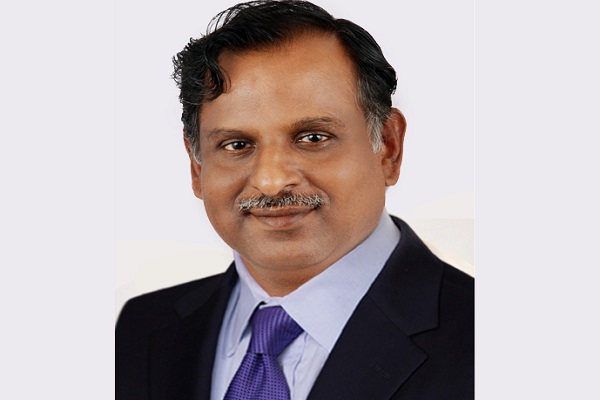
The Indian Space Research Organisation (ISRO) is working on developing technologies that could significantly extend the operational life of future lunar landers to as much as 1000-200 days, a major advancement over the current 14-day lifespan achieved by Chandrayaan-3, ISRO Chairman V. Narayanan said on Saturday.
The initiative -- undertaken in collaboration with the Department of Atomic Energy (DAE) -- aims to address one of the most challenging aspects of lunar exploration, surviving the extreme conditions of the Moon’s night, when temperatures drop sharply and solar power becomes unavailable.
Explaining the challenge, Narayanan noted that while India successfully achieved a historic soft landing near the Moon’s south pole with Chandrayaan-3 in August 2023, the Vikram lander remained operational only for the duration of the lunar day.
Once the lunar night set in, the absence of sunlight led to a loss of power, limiting operations.
To overcome this limitation, ISRO and DAE are now developing artificial heating systems that could protect spacecraft electronics and instruments during the prolonged lunar night.
These systems are expected to ensure continuous functionality even in extremely low-temperature conditions.
“We are going to develop artificial heaters. If we succeed, such landers can survive for 100 to 200 days instead of only 14 days,” Narayanan said.
India made history on August 23, 2023, by becoming the first country to land near the Moon’s south pole, a region considered crucial for future exploration due to the possible presence of water ice.
Earlier in June, the government’s Indian National Space Promotion and Authorisation Centre (IN-SPACe) has selected three Indian space startups -- Astrobase Space Technologies, SatSure Analytics India and TM2SPACE Technologies -- as the first set of Non-Governmental Entities (NGEs) for funding under its Technology Adoption Fund (TAF) scheme.