The Growing Popularity of AI-Powered Personal Assistants
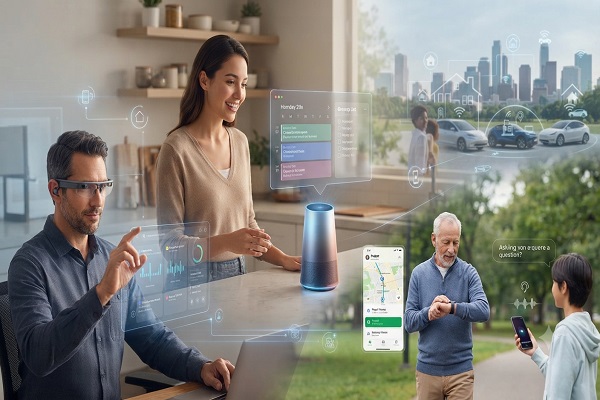
Artificial intelligence is transforming the way people interact with technology, and AI-powered personal assistants are becoming an increasingly important part of everyday life. From answering questions and managing schedules to controlling smart home devices and helping with professional tasks, these digital assistants are making daily activities more convenient and efficient.
With advancements in machine learning, natural language processing and generative AI, modern personal assistants are becoming more capable of understanding user requests and providing relevant responses. Unlike traditional voice assistants that primarily follow predefined commands, newer AI-powered systems can understand conversational instructions, generate content, summarise information and assist with complex tasks.
As individuals and businesses increasingly adopt digital solutions, AI-powered personal assistants are gaining popularity across smartphones, computers, smart speakers and other connected devices.
1. What Are AI-Powered Personal Assistants?
AI-powered personal assistants are software applications that use artificial intelligence to understand instructions, respond to questions and help users complete different tasks.
They use technologies such as natural language processing, machine learning and speech recognition to interpret requests and provide appropriate responses.
Popular examples include ChatGPT, Google Gemini, Apple Siri, Amazon Alexa and Microsoft Copilot.
These assistants can perform several functions, including answering general questions, setting reminders, organising information, drafting messages and helping users access digital services.
2. Increasing Demand for Voice-Based Assistance
Voice-based interaction is one of the major factors contributing to the popularity of AI-powered personal assistants.
Instead of typing commands, users can speak naturally to compatible devices and receive responses.
Common applications include:
Searching for information online.
Setting alarms and reminders.
Checking weather information.
Playing music and managing entertainment.
Making hands-free requests on supported devices.
Controlling compatible smart home appliances.
Improved speech recognition and natural language understanding are making voice interactions more convenient for users.
3. AI Assistants Are Improving Workplace Productivity
Businesses and professionals are increasingly exploring AI-powered personal assistants to simplify everyday work.
These tools can help reduce repetitive tasks and support employees in managing information more efficiently.
Some common workplace applications include:
Drafting emails and business documents.
Summarising lengthy reports.
Organising meeting notes.
Preparing presentations.
Generating ideas and research outlines.
Assisting with data analysis.
Managing schedules and task lists.
By supporting routine activities, AI assistants can help professionals spend more time on decision-making, creativity and other important responsibilities.
4. Personalised Recommendations and User Experiences
Modern AI assistants can provide recommendations based on user requests and, where enabled, relevant preferences or available context.
For example, they can suggest recipes based on available ingredients, recommend travel destinations based on stated interests or help organise daily activities.
Personalisation can make digital interactions more relevant and convenient.
However, the quality of recommendations depends on the information available, the system's capabilities and the accuracy of the user's instructions.
5. Integration with Smart Home Devices
The growing adoption of smart home technology is creating new opportunities for AI-powered personal assistants.
Many compatible assistants can connect with smart devices and help users control different household functions.
Examples include:
Adjusting smart lighting.
Controlling compatible air conditioners.
Managing smart televisions.
Operating connected security devices.
Controlling smart plugs and appliances.
Managing home entertainment systems.
This integration allows users to manage multiple connected devices through voice commands or mobile applications.
6. AI Assistants in Smartphones and Computers
Smartphones and computers are among the most common platforms for accessing AI-powered personal assistants.
Technology companies are integrating AI capabilities into operating systems, productivity applications and digital services.
These assistants can help users write messages, summarise documents, search for information, edit content and manage different digital activities.
Some systems also support image recognition, real-time information processing and advanced conversational interactions.
As hardware and software capabilities improve, AI assistants are becoming more closely integrated into everyday computing experiences.
7. Support for Education and Learning
AI-powered personal assistants are also gaining attention in the education sector.
Students can use these tools to understand difficult concepts, explore academic subjects and organise their study schedules.
Common educational applications include:
Explaining complex topics in simpler language.
Summarising educational material.
Creating practice questions.
Supporting language learning.
Providing writing feedback.
Helping students organise revision plans.
However, students should verify important information and use AI responsibly rather than depending entirely on automatically generated answers.
8. Benefits for Small Businesses and Entrepreneurs
AI personal assistants can offer practical support to small businesses and entrepreneurs who may have limited resources.
They can help with several business-related activities, including:
Preparing marketing content.
Drafting customer communication.
Generating product descriptions.
Creating social media ideas.
Organising business information.
Supporting basic customer service.
Preparing reports and business plans.
These applications can help small businesses explore digital tools without immediately investing in large technology teams.
However, important business decisions and customer-facing information should always be reviewed by people.
9. Privacy and Security Challenges
Despite their growing popularity, AI-powered personal assistants also raise important questions about data privacy and security.
Depending on the service and settings, these tools may process voice recordings, text conversations, personal preferences or other information.
Users should understand how their chosen platforms collect, store and process information.
Important precautions include:
Avoid sharing passwords and sensitive financial information.
Review privacy and data-sharing settings.
Use strong authentication methods.
Check application permissions.
Download software from trusted sources.
Verify information before acting on important recommendations.
Businesses should also establish clear policies for using AI tools when handling confidential company information.
10. The Future of AI-Powered Personal Assistants
The future of AI-powered personal assistants is expected to involve more advanced conversational abilities, improved personalisation and greater integration across digital platforms.
Emerging developments include:
Advanced AI Agents: AI systems are increasingly being designed to perform multiple connected tasks rather than simply answering individual questions.
Multimodal Capabilities: Assistants are becoming better at working with different types of information, including text, images, audio and video.
Smarter Device Integration: AI assistants may become more deeply connected with smartphones, computers, vehicles and smart home systems.
Improved Language Support: Better multilingual capabilities could make AI assistance more accessible to people across different regions and language backgrounds.
Personalised Digital Experiences: Future assistants may provide more relevant support by using permitted user preferences and contextual information.
These developments could make AI assistants increasingly useful for both personal and professional activities.
Conclusion
AI-powered personal assistants are changing how people interact with technology by making information access, communication and everyday task management more convenient. Their growing use across smartphones, computers, workplaces, educational platforms and smart homes highlights the expanding role of artificial intelligence in modern society.
Although challenges related to privacy, security and information accuracy remain important, continued technological advancements are expected to improve their capabilities.
As AI technology evolves, personal assistants are likely to become an increasingly valuable part of digital lifestyles, helping individuals and businesses manage tasks, improve productivity and explore new possibilities.