Smart Airports and the Future of International Travel
Smart Airports and the Future of International Travel
Airports are rapidly evolving from traditional transportation hubs into intelligent, connected ecosystems. As international passenger numbers continue to grow, airports are turning to artificial intelligence, biometrics, automation, digital identity, smart baggage systems, and real-time data to make travel faster, safer, and more convenient.
In 2026, the idea of a "smart airport" is becoming increasingly practical. Recent industry trials have demonstrated that digital identity and biometric verification can support contactless journeys across multiple airlines and airports. The International Air Transport Association (IATA) says proof-of-concept projects have shown that digital identity can replace repeated paper-document checks, while interoperability between different digital identity systems is becoming possible.
What Is a Smart Airport?
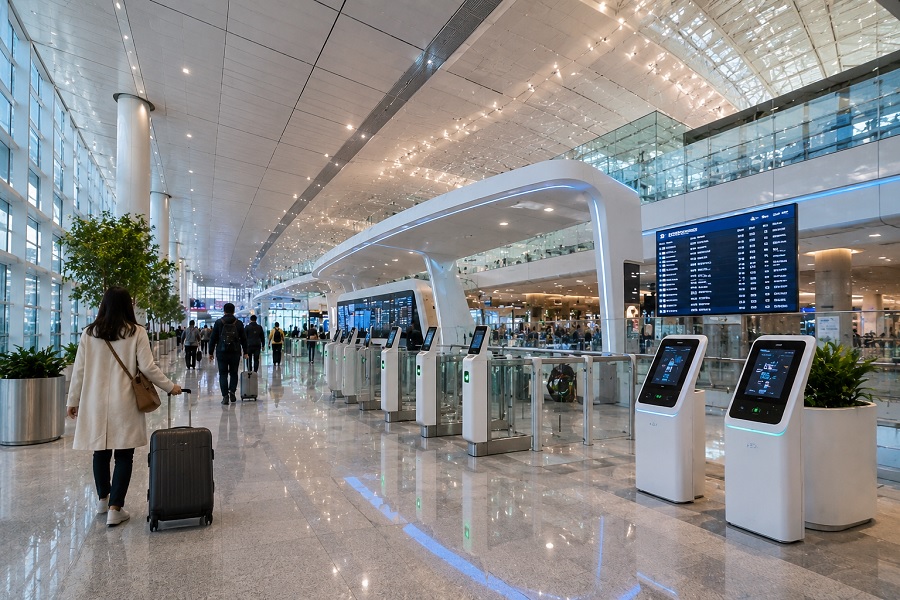
A smart airport uses connected digital technologies to improve almost every stage of the passenger journey. These technologies can include artificial intelligence, biometric identification, Internet of Things sensors, automated baggage handling, self-service kiosks, digital wayfinding, intelligent security systems, and predictive analytics.
The objective is not simply to add technology. The goal is to create a smoother journey in which passengers spend less time waiting and more time enjoying the airport experience.
AI is also being used to help airports manage passenger flows, baggage operations, maintenance, and other complex processes as international air travel demand grows.
Biometric Travel Could Reduce Airport Queues
One of the most important developments in smart airports is biometric travel. Facial recognition and digital identity systems can allow passengers to verify their identity without repeatedly showing a physical passport or boarding pass.
In April 2026, IATA reported successful digital identity trials involving airlines, airports, technology providers, and governments across Europe and Asia-Pacific. The trials demonstrated that a single digital identity can potentially be used across different parts of a journey, including airport processing and boarding.
Hamad International Airport in Doha also announced a major biometric rollout in July 2026. Its Fast Pass system connects more than 700 passenger touchpoints, allowing enrolled passengers to use facial recognition for processes ranging from check-in and baggage drop to security and boarding.
The Rise of Contactless International Travel
The future international airport could involve fewer physical documents and fewer repeated identity checks. Passengers may be able to complete much of their journey using a secure digital identity stored on a mobile device or issued through a government-backed system.
This approach could make international travel more convenient, especially for frequent flyers. However, international adoption requires cooperation between governments, airlines, airports, and border authorities because identity systems must work securely across national boundaries.
AI-Powered Airport Operations
Artificial intelligence is expected to play a major role in the next generation of airports. AI systems can analyze large amounts of data in real time to help airports understand passenger movement, predict congestion, optimize operations, and identify potential disruptions.
Future systems may be able to provide airport staff with early warnings about crowded security checkpoints, baggage delays, gate changes, or operational problems.
For passengers, this could mean more accurate travel information and fewer unexpected delays. For airport operators, AI could help make better use of existing infrastructure.
Smarter Security Screening
Security is one of the areas where technology could have a major impact on the passenger experience. Advanced screening equipment and AI-assisted systems may help improve security while reducing unnecessary delays.
The future could include more automated identity verification and smarter screening processes that allow passengers to move through checkpoints with fewer manual document checks.
However, security will remain a critical area where technology must be balanced with human oversight. Automated systems should support trained security professionals rather than eliminate the need for appropriate human judgment.
Automated Baggage Handling
Lost or delayed luggage is one of the biggest frustrations associated with international travel. Smart airports are increasingly exploring technology that can improve baggage tracking and handling.
Future baggage systems could provide passengers with more accurate real-time information about their luggage from check-in to arrival. Automated systems may also help airports identify potential delays and improve baggage routing.
A more connected baggage journey could give travelers greater confidence, particularly when they have connecting flights or tight schedules.
Digital Wayfinding and Smart Airport Apps
Large international airports can be difficult to navigate, especially for first-time visitors. Smart airport applications can provide digital maps, walking directions, gate information, flight updates, restaurant recommendations, and real-time notifications.
Future systems could offer personalized directions based on a passenger's location and boarding time. A traveler might receive a notification explaining how long it will take to reach the gate and suggesting the best route.
This type of technology could be especially useful at large airports where passengers may need to travel long distances between terminals and gates.
Smarter Airport Shopping and Dining
Smart airports are also changing the way travelers experience shopping and dining. Digital ordering systems, mobile payments, personalized recommendations, and automated pickup services can make airport retail more convenient.
AI-based systems may eventually recommend restaurants, lounges, shops, or services based on a passenger's preferences and available time.
For example, a traveler with a two-hour layover might receive recommendations for a nearby restaurant, while someone with only 30 minutes before boarding could be directed toward quick dining options near the departure gate.
Smart Airports and Sustainability
Technology can also help airports become more environmentally efficient. Smart energy systems, intelligent lighting, automated climate control, electric ground vehicles, and data-driven resource management can support more sustainable airport operations.
AI-powered systems can help monitor energy consumption and identify areas where resources can be used more efficiently.
As international tourism grows, the ability to combine passenger growth with environmental responsibility will become increasingly important.
The Growth of Smart Airports in India
India is also moving toward more technology-enabled passenger journeys. The Airports Authority of India describes Digi Yatra as a biometric boarding initiative designed to create a seamless experience from airport entry through to boarding. The program began with launches at Delhi, Bengaluru, and Varanasi and later expanded to other airports.
IATA's 2026 proof-of-concept work also included an IndiGo and Bengaluru International Airport Limited demonstration showing interoperability between different digital identity providers, including India's Digi Yatra system and international digital wallets.
This could be an important step toward more connected international travel experiences in the future.
Privacy and Data Security Will Be Essential
While smart airports offer many advantages, they also raise important questions about privacy and data protection. Biometric systems and digital identities involve highly sensitive personal information, making cybersecurity and responsible data management essential.
Passengers should have clear information about how their data is collected, where it is stored, how long it is retained, and who can access it.
The future of smart airports will therefore depend not only on technological innovation but also on passenger trust, strong security standards, transparent policies, and appropriate regulation.
Will Human Staff Still Matter?
Even as airports become more automated, human service will remain important. Technology can handle repetitive processes, but travelers may still need assistance during disruptions, emergencies, accessibility situations, or complicated travel problems.
The ideal smart airport is therefore not one without people. It is one where technology handles routine tasks while staff are available to provide meaningful assistance when passengers need it.
What Will International Travel Look Like in the Future?
The airport of the future could feel very different from today's airport. Travelers may complete check-in before arriving, use a digital identity for multiple airport touchpoints, drop off luggage through automated systems, pass through smart security, and receive personalized directions through a mobile device.
At the same time, airports may use AI to manage passenger flows, predict operational problems, optimize baggage handling, and improve energy efficiency.
The result could be a more seamless travel journey in which passengers spend less time standing in queues and more time enjoying their trip.
Final Thoughts
Smart airports are becoming an important part of the future of international tourism. Technologies such as AI, biometrics, digital identity, automated baggage handling, smart security, and real-time travel information have the potential to make international journeys faster and more convenient.
However, the success of smart airports will depend on finding the right balance between innovation, privacy, security, accessibility, and human service. Technology should make travel easier without making passengers feel that their personal information or choices are being overlooked.
As more airports around the world adopt connected systems, international travel could gradually move toward a more seamless experience where identity, security, baggage, and boarding are integrated into a single digital journey. The smart airport is no longer just a futuristic concept. In 2026, many of its key technologies are already being tested or deployed, pointing toward a major transformation in the way the world travels.