Oil & Gas Sector Update : Samudra Manthan: Harbinger of long-term growth by Prabhudas Lilladher Capital

India has 26 sedimentary basins: 16 onland, 7 across onland/offshore, and 3 entirely offshore. Unfortunately, only 7 of these have proven reserves and are under production (Category I). While offshore appears small number wise, out of total area of 3.4mn sq km, 51% is offshore. However, over the last 2 decades, number of offshore wells drilled per year have largely remained flat in the country at 110-130, while those for onland have more than doubled to 608 by FY25. That too, focus clearly has been on nearmedium term with exploratory wells accounting for only 17%/30% of onshore/offshore wells in FY25 vs. nearly half, 2 decades back.
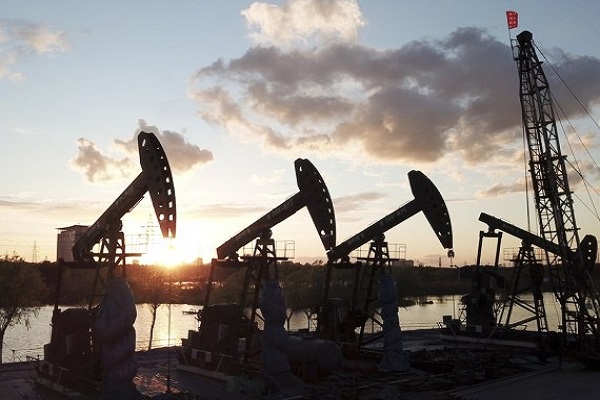
The primary reason for low offshore drilling has been high costs. While onland drilling costs from a few million to USD25mn, deepwater may cost as high as USD150mn per well. To encourage Indian companies to up their ante toward energy security, the government has recently laid out an investment of INR841bn to be spent by FY31 under a new scheme- Samudra Manthan. This has been termed as Phase I, which suggests possibility of similar initiatives in future. Our research highlights a similar framework that Brazil brought out for monetization of its costly pre-salt discoveries. How successful would Samudra Manthan be, it is difficult to fathom now, but positive developments could rerate the upstream companies – ONGC and OINL – and create long-term wealth.
Samudra Manthan - Strengthening energy security:
Currently, India’s import dependence stands at 87% for oil and 53% for natural gas. With demand for petroleum products expected to grow at 3-4%, unless we ramp up our oil and gas production rapidly, our dependence would stand at 91%/65% for oil/ gas by 2035. As a result, the government has announced INR841bn Samudra Manthan primarily for offshore upstream exploration and development.
Brazil’s framework for pre-salt monetization provided a similar boost:
First commercial discovery in Brazil was made in 2006 and the first well incurred an investment of USD240mn and took over a year for drilling. As a result, the government came out with a separate framework just to encourage monetization of pre-salt discoveries in 2010. The rest, as they say, is history – pre-salt accounted for ~80% of total oil and gas production of the country by 2025.
Will it benefit upstream companies:
Samudra Manthan would definitely help both ONGC and OINL in the long run. However, it may be noted that ~67% of ONGC’s total production comes from fields that are witnessing structural decline in production. Thus, only time would tell whether the scheme would result in any growth. We highlight both ONGC and OINL as potential long-term investment bets, should the scheme result in overall growth in production.
Please refer disclaimer at https://www.plindia.com/disclaimer/
SEBI Registration No. INH000000271







More News

Retail Sector Update : Sourcing/RM inflation key monitorable; prefer TTAN/VMM/PAG by Emkay G...