Nepal`s Agriculture Sector: Outlook and Policy Support by CareEdge Ratings
Trends in Nepal’s Agriculture’s Contribution to GDP
• Over the past decade, from FY15-FY25, Nepal’s economy has grown at an average growth rate of around 4%. According to the Macroeconomic Report published in February 2026 by Nepal Rastra Bank (NRB), Nepal’s growth outlook for FY26 remains cautiously optimistic, supported by easing inflationary pressures, accommodative monetary conditions, and a gradual recovery in the industrial and services sectors.
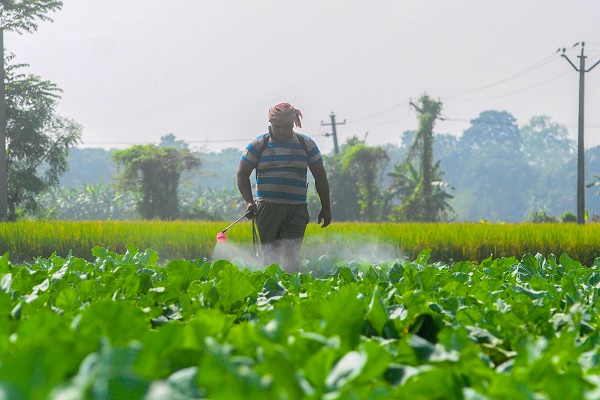
• Despite overall economic growth, the relative contribution of agriculture to GDP has declined, falling from 30.3% in FY15 to 25.2% in FY25, primarily due to the rising dominance of the service sector, which accounted for around 62% of GDP in FY25. This reflects an ongoing structural shift in the economy.
Policy Push Through Banking Sector
• As per NRB’s prescribed sector lending guidelines (as per mid-March 2026), Class ‘A’, ‘B’ and ‘C’ banks’ contribution to the Agriculture sector should be as follows:
• This indicates policy intended to channel institutional credit toward agriculture and improve sectoral financing. It aims to enhance financial inclusion and improve productivity through more effective allocation of financial resources. Collectively, these measures are intended to support sustainable and inclusive economic growth.
• However, during mid-March 2026, outstanding loans of the BFIs to the agriculture sector declined by ~2%.
Budgetary Support and Allocation
• In the FY27 budget, the government has allocated a total of Rs. 46.92 billion (previously Rs. 57.48 billion in FY2025/26) to the Ministry of Agriculture and Livestock Development.
• A large portion of this budget, i.e. almost 70% (Rs. 32 billion), has been allocated for chemical fertiliser subsidies for crop productivity and food security.
• The budget also emphasises bringing barren and fallow land into organised clusters managed by commercial agricultural companies, thereby enabling large-scale, efficient, and modern farming practices
Subsidy and Risk Mitigation Measures
• Further, the government will provide up to 40% subsidy on investment in agriculture and livestock projects, capped at Rs. 20 Mn, to support large-scale farming and commercial agriculture.
• Also, the government will provide up to 80% subsidy on agricultural insurance premiums, thereby reducing farmers’ exposure to risks such as crop failure and natural disasters.
Conclusion
Nepal’s agriculture sector has been witnessing a decline in its share of GDP, even though it continues to play a key role in ensuring food security and generating employment. Government policies indicate an approach focusing on:
• Short-term support through measures such as fertiliser subsidies and agricultural insurance.
• Long-term development by promoting commercialisation and strengthening access to formal financing.
However, challenges such as climate risks, import dependency, and weak credit flow continue to constrain sectoral growth.
Above views are of the author and not of the website kindly read disclaimer