Kharif Sowing Lags Last Year Despite Improving Monsoon Progress by Amit Gupta, Kedia Advisory
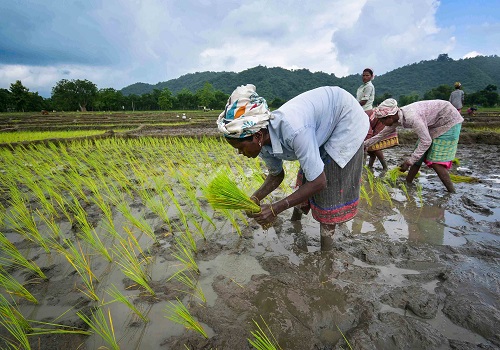
India's kharif crop sowing remained below last year's pace as of July 10, 2026, with total acreage reaching 531.25 lakh hectares, down 101.44 lakh hectares year-on-year. Delayed monsoon rains in June affected planting across key crops, particularly oilseeds, pulses, coarse cereals, and cotton. Oilseeds recorded the steepest decline, led by soybean and groundnut, while coarse cereals and cotton also witnessed significant shortfalls. Rice sowing, although lower than last year, remained comfortably above its normal acreage, indicating resilient planting in major paddy-growing regions. With monsoon rainfall improving, market participants will closely monitor sowing progress over the coming weeks.
Key Highlights
- Total kharif sowing declined by 101.44 lakh hectares compared to last year.
- Oilseeds recorded the largest acreage decline, led by soybean and groundnut.
- Coarse cereals and cotton also remained significantly behind last year's sowing.
- Rice acreage stayed above the normal level despite a year-on-year decline.
- Better monsoon rainfall in July will be crucial for narrowing the sowing gap.
India's kharif crop sowing remained under pressure during the current season, with the latest government data showing total acreage at 531.25 lakh hectares as of July 10, compared with 632.69 lakh hectares during the same period last year. The slower pace of planting reflects the impact of delayed and uneven monsoon rainfall across several agricultural regions during the early part of the season. However, improving rainfall activity in July has supported field operations and could help accelerate sowing in the coming weeks.
Among major crops, oilseeds witnessed the sharpest decline, with acreage falling by 31.34 lakh hectares year-on-year to 117.83 lakh hectares. Soybean sowing declined by 17.21 lakh hectares, while groundnut acreage was lower by 12.05 lakh hectares, reflecting delayed field preparation and rainfall-dependent planting. Coarse cereals also registered a significant decline of 28.61 lakh hectares, mainly due to reduced maize and bajra acreage.
Pulses sowing stood at 56.63 lakh hectares, down 17.22 lakh hectares from a year earlier. Arhar, urad and moong all reported lower acreage, highlighting slower planting activity across central and western India. Cotton acreage also remained weak, declining by 14.41 lakh hectares compared with last year.
Rice presented a relatively positive picture. Although paddy sowing was 10.84 lakh hectares below last year's level, the total planted area remained 16.95 lakh hectares above the normal acreage, indicating healthy long-term planting trends in key producing states. Sugarcane and Jute & Mesta were the only major crops to register modest year-on-year gains.
Finally, the pace of monsoon rainfall over the next few weeks will be critical in determining whether delayed kharif sowing can recover, particularly for oilseeds, pulses, cotton and coarse cereals, while supporting overall production prospects.
Above views are of the author and not of the website kindly read disclaimer