Buy Kaynes Technology Ltd for the Target Rs.4,800 by Motilal Oswal Financial Services Ltd
OSAT expansion backed by India’s semiconductor push
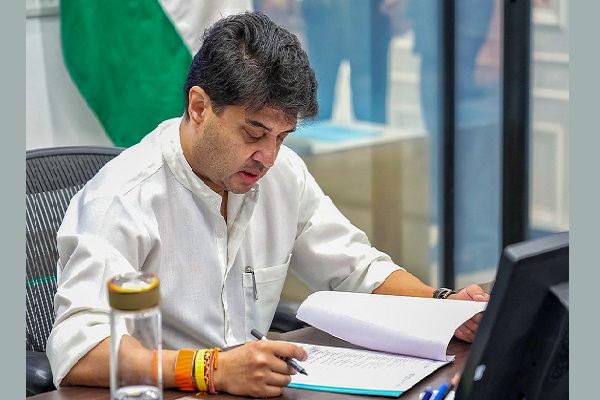
We attended the inauguration ceremony marking the commencement of Phase 1 of Kaynes OSAT facility at Sanand (inaugurated by PM Modi), a key milestone in the company’s entry into semiconductor manufacturing. This phase marks the beginning of its backend operations, positioning Kaynes as an early participant in India’s evolving semiconductor ecosystem.
* Kaynes has commenced its phase 1 (30m units capacity) of the planned OSAT facility with a total capacity of ~2.3b units. Further, Phases 2 and 3 are expected to be operational by mid-CY26 and beginning of FY28, respectively, backed by an investment of ~INR33b. Additionally, its partnership with Semiconductor Fabless Accelerator Lab (SFAL) provides access to a steady pipeline of chip designs, strengthening its position in India’s semiconductor value chain.
* India’s semiconductor production is central to its USD400b+ electronics manufacturing ecosystem ambition by CY30, contributing 2.5 - 3.0% to GDP while remaining heavily dependent on imports (90%). To address this, the govt is driving over USD25b in investments through initiatives like the India Semiconductor Mission (ISM). Domestic semiconductor demand is expected to grow from ~USD45-50b in CY25 to ~USD105-110b by CY30 (~13% CAGR), which could increase India’s share in the global semiconductor market from ~7% to ~10% over time.
* Under PM Narendra Modi’s vision, India is positioning semiconductors as a cornerstone of technological leadership, with the ISM driving ecosystem development across design, manufacturing, talent, and materials. With 10 approved projects, strong investments in skills and startups, and initiatives like the National Critical Minerals Mission, India aims to build a resilient, self-reliant supply chain and emerge as a key global semiconductor hub.
* We expect Kaynes to clock a CAGR of 45%/50%/54% in revenue/EBITDA/PAT during FY25 - 28. We reiterate our BUY rating on the stock with a TP of INR4,800 (premised on 30x FY28E EPS).
Entry into India’s semiconductor ecosystem
* Kaynes is establishing an OSAT facility with a total planned capacity of 2.3b units. Phase 1 has already commenced operations with an initial capacity of around 30m units, while Phases 2 and 3 are expected to be operational by mid-CY26 and beginning of FY28, respectively.
* Phase 1 will require a total of 100 employees, while full-scale operations are expected to require ~2.5k employees. The facility is being built on ~46 - 47 acres in a SEZ, with an investment of ~INR33b.
* The semiconductor manufacturing process follows a sequence of stages - design, wafer fabrication (Fabs), and OSAT (where Kaynes operates). Second, OSAT facilities benefit from faster ramp-up timelines, typically becoming operational within 2 - 3 years, compared to 5 - 7 years for fabs. This enables quicker capacity creation, faster commercialization, and improved revenue visibility.
* Further, through its MoU with SFAL, Kaynes becomes a preferred backend partner, gaining early access to a pipeline of new chip designs from Indian startups and design firms. This helps Kaynes secure future demand and positions it as an integral part of India’s semiconductor value chain.
* Kaynes is emerging as a front - runner OSAT player in India, with a scalable capacity of up to ~2.3b units by FY28 (1QFY28). Alongside its SFAL partnership, which provides access to a consistent pipeline, the company is well positioned to capitalize on the growth of India’s semiconductor ecosystem.
Demand surge backed by strategic policy push
* The global semiconductor market was valued at USD627b in CY24 and is expected to reach USD1t by CY30. The semiconductor ecosystem is a foundational pillar for India’s ambition to build a USD400b+ electronics manufacturing ecosystem. Currently, semiconductors contribute ~2.5-3.0% to India’s GDP, underscoring both their economic importance and future growth potential.
* India remains highly import-dependent, sourcing nearly ~90% of its semiconductor requirements from global markets. To address this, the government has approved over USD25b of investments through initiatives (incl companies like HCL Tech, Tata Electronics, CDIL, etc.) such as the ISM, SPECS, and various state-led incentive schemes, aimed at developing domestic manufacturing capabilities.
* Domestic semiconductor demand is estimated at ~USD45 - 50b in CY25 and is projected to grow to ~USD105-110b by CY30, reflecting a ~13% CAGR. This growth is driven by rising electronics consumption, digitalization, EV adoption, and industrial automation.
* As a result of this demand expansion and increasing localization, India’s share in the global semiconductor market, currently at ~7%, is expected to rise to ~10% over time, strengthening its position in the global semiconductor value chain
India’s semiconductor push: Toward a full-stack ecosystem
* PM Modi in his speech termed this decade as “India’s Techade,” with semiconductors at the core of future technological leadership. India is aiming to move beyond being just a participant to becoming a leader in global technology and supply chains, and this Kaynes plant represents a key step toward establishing the country as a global manufacturing hub and a “factory of the world.”
* India’s push into semiconductors is focused on building a resilient global supply chain amid disruptions from pandemics and geopolitical tensions while driving self-reliance across critical sectors such as AI, EVs, clean energy, defense, and electronics.
* Under the ISM, 10 projects have already been approved across six states, including those by Kaynes and Micron Technology, with the upcoming ISM 2.0 phase set to further strengthen the ecosystem by focusing on semiconductor equipment and materials to enable a full - stack value chain.
* India is actively investing in talent and design capabilities, targeting the development of over 85,000 semiconductor design professionals, while initiatives like the Chips-to-Startup program are enabling 400+ institutions and startups, resulting in the design of 55+ chips.
* At the same time, the government is strengthening raw material supply chains through initiatives such as the National Critical Minerals Mission and the development of a Rare Earth Corridor across coastal states.
* Overall, India is building a holistic semiconductor ecosystem across design, manufacturing, talent, and raw materials, supported by the ISM. This positions the country to reduce import dependence and emerge as a key player in the global semiconductor supply chain.
Valuation and view
* We expect growth in Kaynes to be driven by the commencement of new OSAT facility with further expansion planned going forward, supported by a design pipeline via SFAL.
* Going forward, Kaynes’ growth will be driven by strong opportunities across railway electronics (including Vande Bharat and Kavach), aerospace and defense, electric vehicles, and smart meters, alongside its strategic expansion into OSAT and PCB manufacturing, which together position the company to benefit from rising demand.
* We expect Kaynes to clock a CAGR of 45%/50%/54% in revenue/EBITDA/PAT during FY25 - 28. We reiterate our BUY rating on the stock with a TP of INR4,800 (premised on 30x FY28E EPS).
For More Research Reports : Click Here
For More Motilal Oswal Securities Ltd Disclaimer
http://www.motilaloswal.com/MOSLdisclaimer/disclaimer.html
SEBI Registration number is INH00000041