Accumulate Petronet LNG Ltd For Target 302 by Prabhudas Liladhar Capital Ltd
Expanding service offerings to drive Kochi utilization
PLNG hosted a management meet and plant visit at its Kochi LNG terminal. The 3rd jetty at Dahej, designed to handle LNG, ethane and propane, was ~71% complete vs. 81% targeted as of Aug’26. The delay is due to prolonged monsoon conditions and certain technical challenges, with commissioning targeted in FY28. The upcoming 750ktpa PDH/500ktpa PP project is targeted for commissioning in mid-FY29. At Kochi, PLNG is expanding its service offerings beyond regasification through GUCD and LNG bunkering services to drive utilization. PLNG completed 3 GUCD operations in June’26, each within ~1.5 days in line with global standards, with demand remaining marketdriven and without a fixed frequency. PLNG is also upgrading its LNG bunkering facility at Kochi, with completion targeted by Mar’27. PLNG has entered into a 50:50 JV with Gruner Renewable Energy to develop 180tpd of CBG production capacity (10 plants of 18tpd each), at an estimated capital outlay of Rs12bn. The final funding structure and partner contributions remain undisclosed. Maintain ‘Accumulate’ with a TP of INR302 (Previous: INR297), based on 10x FY28E EPS
Integration of GUCD at Kochi Terminal:
PLNG has developed Gassing-Up and CoolingDown (GUCD) facilities at its Kochi LNG terminal, enabling LNG carriers to be prepared for operations after construction or maintenance. The process involves gradually cooling the vessel from ambient temperature to −162°C and removing residual/undesirable gases before LNG operations commence. Historically, GUCD required 3–4 days per vessel and was often undertaken at international locations such as Singapore. Following process improvements, PLNG has reduced the turnaround time to ~1–1.5 days, which management indicated is comparable to Singapore. 3 GUCD operations were completed in June’26, each within ~1.5 days. Demand remains market-driven with no fixed frequency. Management sees GUCD as one of several initiatives to improve Kochi terminal utilization.
3rd Jetty progress lags target:
PLNG’s 3rd jetty is a multi-purpose facility designed to handle LNG, ethane and propane. Propane will primarily serve as feedstock for the Company’s upcoming petrochemical project, while the ethane handling facilities are being developed to cater to 3 rd party customers. As of 25 Aug’26, the project was over 71% complete vs. the targeted 81%, with the delay attributed to prolonged monsoon conditions and technical execution challenges. The project remains on track for commissioning in FY27-28.
Exploring ethane contracts:
Along with ethane unloading capability at its 3rd jetty, PLL is developing dedicated ethane handling and storage facilities connected to the jetty. Management intends to offer these facilities to 3 rd party customers on a tolling basis. ONGC has already reserved ~600ktpa capacity for 15 years from FY29, which is expected to generate ~Rs50bn of gross revenue over the contract period. PLNG is also exploring the supply of ethane and propane from its Dahej terminal to landlocked petrochemical plants across India through rail transportation. In April’26, PLL signed a non-binding tripartite MoU with CONCOR and HMEL to explore the transportation of ethane and propane through the rail siding facility at Dahej.
No challenge anticipated in propane sourcing:
PLNG does not anticipate any major challenges in propane sourcing. While Gulf supply was initially expected to be more attractive, US propane supply is currently abundant and competitively priced, with management expecting this advantage to persist even if Gulf market conditions normalize. Commissioning is targeted for mid-FY29, with all long-lead items ordered and civil erection and mechanical works in full swing. Management reiterated expected annual opex savings of ~Rs1.2bn, driven by ~19 MW of power savings. Management also indicated that India’s PP demand is projected to reach ~15mmtpa by 2030, against expected domestic production of 10–11mmtpa, implying a 4-5mmtpa demand-supply gap.
GOBARdhan scheme provides CBG support:
PLNG is forming a 50:50 JV with Gruner Renewable Energy to establish 10 CBG plants of 18/tpd each, aggregating 180/tpd capacity, at an estimated project cost of Rs12bn. The JV will integrate raw-material supply, fermented organic manure (FOM) offtake, gas offtake, and capital and operating arrangements under a secured pricing mechanism for 20 years. Management indicated that the GOBARdhan scheme could provide subsidy support of ~Rs2cr/TPD, comprising Rs1.25cr/TPD for plant & machinery and Rs0.75cr/TPD for feedstock aggregation and FOM handling. This implies potential subsidy support of ~Rs3.6bn for the planned 180 TPD capacity, subject to eligibility. At 350 operating days, the plants would produce ~63ktpa of CBG. Based on management's assumptions of ~51 MMBtu/tonne energy content and an assured offtake price of Rs2,110/MMBtu, the project could generate ~Rs6.8bn of annual gross revenue for the JV, of which PLL’s 50% economic share would be ~Rs3.4bn, before operating costs, depreciation and finance costs. The final funding structure and partner contributions remain undisclosed.
LNG bunkering - new revenue opportunity:
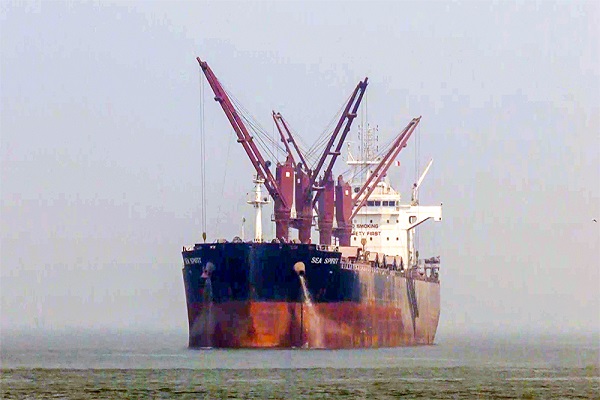
PLNG is exploring LNG bunkering services from its Kochi LNG terminal as a new growth avenue, supported by the evolving maritime fuel transition and growing global adoption of LNG as a marine fuel. With the expected growth in container and trans-shipment traffic, market interactions indicate a favourable demand outlook for LNG bunkering among international shipping operators. Accordingly, PLNG is upgrading its bunkering facilities at Kochi to cater to potential demand. The Company is undertaking a project to enhance its LNG bunkering facility to global standards; orders for key equipment have been placed and all major equipment has been received at site. Installation and integration activities are underway and are expected to be completed by March’27
Regasification tariff to remain competitive in market:
According to management, Dahej remains one of the lowest-cost LNG regasification terminals in India, with existing capacity-booking contracts largely secured through FY35. These contracts incorporate defined tariffs, escalation mechanisms, minimum guaranteed capacity utilization and user-pay provisions. PLNG is also looking to contract its incremental ~5mmtpa Dahej capacity. While management did not disclose the final tariff or commercial terms, it indicated that tariffs for the new capacity would not be lower than prevailing levels. Further, the shift in LNG delivery terms from FOB to DES for its renewed SPA with Qatar is not expected to structurally impact Dahej’s regasification tariff. Under DES, PLL’s shipping responsibility is eliminated, and the resulting shipping-cost benefit is expected to be passed through to customers, while PLL continues to earn the underlying storage and regasification economics.
Kochi Terminal Overview:
The 5mmtpa Kochi LNG terminal has long-term SPAs aggregating 2.625mmtpa with ExxonMobil, Australia, with back-to-back GSPAs with GAIL, IOCL and BPCL. The terminal is connected to the Kochi-Mangalore pipeline, with key customers including BPCL, FACT, MCF, OMPL and MRPL. Current terminal utilisation is ~25%. Since commissioning, the terminal has handled 180 vessels, comprising 147 cargo vessels, 8 storage operations, 23 GUCD/cooling-down and reloading operations, and 2 LNG bunkering operations. The terminal operates with a single ~362m-long jetty. Kochi is also differentiated by its ability to offer 3 specialised LNG services under one roof — Gassing Up & Cooling Down (GUCD), LNG reloading and LNG bunkering.
Please refer disclaimer at https://www.plindia.com/disclaimer/
SEBI Registration No. INH000000271