Women Breaking Barriers in Science
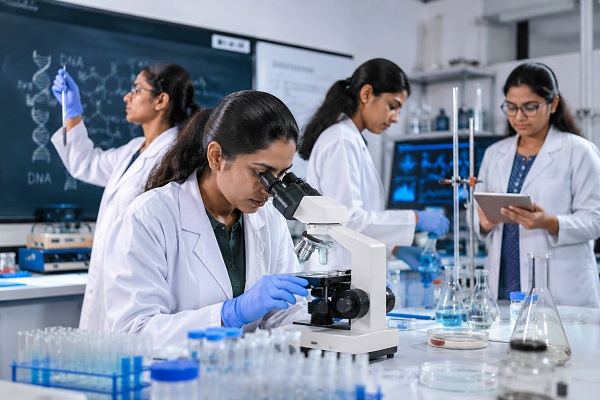
Women have played a transformative role in advancing science, making groundbreaking discoveries that have shaped medicine, technology, environmental research, and space exploration. Despite facing historical challenges and limited opportunities, countless women have overcome barriers to become pioneers in their fields. Today, their achievements continue to inspire future generations and highlight the importance of diversity in scientific innovation.
Across the world, women are leading research in disciplines such as biotechnology, artificial intelligence, climate science, physics, chemistry, and astronomy. Their work is contributing to medical breakthroughs, cleaner energy solutions, advanced computing technologies, and a deeper understanding of our planet and the universe. From developing life-saving treatments to exploring outer space, women scientists are helping solve some of humanity's greatest challenges.
India has also witnessed the remarkable rise of women in science and technology. Indian scientists, engineers, and researchers have played vital roles in prestigious institutions such as ISRO, DRDO, CSIR, IITs, and leading universities. Women have contributed significantly to India's space missions, vaccine research, environmental conservation, and digital innovation, demonstrating that talent and determination can overcome traditional barriers.
The increasing participation of women in STEM (Science, Technology, Engineering, and Mathematics) is creating more inclusive research environments. Diverse teams often bring different perspectives to problem-solving, leading to more creative ideas and better scientific outcomes. Universities, research organizations, and governments are now investing in scholarships, mentorship programs, and leadership initiatives that encourage more girls to pursue careers in science.
Despite this progress, women in science continue to face challenges such as gender bias, unequal representation in leadership positions, limited research funding, and work-life balance pressures. However, ongoing efforts to promote equal opportunities and inclusive workplaces are helping close these gaps and create stronger scientific communities.
Technology has also opened new doors for aspiring women scientists. Online education platforms, international collaborations, research grants, and digital laboratories have made scientific learning and innovation more accessible than ever before. Young women now have greater opportunities to connect with global experts, publish research, and contribute to cutting-edge discoveries.
Role models continue to play an essential part in inspiring future generations. The achievements of women scientists, engineers, astronauts, and innovators encourage young students to believe that science is a field where passion, curiosity, and perseverance matter far more than gender.
As the world faces complex global challenges such as climate change, healthcare innovation, food security, and sustainable development, the contributions of women in science have become more important than ever. Their leadership, creativity, and dedication are driving discoveries that improve lives and shape a better future.
Women breaking barriers in science represent not only progress toward gender equality but also the limitless potential of human innovation. By encouraging greater participation, supporting education, and creating equal opportunities, societies can ensure that the next generation of scientific breakthroughs is powered by talent from every background.