How to Maintain Your Identity After Becoming a Mother
Motherhood is one of the most meaningful experiences in a woman's life. It brings happiness, emotional connection and a new sense of responsibility. However, becoming a mother also introduces significant changes to everyday routines, personal priorities and relationships. Between caring for a child, managing household responsibilities and balancing family life, many women gradually find themselves putting their own interests, ambitions and personal needs aside.
Although motherhood becomes an important part of a woman's identity, it does not mean she has to give up the person she was before having children. Her dreams, hobbies, friendships, career goals and individual personality remain equally valuable.
Maintaining personal identity after becoming a mother is not about choosing between motherhood and individuality. It is about creating a healthy balance in which a woman can enjoy raising her child while continuing to grow as an individual.
Here are some practical ways to maintain your identity after becoming a mother.
1. Remember That You Are More Than a Mother
Motherhood is an important role, but it does not define every aspect of your personality. You are also an individual with personal interests, opinions, ambitions and dreams.
Before becoming a mother, you may have enjoyed travelling, reading, exercising, pursuing a career or spending time with friends. These interests do not need to disappear after having a child.
Remind yourself that being a good mother and maintaining your individuality can exist together. You deserve to have personal goals and interests beyond parenting.
2. Make Time for Yourself Every Day
Personal time often becomes limited after welcoming a baby, especially during the early stages of motherhood. However, even small breaks can help women reconnect with themselves.
Try setting aside 15 to 30 minutes each day for activities that make you feel relaxed and happy.
You could:
Read a few pages of your favourite book.
Listen to music or a podcast.
Enjoy a cup of tea without distractions.
Practise meditation or gentle stretching.
Write in a personal journal.
Spend time on a favourite hobby.
Personal time does not have to be complicated. Small moments of self-care can help you feel more connected to your individual identity.
3. Continue Pursuing Your Career Goals
For many women, professional identity is an important part of personal confidence and financial independence. Taking a career break for childcare does not mean giving up professional ambitions permanently.
If returning to work is important to you, consider exploring flexible working arrangements, remote opportunities, part-time roles or skill-development programmes.
You can also use your available time to update professional knowledge, attend online courses or develop new skills.
Remember that every woman's career journey is different. Some may return to work quickly, while others may prefer to focus on parenting for several years. Both choices deserve respect.
4. Maintain Your Friendships and Social Connections
Motherhood can sometimes reduce opportunities to socialise. Between feeding schedules, school activities and household responsibilities, meeting friends may become less frequent.
However, maintaining friendships is important for emotional well-being and personal identity.
Make an effort to stay connected with people who knew you before motherhood and those you meet during this new stage of life.
You can arrange occasional coffee meetings, phone conversations, family outings or short get-togethers.
Having conversations that are not always about children or parenting can also help you reconnect with other aspects of your personality.
5. Do Not Give Up Your Hobbies
Hobbies provide opportunities for creativity, relaxation and personal satisfaction. Unfortunately, many mothers stop pursuing activities they previously enjoyed because they feel guilty about spending time away from their children.
Instead of abandoning your interests, try incorporating them into your new routine.
For example:
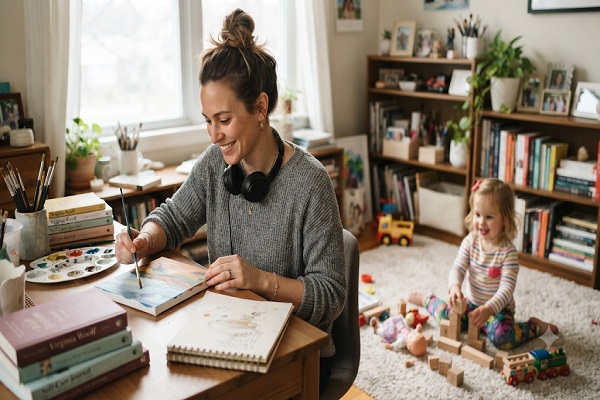
If you enjoy painting, dedicate a few minutes to creative work.
If you love cooking, experiment with new recipes.
If you enjoy photography, capture everyday moments.
If you like dancing, practise at home.
If you enjoy gardening, create a small garden space.
You can also introduce age-appropriate activities that allow your children to participate in your hobbies.
Maintaining personal interests can make everyday life more enjoyable and fulfilling.
6. Share Parenting Responsibilities
Maintaining personal identity becomes easier when childcare and household responsibilities are shared fairly.
If you have a partner, discuss how both of you can divide parenting duties and household work. Family members may also be able to provide support when needed.
For example, one parent can look after the child while the other spends time exercising, meeting friends or pursuing professional interests.
Parenting should not mean that one person has to sacrifice all personal activities. Shared responsibility creates more opportunities for both parents to maintain their individual identities.
7. Avoid Comparing Yourself With Other Mothers
Social media often presents idealised images of motherhood. You may see mothers managing successful careers, maintaining perfect homes, travelling frequently and appearing energetic throughout the day.
Such comparisons can create unnecessary pressure and self-doubt.
Every mother has a different support system, financial situation, family structure and set of responsibilities.
Instead of comparing your journey with someone else's, focus on what works for your circumstances.
There is no single perfect way to balance motherhood and personal life.
8. Take Care of Your Physical and Mental Well-Being
Personal identity is closely connected with physical health and emotional well-being. After childbirth, women may experience changes in their bodies, sleeping patterns, energy levels and emotional health.
Prioritising your well-being can help you feel more comfortable and confident.
Some useful habits include:
Eating balanced and nutritious meals.
Getting adequate rest whenever possible.
Staying physically active according to your recovery needs.
Spending time outdoors.
Maintaining social connections.
Seeking professional support when emotional difficulties become overwhelming.
Women experiencing persistent sadness, anxiety, exhaustion or loss of interest in everyday activities should consider speaking with a qualified healthcare professional.
Taking care of yourself is an important part of caring for your family.
9. Set Personal Goals Beyond Motherhood
Personal goals give you something meaningful to work towards. They can also help you maintain a sense of direction during changing stages of family life.
Your goals do not have to be ambitious or complicated.
You might want to:
Learn a new language.
Complete an online certification.
Start a small business.
Improve your fitness.
Read more books.
Save money for personal interests.
Travel to a new destination.
Write down a few goals and break them into smaller, achievable steps.
Celebrating personal progress, even in small ways, can strengthen your confidence and sense of achievement.
10. Learn to Say No Without Feeling Guilty
Many mothers feel pressure to meet everyone's expectations. They may try to manage childcare, household work, family gatherings and professional responsibilities without asking for help.
However, constantly saying yes can leave little room for personal needs.
Learn to recognise your limits and communicate them respectfully.
You do not have to attend every social event, complete every household task or accept every additional responsibility.
Setting healthy boundaries allows you to protect your time and energy.
11. Maintain Your Personal Style and Appearance
Changes in routine and responsibilities can sometimes make personal grooming and fashion feel less important.
However, dressing in a way that reflects your personality can help you feel confident and comfortable.
You do not need an elaborate beauty routine or expensive wardrobe. Simple activities such as choosing clothes you enjoy, maintaining a skincare routine or trying a new hairstyle can help you reconnect with your personal style.
The goal is not to meet external beauty expectations but to feel comfortable in your own appearance.
12. Build an Identity That Includes Motherhood
Your identity does not have to remain exactly the same as it was before becoming a mother. Parenthood naturally introduces new experiences, values and perspectives.
You may discover new strengths, develop greater patience or become interested in activities you had never considered before.
Allow yourself to grow and change without feeling that you have lost your previous identity.
Motherhood can become a meaningful part of your personal story without becoming your entire story.
13. Ask for Help When You Need It
One of the biggest challenges mothers face is the expectation that they should manage everything independently.
Asking for help is not a sign of weakness. It is a practical way to create a healthier family environment.
You can ask your partner, relatives or trusted friends for assistance with childcare and household responsibilities.
If additional support is available and affordable, consider childcare services or occasional household assistance.
Accepting support gives you more opportunities to rest, pursue personal interests and maintain a balanced routine.
14. Celebrate Your Individual Achievements
Motherhood involves many responsibilities, and it is easy to overlook personal accomplishments.
However, your achievements outside parenting deserve recognition too.
Whether you complete a professional course, start a business, develop a new skill, improve your fitness or achieve a personal goal, take time to appreciate your progress.
Celebrating these milestones reinforces the idea that your personal growth continues throughout motherhood.
Benefits of Maintaining Your Identity After Motherhood
Maintaining individual interests and personal goals can positively influence different aspects of a mother's life.
Some important benefits include:
Improved self-confidence: Pursuing personal interests can strengthen a woman's sense of achievement and independence.
Better emotional well-being: Personal time and meaningful activities can provide relaxation and emotional balance.
Healthier relationships: Maintaining individual interests can encourage better communication and mutual understanding within families.
Professional growth: Continuing to develop skills can create opportunities for career advancement.
Positive family environment: Children can learn the importance of individuality, confidence and personal development by observing their parents.
Greater life satisfaction: Balancing parenting with personal interests can make life feel more meaningful and fulfilling.
Conclusion
Becoming a mother changes a woman's life, but it does not mean she has to leave her individuality behind. Her personal interests, friendships, career ambitions, hobbies and dreams remain important even after welcoming a child.
By making time for herself, maintaining social connections, sharing parenting responsibilities and setting personal goals, a woman can create a healthier balance between motherhood and individual growth.
Most importantly, mothers should remember that taking care of their own needs is not selfish. A woman can love her children deeply while continuing to invest in herself.
Motherhood is an important chapter of life, but it is not the only chapter. Every woman deserves the opportunity to grow, explore, dream and remain true to herself.