Wireless Earbuds Buying Guide
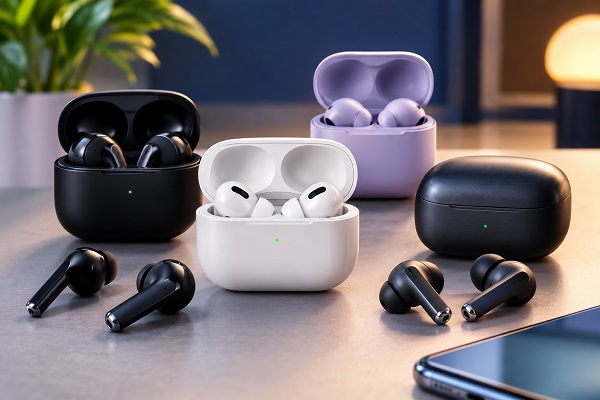
Wireless earbuds have become an everyday gadget for music, calls, workouts, travel, gaming, and entertainment. With so many models available at different prices, choosing the right pair can be confusing.
The best earbuds are not necessarily the most expensive ones. The right choice depends on **sound quality, battery life, comfort, connectivity, microphone quality, noise cancellation, and your daily usage**.
Decide How You Will Use Them
Before buying wireless earbuds, think about your primary use.
If you mainly listen to music, prioritize sound quality and comfort.
If you take many calls, microphone quality and noise reduction become more important.
For workouts, look for a secure fit and sweat or water resistance.
For gaming, low latency and stable connectivity are useful.
For travel, active noise cancellation can make a major difference.
Sound Quality
Sound quality should be one of the most important factors when choosing earbuds.
Look for earbuds that provide a balanced sound profile with clear vocals, controlled bass, and detailed high frequencies.
Some earbuds emphasize bass, which can be enjoyable for genres such as hip-hop and electronic music. Others focus on a more balanced sound that works across different types of music.
Don't judge audio quality only by specifications. Reviews and real-world listening tests can provide a better idea of how earbuds actually sound.
Active Noise Cancellation
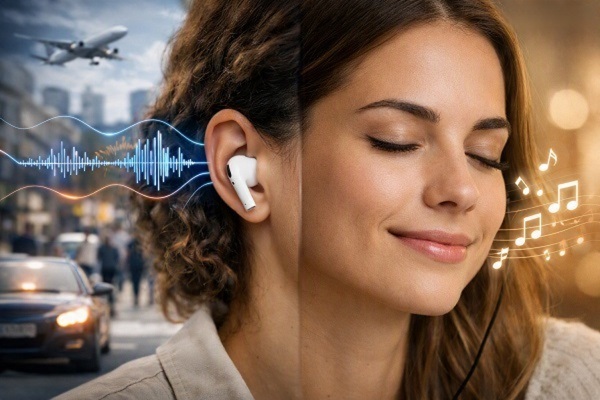
Active Noise Cancellation, commonly known as ANC, uses microphones and electronic processing to reduce surrounding sounds.
ANC is particularly useful when:
* Travelling by airplane
* Using public transportation
* Working in noisy environments
* Studying in busy places
* Spending time in crowded areas
However, ANC can affect battery life, so check the manufacturer's battery estimates with ANC enabled.
Transparency Mode
Transparency mode allows surrounding sounds to pass through the earbuds using external microphones.
This is useful when you need to hear:
* Conversations
* Traffic
* Announcements
* People around you
A good transparency mode can make earbuds much more convenient for everyday use.
Microphone Quality
If you frequently attend meetings or make phone calls, don't overlook microphone quality.
Look for earbuds with multiple microphones and noise-reduction technology. These can help your voice remain clearer when you're speaking outdoors or in moderately noisy environments.
However, microphone performance can vary significantly between models, so independent reviews can be useful.
Battery Life
Battery life determines how frequently you need to recharge your earbuds.
Consider both:
* Earbud battery life
* Charging case battery life
A good pair should provide enough listening time for your typical daily routine.
The charging case is particularly important because it allows you to recharge the earbuds while you're away from a power outlet.
Charging Options
Most modern wireless earbuds use USB-C for charging.
Some premium models also support wireless charging.
USB-C is convenient because the same cable can often be used for your smartphone, tablet, laptop, and other gadgets.
Bluetooth Connectivity
Stable Bluetooth connectivity is essential for wireless earbuds.
Look for newer Bluetooth versions and support for modern audio features. Newer Bluetooth standards can improve connectivity, efficiency, and overall wireless performance.
Your phone and earbuds also need to support compatible features for you to get their full benefits.
Comfort and Fit
Even excellent-sounding earbuds are not useful if they become uncomfortable after 20 minutes.
Pay attention to:
* Earbud shape
* Weight
* Ear-tip sizes
* Stem design
* Stability during movement
Many earbuds come with multiple silicone ear-tip sizes. Trying different sizes can significantly improve both comfort and noise isolation.
Water and Sweat Resistance
If you plan to use earbuds while exercising, check their IP rating.
Water and sweat resistance can help protect earbuds during workouts and everyday exposure to moisture.
However, water resistance does not mean that every pair is designed to be submerged in water.
Controls
Touch controls can make it easier to control:
* Music playback
* Volume
* Calls
* ANC
* Voice assistants
Make sure the controls are responsive and easy to use without accidentally triggering commands.
Some earbuds also allow you to customize controls through a companion smartphone app.
Companion App
A good companion app can provide additional features such as:
* Equalizer settings
* Firmware updates
* Touch-control customization
* Noise-control settings
* Earbud location features
* Battery information
Software support can therefore be almost as important as the hardware itself.
Multipoint Connectivity
Multipoint Bluetooth allows compatible earbuds to connect to two devices at the same time.
For example, you could connect your earbuds to your laptop and smartphone.
When a call arrives on your phone, the earbuds can switch from the laptop to the phone and then return to the laptop afterward.
This can be particularly useful for people who work across multiple devices.
Gaming Performance
If you plan to use wireless earbuds for gaming, latency matters.
High latency can create a noticeable delay between an action on the screen and the corresponding sound.
Look for earbuds that offer a dedicated low-latency or gaming mode if gaming is an important part of your usage.
Codec Support
Bluetooth audio codecs determine how audio is transmitted between your device and earbuds.
Depending on your smartphone and earbuds, you may encounter codecs such as SBC, AAC, aptX, or LDAC.
However, having a particular codec does not automatically guarantee better sound. The entire audio system, including the earbuds, source device, software, and tuning, matters.
Earbuds vs Over-Ear Headphones
Wireless earbuds are compact and convenient, making them ideal for commuting, workouts, and everyday use.
Over-ear headphones generally provide larger drivers, stronger passive isolation, and longer listening comfort for some users.
If portability is your priority, earbuds are usually the better option. If maximum immersion and long listening sessions matter more, over-ear headphones may be worth considering.
Don't Buy Based Only on Price
Expensive earbuds aren't automatically better for everyone.
A mid-range pair may provide everything you need, while a premium model may offer features you rarely use.
Instead of asking, "Which earbuds are the best?", ask:
**"Which earbuds provide the features I actually need?"**
Common Buying Mistakes
Avoid these common mistakes:
* Choosing earbuds only because of their brand
* Ignoring comfort
* Focusing only on ANC
* Ignoring microphone quality
* Not checking battery life
* Buying without considering device compatibility
* Assuming more expensive means better
* Ignoring software support
* Buying the wrong size of ear tips
Final Thoughts
Choosing wireless earbuds becomes easier when you focus on your actual requirements.
For music, prioritize **sound quality and comfort**.
For calls, focus on **microphone performance and connectivity**.
For travel, prioritize **ANC and battery life**.
For workouts, look for **secure fit and water resistance**.
For gaming, consider **low latency and stable connectivity**.
The best wireless earbuds are ultimately the ones that fit your lifestyle, devices, budget, and listening preferences.