Why Smartphone Refresh Rate Matters
When buying a new smartphone, people often focus on the camera, processor, battery and storage. However, one display specification that can significantly affect the everyday experience is the **refresh rate**.
You may have seen smartphones advertised with 60Hz, 90Hz, 120Hz or even higher refresh rates. But what does refresh rate actually mean, and does a higher number always make a phone better?
What Is Smartphone Refresh Rate?
Refresh rate refers to how many times a smartphone's display can refresh the image on the screen every second. It is measured in **Hertz (Hz)**.
For example:
* **60Hz** means the display refreshes 60 times per second.
* **90Hz** means it refreshes 90 times per second.
* **120Hz** means it refreshes 120 times per second.
* **144Hz** means it refreshes 144 times per second.
A higher refresh rate can make animations and movement appear smoother because the screen can update more frequently.
Why Does Refresh Rate Matter?
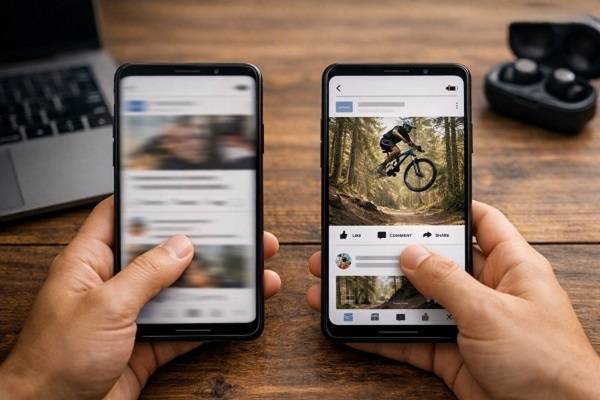
The difference becomes particularly noticeable when scrolling through websites, social media feeds, menus and other content.
On a 60Hz display, scrolling can appear relatively smooth, but moving to a higher refresh rate can make the experience feel more fluid. This is one reason many modern smartphones use 90Hz or 120Hz displays.
The improvement may be especially noticeable when switching between a 60Hz phone and a 120Hz phone.
60Hz vs 90Hz vs 120Hz
60Hz
60Hz has traditionally been common on smartphones and remains perfectly usable for everyday activities such as calling, messaging, browsing and watching videos.
It can also consume less power than some higher-refresh-rate configurations, depending on the device and display technology.
90Hz
90Hz offers a noticeable step up in smoothness compared with 60Hz. Scrolling and animations generally feel more fluid.
For many users, 90Hz can provide a good balance between smoothness and battery consumption.
120Hz
120Hz has become increasingly common in mid-range and premium smartphones. It can make scrolling, animations and supported games feel particularly smooth.
For users who spend a lot of time browsing, using social media or gaming, a 120Hz display can make the phone feel more responsive.
Does Higher Refresh Rate Improve Gaming?
Refresh rate can be important for gaming, particularly in games that support higher frame rates.
A 120Hz display can potentially show up to 120 frames per second when the phone's hardware and the game support it.
However, simply having a 120Hz display does not guarantee 120 FPS gaming. The processor, graphics performance, game settings, software optimization and thermal management also matter.
For casual gaming, 60Hz may be sufficient. Competitive gamers may appreciate the smoother motion offered by higher refresh rates.
Refresh Rate and Touch Sampling Rate Are Different
A common misunderstanding is that refresh rate and touch sampling rate are the same thing.
They are not.
**Refresh rate** refers to how frequently the display updates the image.
**Touch sampling rate** refers to how frequently the touchscreen checks for touch input.
A smartphone can have a high refresh rate and a different touch sampling rate. Both specifications can contribute to how responsive a phone feels, but they measure different things.
Does a Higher Refresh Rate Use More Battery?
Generally, operating a display at a higher refresh rate can consume more power because the display may need to update more frequently.
However, modern smartphones often use **adaptive or variable refresh rates**. The phone can automatically adjust the refresh rate depending on what you're doing.
For example, it may use a higher refresh rate while scrolling and reduce it when displaying static content.
This can help balance smoothness and battery life.
What Is Adaptive Refresh Rate?
Adaptive refresh rate allows the smartphone to automatically change the display refresh rate based on the content being displayed.
If you're scrolling, the phone may increase the refresh rate to provide smoother movement. When you're reading a static page, it may lower the refresh rate to reduce power consumption.
This feature can provide a better combination of performance and battery efficiency.
Does Refresh Rate Affect Video Quality?
Not always.
Most movies and online videos are recorded and delivered at frame rates lower than 120 frames per second. Therefore, watching a standard video does not automatically become dramatically better simply because your smartphone has a 120Hz display.
The biggest benefits of high refresh rates are generally noticeable during **scrolling, animations, gaming and other interactive activities**.
Is 120Hz Worth It?
For many smartphone users, 120Hz can be a worthwhile feature.
It is particularly useful if you:
* Scroll frequently through social media
* Browse websites regularly
* Play games that support high frame rates
* Prefer smoother animations
* Want a more fluid overall interface
However, if you mainly use your smartphone for calls, messaging, basic browsing and occasional video watching, a 60Hz display can still provide a satisfactory experience.
What Refresh Rate Should You Choose?
The right refresh rate depends on your usage and budget.
**60Hz:** Suitable for basic everyday use.
**90Hz:** A good middle ground between smoothness and efficiency.
**120Hz:** Ideal for users who want a smoother experience and frequently game or scroll.
**144Hz and above:** More relevant to users who specifically prioritize high-refresh-rate gaming and supported applications.
Final Thoughts
Smartphone refresh rate is more than just a number on a specification sheet. It can influence how smooth scrolling, animations and supported games feel during everyday use.
For most users looking for a modern smartphone, **90Hz or 120Hz can offer a noticeable improvement over 60Hz**. However, refresh rate should not be the only factor in a buying decision.
Display quality, brightness, processor performance, battery life, software optimization and camera capabilities should also be considered before choosing a smartphone.