How Noise Cancellation Works in Wireless Earbuds
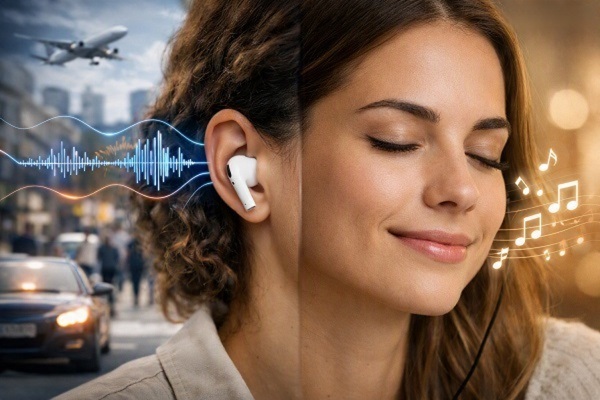
Wireless earbuds have become a popular choice for music, calls and entertainment. One of their most useful features is noise cancellation, which can reduce unwanted sounds from the surrounding environment and make listening more comfortable.
But how exactly does noise cancellation work?
What Is Noise Cancellation?
Noise cancellation is a technology designed to reduce unwanted background sounds. It is particularly useful in places such as busy roads, offices, airports, public transport and crowded cafés.
Modern earbuds generally use microphones, electronic processing and speakers to reduce external noise.
Active Noise Cancellation Explained
The most common technology is **Active Noise Cancellation (ANC)**.
ANC earbuds use microphones to listen to sounds around you. The internal processor analyses these sounds and creates an opposing sound wave.
When the original unwanted sound and the opposing sound wave meet, they partially cancel each other out. This process is known as destructive interference.
For example, if a microphone detects the low-frequency sound of an aircraft engine, the earbuds can generate a corresponding anti-noise signal to reduce the perceived engine noise.
How the Microphones Help
ANC earbuds can have microphones positioned both outside and inside the earbud.
External Microphones
External microphones listen to sounds in the surrounding environment. The earbuds use this information to identify and respond to outside noise.
Internal Microphones
Internal microphones can monitor the sound inside the ear canal. This allows the earbuds to adjust the cancellation effect and help maintain the intended audio experience.
Some advanced earbuds combine both approaches to improve noise reduction.
Passive Noise Isolation vs ANC
Noise reduction is not always electronic.
**Passive noise isolation** happens when the physical design of the earbuds blocks outside sounds. Silicone ear tips, foam materials and a proper fit can prevent some external noise from reaching your ears.
ANC works differently by electronically reducing certain sounds.
The two technologies often work together. A good seal can provide passive isolation, while ANC handles additional background noise.
Why ANC Works Better With Some Sounds
Noise cancellation is generally more effective against continuous, predictable sounds.
Low-frequency sounds such as aircraft engines, air conditioners, fans and train noise can be relatively easy for ANC systems to reduce.
Sudden or unpredictable sounds, such as someone shouting, a door closing or a car horn, can be more difficult to cancel completely because they change very quickly.
What Is Transparency Mode?
Many wireless earbuds offer a feature called **Transparency Mode** or Ambient Mode.
Instead of blocking outside sound, the earbuds use their microphones to capture environmental audio and play it through the speakers.
This allows users to listen to music while still being aware of conversations, announcements or surrounding activity.
Does Noise Cancellation Affect Battery Life?
Yes. ANC requires microphones, signal processing and additional power, so using noise cancellation generally consumes more battery than listening with ANC turned off.
The difference varies depending on the earbuds, volume level, codec, software and other features being used.
Does ANC Improve Call Quality?
ANC and microphone-based call noise reduction are related but serve different purposes.
ANC primarily focuses on reducing noise for the person wearing the earbuds. During calls, earbuds may use additional microphones and processing to reduce background noise picked up by the microphone.
This can make your voice easier for the other person to hear in noisy environments.
Why Fit Matters
Even the most advanced ANC system cannot compensate completely for poorly fitting earbuds.
If the ear tips do not create a good seal, external sound can enter around the earbuds. This can reduce passive isolation and make the ANC system less effective.
Choosing the correct ear-tip size can therefore make a noticeable difference.
Is More ANC Always Better?
Not necessarily.
Different people have different preferences. Strong ANC can be useful during flights or commuting, while lighter noise reduction may feel more natural in quieter environments.
Some earbuds allow users to adjust the level of noise cancellation through an accompanying smartphone application.
Conclusion
Noise cancellation in wireless earbuds combines microphones, digital signal processing and speakers to reduce unwanted environmental sounds. Active Noise Cancellation creates an opposing sound signal, while passive isolation physically blocks some external noise.
The effectiveness of ANC depends on the technology, earbud design, microphone system and fit. For the best experience, users should choose earbuds that provide a comfortable seal and offer noise-control modes suited to their surroundings.
As wireless audio technology continues to improve, noise cancellation is likely to become even more intelligent, adaptive and power-efficient.