Wi-Fi 7 Explained: Everything You Need to Know About the Next Generation of Wireless Connectivity
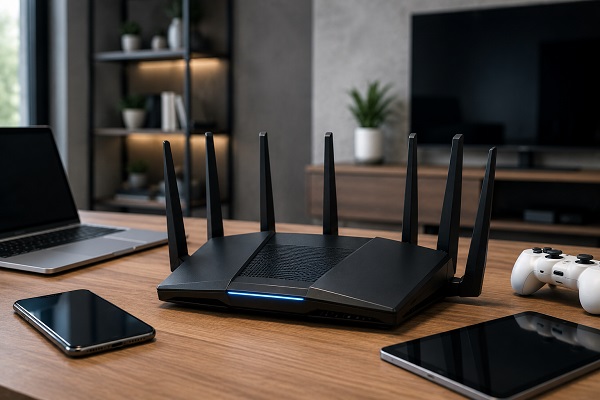
Wireless internet has become an essential part of everyday life, powering everything from smartphones and laptops to smart TVs, gaming consoles, and connected home devices. As the number of connected devices continues to grow, the demand for faster, more reliable, and lower-latency wireless networks has never been greater. This is where **Wi-Fi 7**, the latest generation of Wi-Fi technology, comes into the picture.
Wi-Fi 7 promises significant improvements in speed, efficiency, and network performance, making it one of the biggest advancements in wireless connectivity in recent years.
What Is Wi-Fi 7?
Wi-Fi 7 is the latest wireless networking standard, officially known as **IEEE 802.11be Extremely High Throughput (EHT)**. It is designed to deliver much faster speeds, lower latency, and improved performance in environments where many devices are connected simultaneously.
While previous Wi-Fi generations focused on increasing speed, Wi-Fi 7 also prioritizes stability, responsiveness, and efficient use of available spectrum.
How Fast Is Wi-Fi 7?
One of the biggest highlights of Wi-Fi 7 is its incredible theoretical maximum speed.
* **Wi-Fi 5:** Up to 3.5 Gbps
* **Wi-Fi 6:** Up to 9.6 Gbps
* **Wi-Fi 6E:** Up to 9.6 Gbps (with access to the 6 GHz band)
* **Wi-Fi 7:** Up to **46 Gbps** (theoretical maximum)
Actual speeds depend on your internet plan, router capabilities, device compatibility, and environmental conditions. Even so, Wi-Fi 7 offers a substantial leap in performance over earlier standards.
Key Features of Wi-Fi 7
1. Wider 320 MHz Channels
Wi-Fi 7 supports **320 MHz channel bandwidth**, doubling the maximum channel width available in Wi-Fi 6E.
A wider channel allows more data to travel simultaneously, resulting in faster downloads, smoother streaming, and improved overall network performance.
2. Multi-Link Operation (MLO)
One of the most important innovations in Wi-Fi 7 is **Multi-Link Operation (MLO)**.
Instead of relying on a single wireless band, compatible devices can transmit and receive data across multiple bands—such as **2.4 GHz, 5 GHz, and 6 GHz**—at the same time.
Benefits include:
* Lower latency
* Higher throughput
* More stable connections
* Reduced network congestion
This is particularly valuable for gaming, video conferencing, and virtual reality applications.
3. 4K QAM Technology
Wi-Fi 7 introduces **4096-QAM (4K Quadrature Amplitude Modulation)**.
Compared with Wi-Fi 6's 1024-QAM, this allows each transmission to carry more data, increasing efficiency and improving peak performance under strong signal conditions.
4. Better Performance in Crowded Areas
Homes and offices today often have dozens of connected devices.
Wi-Fi 7 is designed to handle:
* Smartphones
* Tablets
* Smart TVs
* Security cameras
* Smart speakers
* Gaming consoles
* IoT devices
* Laptops
The new standard manages network traffic more efficiently, reducing slowdowns even during heavy usage.
### 5. Lower Latency
Latency refers to the delay between sending and receiving data.
Wi-Fi 7 significantly reduces latency, making it ideal for:
* Competitive online gaming
* Cloud gaming
* Video conferencing
* Augmented Reality (AR)
* Virtual Reality (VR)
* Remote work applications
Do You Need a New Router?
Yes. To enjoy the full benefits of Wi-Fi 7, you'll need:
* A Wi-Fi 7 router
* Wi-Fi 7-compatible devices
* A broadband connection capable of delivering high speeds
Older Wi-Fi devices will still connect to Wi-Fi 7 routers because the standard is backward compatible, but they won't benefit from the latest features.
Who Should Upgrade?
Wi-Fi 7 is particularly beneficial for:
* Gamers seeking ultra-low latency
* Content creators transferring large files
* Professionals working with cloud-based applications
* Families with many connected devices
* Businesses handling high network traffic
* Smart homes with numerous IoT devices
If your current Wi-Fi 6 or Wi-Fi 6E setup already meets your needs, upgrading immediately may not be necessary. However, those purchasing new networking equipment may find Wi-Fi 7 to be a future-ready investment.
The Future of Wireless Connectivity
As technologies such as artificial intelligence, cloud computing, 8K streaming, extended reality (XR), and smart homes continue to evolve, the demand for faster and more reliable wireless networks will only increase.
Wi-Fi 7 is built to support these next-generation applications by delivering greater capacity, improved efficiency, and enhanced reliability. It lays the foundation for a more connected digital ecosystem where multiple high-bandwidth devices can operate seamlessly.
Final Thoughts
Wi-Fi 7 represents a major advancement in wireless networking. With features such as **Multi-Link Operation, 320 MHz channels, 4K QAM, improved capacity, and lower latency**, it is designed to meet the growing demands of modern homes, businesses, and connected devices.
Although widespread adoption will take time as compatible routers and devices become more common, Wi-Fi 7 offers a glimpse into the future of high-performance wireless connectivity. For users looking to future-proof their home or office network, Wi-Fi 7 is a compelling step forward.