Understanding GDP: What It Is and Why It Matters

When people talk about a country's economy, one of the first terms that comes up is **Gross Domestic Product (GDP)**. It is one of the most important indicators used to measure the size, strength and overall health of an economy. Governments, businesses, investors and policymakers closely monitor GDP because it provides valuable insights into economic performance and future growth prospects.
What is GDP?
Gross Domestic Product (GDP) represents the **total monetary value of all final goods and services produced within a country's borders during a specific period**, usually a quarter or a year. It reflects the overall economic output of a nation and serves as a benchmark for comparing economic performance over time.
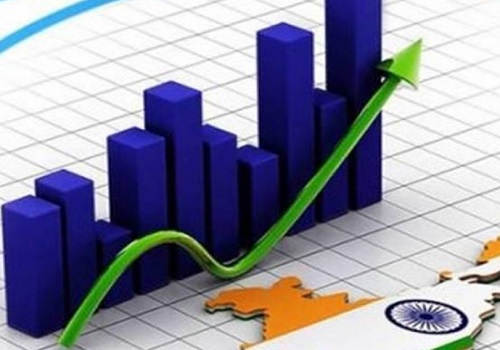
Rather than measuring wealth, GDP measures **economic activity**. A growing GDP generally indicates expanding business activity, higher production and stronger consumer spending, while a declining GDP may signal an economic slowdown.
How is GDP Calculated?
GDP is commonly calculated using the **Expenditure Method**, which adds together all major sources of spending in an economy:
**GDP = Consumption + Investment + Government Spending + (Exports – Imports)**
* **Consumption:** Household spending on goods and services such as food, healthcare, education and entertainment.
* **Investment:** Business spending on factories, machinery, technology and residential construction.
* **Government Spending:** Expenditure by central and state governments on infrastructure, public services and defence.
* **Net Exports:** The difference between exports and imports. A positive balance adds to GDP, while a negative balance reduces it.
Why is GDP Important?
GDP serves as a key indicator for assessing economic health and guiding decision-making.
**Measures Economic Growth**
An increasing GDP signals expansion in economic activity, higher production and stronger demand across sectors.
**Supports Policy Decisions**
Central banks and governments use GDP data to frame monetary and fiscal policies, including interest rates, taxation and public spending.
**Boosts Investor Confidence**
Strong GDP growth often attracts domestic and foreign investment, reflecting confidence in the country's economic outlook.
**Tracks Living Standards**
Although GDP does not directly measure individual income, sustained economic growth generally creates employment opportunities, improves wages and supports higher living standards.
Types of GDP
**Nominal GDP**
Measures the value of goods and services at current market prices without adjusting for inflation.
**Real GDP**
Adjusts for inflation, providing a more accurate picture of actual economic growth over time.
**GDP Per Capita**
Calculated by dividing GDP by the population, it estimates the average economic output per person and is often used to compare living standards across countries.
What Drives GDP Growth?
Several factors contribute to higher GDP:
* Rising consumer spending
* Strong industrial and manufacturing output
* Growth in the services sector
* Higher exports
* Increased infrastructure investment
* Technological innovation
* Stable inflation and interest rates
Countries with balanced growth across these areas generally experience stronger and more sustainable economic expansion.
Limitations of GDP
While GDP is an essential economic indicator, it has certain limitations.
It does not measure income inequality, environmental sustainability, unpaid household work or overall quality of life. A country may record strong GDP growth while still facing challenges such as unemployment, inflation or unequal wealth distribution.
Therefore, economists often evaluate GDP alongside indicators like inflation, employment, industrial production and consumer confidence to gain a comprehensive understanding of economic performance.
Conclusion
GDP remains one of the most widely followed indicators of a country's economic health. It helps governments design policies, enables businesses to plan investments and provides investors with valuable insights into market conditions. Although GDP alone cannot capture every aspect of economic well-being, it continues to serve as the foundation for understanding how an economy is performing and where it is headed.