Gadgets in Drones: Smart Technology That Powers Modern Flying Machines
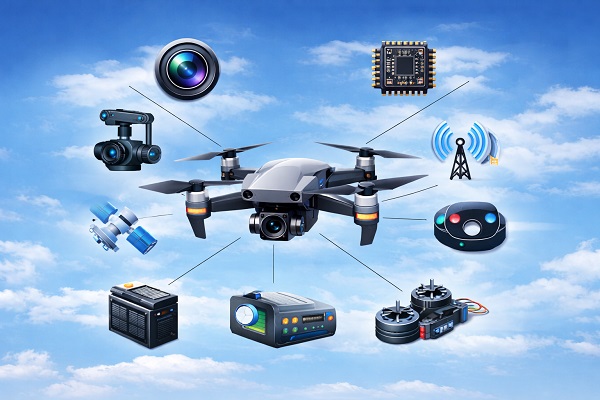
Drones, also known as Unmanned Aerial Vehicles (UAVs), have transformed the way we capture images, deliver goods, monitor land, and enhance security. Behind their smooth flight and intelligent performance lies a combination of advanced gadgets and smart components. These gadgets work together to make drones accurate, stable, and highly efficient. From cameras to sensors, every part plays a vital role in drone operations.
1. High-Resolution Camera Systems
One of the most important gadgets in a drone is its camera. Modern drones are equipped with high-resolution cameras capable of capturing HD, 4K, and even 8K videos. These cameras are often mounted on gimbals to ensure stability and vibration-free footage. Camera drones are widely used in photography, filmmaking, surveillance, agriculture, and real estate.
2. Gimbal Stabilization Technology
A gimbal is a mechanical gadget that keeps the camera steady during flight. It automatically adjusts angles to counter drone movement, wind, or sudden turns. A 2-axis or 3-axis gimbal ensures smooth video recording and sharp images, even at high speeds or altitudes.
3. GPS Module
The GPS gadget helps drones determine their exact location. It enables features such as return-to-home, waypoint navigation, position holding, and autonomous flight paths. GPS technology is essential for mapping, surveying, delivery drones, and long-range missions.
4. Flight Controller
The flight controller is the brain of the drone. It processes data from various sensors and controls motor speed, balance, and direction. This gadget ensures stable flight, smooth turns, and accurate hovering. Advanced flight controllers support auto-landing, altitude hold, and obstacle avoidance.
5. Sensors and Obstacle Avoidance Gadgets
Modern drones are fitted with multiple sensors such as ultrasonic sensors, infrared sensors, and LiDAR. These gadgets help detect obstacles and prevent collisions. Obstacle avoidance technology is especially useful in indoor flying, urban areas, and low-altitude missions.
6. Battery and Power Management System
Lithium-polymer (Li-Po) batteries are widely used in drones due to their lightweight and high energy capacity. Smart battery gadgets monitor temperature, voltage, and charging cycles to improve safety and flight time. Power management systems help drones fly longer and land safely when battery levels are low.
7. Communication and Transmission Systems
Drones use radio transmitters and receivers to communicate with controllers or smartphones. Advanced drones feature real-time video transmission gadgets that allow live streaming directly to mobile devices. Long-range transmission systems enable drones to fly several kilometers away without losing connection.
8. Propulsion System (Motors & ESCs)
Brushless motors and Electronic Speed Controllers (ESCs) are crucial gadgets for drone movement. Motors generate lift, while ESCs control motor speed and direction. Together, they ensure smooth take-off, stable hovering, and precise maneuvering.
9. AI and Smart Processing Chips
High-end drones now include AI-powered gadgets that enable face tracking, object recognition, automatic following, and intelligent flight modes. These smart chips make drones more autonomous and user-friendly.
Conclusion
Drones are no longer simple flying devices; they are advanced machines powered by intelligent gadgets and cutting-edge technology. From cameras and sensors to GPS and AI processors, every gadget contributes to making drones safer, smarter, and more versatile. As technology continues to evolve, drones will become even more powerful tools across industries like defense, agriculture, delivery, media, and disaster management.