Feeling of Heat After Eating: The Connection Between Body Heat and Pitta in Ayurveda
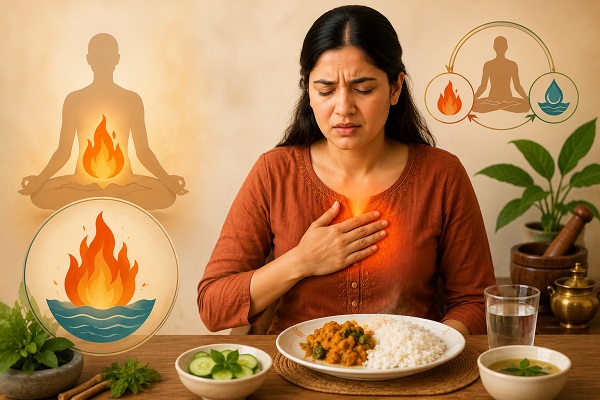
Many people often experience a sudden feeling of warmth, heaviness, or internal “heat” after eating meals. This sensation can sometimes feel uncomfortable, especially during hot weather or after consuming spicy or oily food. According to Ayurveda, this condition is closely related to the balance of Pitta dosha, which governs heat, digestion, and metabolism in the body.
What is Pitta in Ayurveda?
In Ayurveda, the human body is governed by three fundamental energies called Doshas: Vata, Pitta, and Kapha. Among them, Pitta dosha is associated with fire and water elements. It controls digestion, metabolism, body temperature, and even hormones related to hunger and energy production.
When Pitta is balanced, digestion is strong, skin remains healthy, and energy levels stay stable. However, when Pitta becomes aggravated, it can lead to excessive internal heat, acidity, irritability, and a burning sensation in the body—especially after eating.
Why Do You Feel Hot After Eating?
The feeling of heat after meals can be explained through both modern and Ayurvedic perspectives:
1. Digestive Fire (Agni Activation)
In Ayurveda, digestion is governed by Agni (digestive fire). After eating, Agni becomes active to break down food. In people with strong or imbalanced Pitta, this digestive fire becomes intense, creating a sensation of internal heat.
2. Spicy and Oily Foods
Foods that are spicy, fried, sour, or salty increase Pitta levels in the body. When such foods are consumed, they naturally generate more heat during digestion, leading to a warm or burning feeling.
3. Metabolic Response
From a modern science point of view, digestion increases blood flow to the stomach and activates metabolism. This process produces heat as a natural by-product, known as thermogenesis.
4. Seasonal Influence
During hot seasons like summer, Pitta is already elevated in the environment. Eating heavy or heat-producing foods during this time can further increase body heat after meals.
Symptoms of Pitta Imbalance After Eating
When Pitta becomes excessive, the body may show several signs after meals, such as:
Excessive heat or burning sensation in the body
Acidity or heartburn
Sweating after eating
Irritability or restlessness
Feeling thirsty frequently
Redness in face or skin
These symptoms indicate that the digestive fire is too strong or not properly balanced.
How to Balance Body Heat After Eating
Ayurveda offers simple lifestyle and dietary solutions to control post-meal heat:
1. Choose Cooling Foods
Include foods that naturally reduce Pitta, such as:
Cucumber, bottle gourd, and leafy greens
Coconut water
Milk and ghee (in moderate quantity)
Sweet fruits like watermelon and banana
2. Avoid Pitta-Aggravating Foods
Reduce intake of:
Excess spicy and fried foods
Excess coffee, tea, and alcohol
Sour and fermented foods in large quantities
3. Eat in a Calm Environment
Eating slowly in a relaxed mood helps regulate digestion and prevents overheating of the digestive system.
4. Stay Hydrated
Drink sufficient water throughout the day. Cooling drinks like buttermilk can help reduce internal heat after meals.
5. Practice Cooling Herbs
Ayurveda recommends herbs like:
Fennel (saunf)
Coriander
Mint
These help soothe digestion and reduce Pitta effects.
When to Be Careful
If the feeling of heat after eating becomes frequent or is accompanied by severe acidity, chest burning, or digestive discomfort, it is advisable to consult a healthcare professional or an Ayurvedic practitioner. Long-term Pitta imbalance may require a personalized diet and treatment plan.
Conclusion
The sensation of heat after eating is a common experience and is often linked to the natural activation of digestion. However, according to Ayurveda, it is strongly influenced by Pitta dosha imbalance. By adopting a cooling diet, mindful eating habits, and lifestyle changes, one can easily maintain internal balance and enjoy comfortable digestion without discomfort.
Balancing Pitta is not just about avoiding heat—it is about creating harmony between food, body, and nature.