Defence Sector Update : Middle East Tensions Could Boost India`s Defence Exports, Supply Chains Stable by Choice Institutional Equities
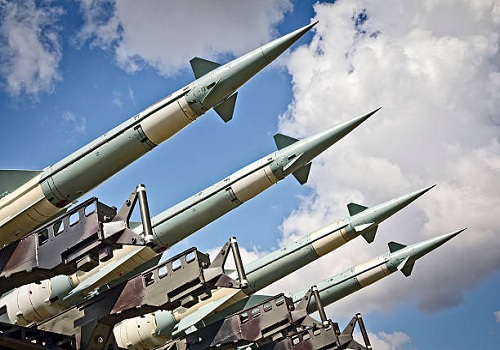
* Escalating tensions around the Strait of Hormuz could trigger higher defence procurement across Gulf nations. The Middle East accounts for ~30–35% of global arms imports, making it one of the largest defence markets globally. India’s defence exports have steadily grown to ~INR 23,600 Cr (~USD 2.8 Bn) in FY25, with the govt targeting INR 50,000 Cr by FY29E, indicating strong export momentum
* Countries such as Saudi Arabia, United Arab Emirates, Qatar, and Bahrain have historically increased defence spending during periods of geopolitical instability. A 10–15% rise in regional procurement budgets could create USD 3–5 Bn (INR 25,000–40,000 Cr) incremental export opportunity for emerging suppliers such as India
* India’s defence industry is currently undergoing a structural transition from a component supplier to a system-level exporter. Historically, Indian companies largely supplied subsystems, components and support equipment, but they are now increasingly marketing and pitching complete platforms such as BrahMos, Akash, Pinaka, torpedoes and anti-drone systems. This transition meaningfully expands India’s addressable export market and improves its positioning as a competitive defence supplier
* Modern warfare is also increasingly defined by a kinetic-cum-economic dimension, where the cost of engagement plays a critical role. For instance, relatively inexpensive loitering munitions such as the Shahed drone, which can cost ~USD 20,000, have often required interception using high-end air defence systems costing several hundred thousand to over a million dollars per engagement. This dynamic is driving demand for cost-effective counter-drone systems, layered air defence and electronic warfare solutions, areas where Indian companies are gradually building capabilities
* From a company perspective, Bharat Electronics Limited (radar and electronic warfare), Bharat Dynamics Limited (missile systems), Data Patterns (India) Limited (mission-critical electronics), and Zen Technologies (counter-drone systems) appear well positioned to benefit from potential export opportunities
* Unlike sectors such as autos or chemicals where logistics disruptions can significantly impact supply chains, the defence sector is less exposed to immediate trade disruptions, as govt-to-govt contracts, strategic logistics corridors and military supply chains typically remain operational even during conflicts. As a result, defence manufacturers are generally able to continue supplying equipment to partner or allied nations despite geopolitical tensions
* That said, while order books across several defence companies remain robust and order inflows appear promising, execution risk remains a key variable. Timely delivery, supply chain coordination, and platform-level integration capabilities will be company-specific differentiators, particularly as Indian firms transition toward executing larger and more complex system-level export contracts
* Overall, while geopolitical tensions could disrupt global trade flows, the impact on India’s defence sector is likely to be net positive, as rising regional security concerns may accelerate procurement of missiles, drones, radar systems and artillery platforms, potentially supporting stronger defence export growth over the medium term
* We continue to maintain a positive outlook on the defence sector and do not foresee any changes to our current assumptions. Consequently, we reiterate our existing recommendations on the companies under our coverage
For Detailed Report With Disclaimer Visit. https://choicebroking.in/disclaimer
SEBI Registration no.: INZ 000160131









Tag News
Record defence exports proof of global confidence in 'Make in India' platforms: Rajnath Singh

More News
Real Estate Sector Update : Developers benefiting from consolidation by JM Financial Service...