Best Business Hotels for Corporate Travellers: A Guide to Comfort, Technology, and Productivity
Business Hotel Reviews: Assessing Workspaces, Meeting Rooms, and Connectivity
Introduction
Business hotels play an important role in modern corporate travel by providing comfortable accommodation and practical facilities for professionals. Unlike traditional leisure hotels, business hotels focus on productivity, convenience, reliable connectivity, and services that help guests manage their professional responsibilities while travelling.
Whether attending a conference, meeting clients, conducting interviews, or working remotely, business travellers need accommodation that supports both work and relaxation. Reviewing a business hotel requires evaluating several important factors, including workspace quality, meeting room facilities, internet speed, location, customer service, and overall value for money.
1. Comfortable and Functional Workspaces
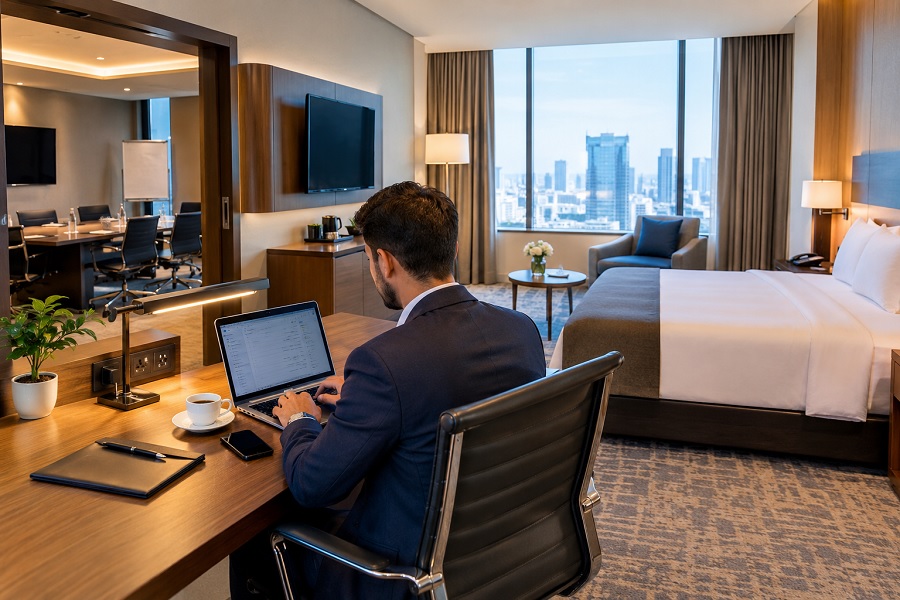
A dedicated workspace is one of the most important features of a business hotel. Travellers often need to prepare presentations, respond to emails, attend virtual meetings, and complete reports during their stay.
A good business hotel should provide a comfortable desk, an ergonomic chair, sufficient lighting, and convenient access to electrical outlets. Rooms should offer enough space to use laptops and other work equipment without compromising comfort.
Some hotels also provide business lounges or shared work areas where guests can work outside their rooms. Quiet surroundings, suitable seating, and a professional atmosphere can make these spaces particularly useful for remote workers and corporate guests.
2. Meeting Rooms and Conference Facilities
Meeting rooms are essential for companies that organise client discussions, training sessions, presentations, and business conferences. A hotel review should assess the availability, size, layout, and condition of these facilities.
Well-equipped meeting rooms may include projectors, large displays, video conferencing systems, microphones, whiteboards, and conference tables. Flexible seating arrangements can accommodate different event formats, from small team meetings to larger corporate gatherings.
Hotels that offer event planning assistance, refreshments, printing facilities, and technical support can make business events easier to organise. Before booking, companies should confirm room capacity, equipment availability, rental charges, and booking policies.
3. Internet Connectivity and Wi-Fi Quality
Reliable internet connectivity is a basic requirement for business travellers. Professionals depend on stable connections for video calls, cloud-based applications, online presentations, and communication with colleagues.
When reviewing a business hotel, guests should consider Wi-Fi coverage throughout guest rooms, meeting areas, restaurants, and business lounges. Connection stability and upload performance are particularly important for video conferencing and sharing large files.
Hotels should ideally provide secure Wi-Fi access and clear instructions for connecting devices. Travellers handling confidential business information should follow their organisation's security policies and consider using an approved VPN.
4. Location and Transportation Accessibility
The location of a business hotel can significantly affect the convenience of a corporate trip. Hotels close to business districts, commercial centres, conference venues, and corporate offices can reduce commuting time.
Access to airports, railway stations, public transportation, taxis, and major roads is also important. A well-located hotel allows professionals to attend meetings on schedule and spend less time travelling between appointments.
Reviews should consider actual travel distances, traffic conditions, parking availability, and transportation options rather than relying only on a hotel's advertised location.
5. Business Services and Technology
Additional business services can improve the overall guest experience. Useful facilities may include printing, photocopying, scanning, document delivery, computer access, and administrative assistance.
Some properties provide private offices, coworking spaces, business centres, and dedicated support for corporate events. Availability varies by hotel, so guests should confirm which services are included in the room price and which require additional payment.
Modern technology, including convenient charging points and audiovisual equipment, can further improve the experience for professionals who travel with multiple devices.
6. Room Comfort and Essential Amenities
Although business facilities are important, a comfortable room remains essential. Business travellers need a clean environment, quality bedding, effective air conditioning, suitable lighting, and a quiet atmosphere to rest after a demanding workday.
Other useful amenities include a kettle, drinking water, a wardrobe, an in-room safe, and sufficient storage space. Blackout curtains and sound insulation can be particularly valuable for travellers who need uninterrupted sleep before early meetings.
A balanced hotel review should examine both the professional facilities and the quality of the accommodation itself.
7. Dining Options and Flexible Services
Busy professionals often work around tight schedules. Hotels with early breakfast options, room service, an on-site restaurant, or convenient takeaway facilities can make meals easier to manage.
Guests should also check breakfast timings, restaurant operating hours, dietary options, and the availability of nearby dining establishments.
Flexible check-in and check-out arrangements may be beneficial for travellers arriving on early flights or departing after late meetings. However, these services depend on availability and hotel policies.
8. Customer Service and Professional Support
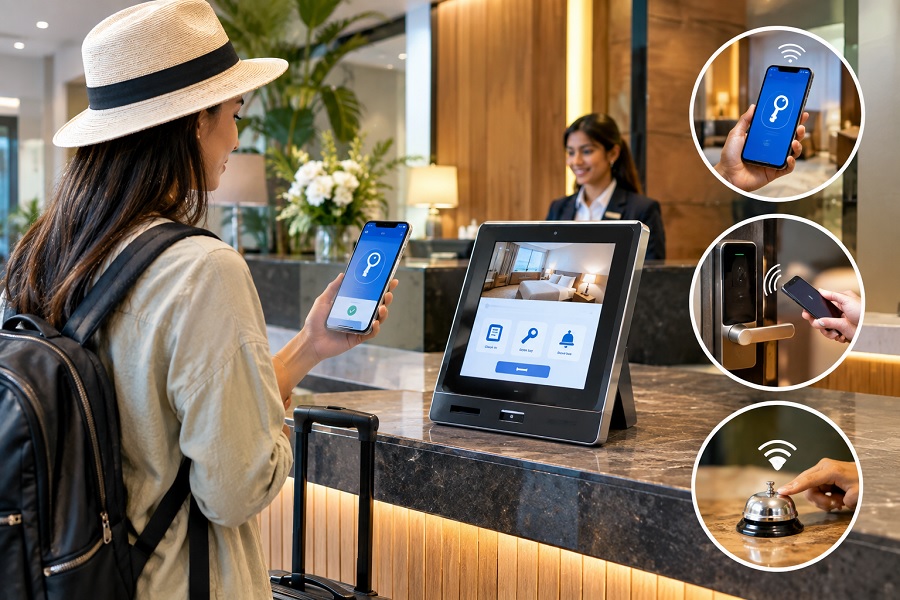
Efficient service is another important factor when evaluating business accommodation. Quick check-in, responsive reception staff, clear billing, and prompt maintenance support can help guests avoid unnecessary delays.
Hotels that understand corporate travel requirements may offer business booking assistance, group reservations, meeting coordination, and itemised invoices.
Reviews should assess how effectively the hotel responds to guest concerns, resolves technical problems, and communicates service limitations.
9. Cleanliness, Safety, and Security
Cleanliness and safety are essential considerations for every hotel guest. Business travellers should look for well-maintained rooms, hygienic bathrooms, clean work surfaces, and properly maintained common areas.
Security features may include controlled room access, secure storage, CCTV in appropriate public areas, and established emergency procedures. Guests working with sensitive documents or electronic devices should also consider room security and network protection.
Recent guest reviews can help identify recurring issues, although individual experiences may vary.
10. Pricing and Value for Money
Business hotel rates can vary according to location, season, demand, room category, and available facilities. The lowest advertised price does not always represent the best value.
A comprehensive review should compare the room rate with the services included. Complimentary Wi-Fi, breakfast, access to workspaces, parking, and meeting facilities can influence the total cost of a stay.
Corporate travellers should also check cancellation policies, taxes, deposits, additional service charges, and discounts for extended stays or company bookings.
11. How to Choose the Right Business Hotel
Choosing the right business hotel begins with identifying the purpose of the trip. A traveller attending a conference may prioritise meeting facilities and proximity to the venue, while a remote worker may focus on internet reliability, desk comfort, and quiet surroundings.
Before making a reservation, travellers should read recent reviews, inspect available room photographs, confirm essential facilities directly with the property, and compare the total booking cost.
Companies organising accommodation for employees should establish clear requirements for location, budget, security, accessibility, and meeting facilities. This approach helps ensure that the selected hotel meets both professional and personal needs.
Conclusion
Business hotel reviews help travellers identify accommodation that supports productivity, convenience, and comfort. Workspaces, meeting rooms, internet connectivity, location, business services, cleanliness, and pricing should all be considered when assessing a property.
A well-chosen business hotel can make corporate travel more efficient by providing the facilities professionals need to work effectively and rest comfortably. By comparing amenities, checking recent guest feedback, and confirming important services before booking, travellers can make informed decisions and select accommodation suited to their business requirements.