Aerolam Outlines Strategic Budget Priorities to Further Stimulate India`s Manufacturing Momentum

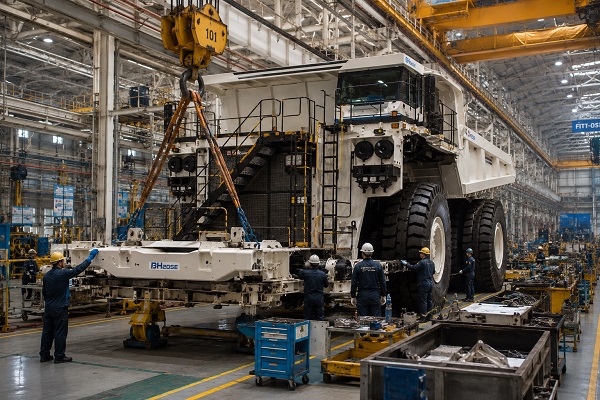
India's manufacturing sector targets significant economic expansion, enhancing contribution from around 17% of GDP to reach 25% by 2030. The industry is looking forward to the Union budget 2026- 27 for sector-specific standards, sustainability-led incentives, and measures that can further strengthen global competitiveness. Sharing his expectations, Brijesh Patel, Managing Director of Aerolam Insulations, emphasized that for India to become a global manufacturing powerhouse, the government must pivot from general incentives to sector-specific efficiency standards.
Although the nation has made significant progress through the National Manufacturing Mission (NMM), insulation and packaging manufacturers continue to face structural barriers that restrict competitiveness. Mr. Patel highlighted that India’s insulation and packaging ecosystem, critical to industrial, logistics and infrastructure efficiency, still continues to face several key challenges including complex regulations, the inverted duty structure, skilled labour gap, high raw material costs, limited export readiness, slower adoption of recyclable materials, and reverse logistics complexity for recyclable materials amongst others.
“By standardizing energy-saving materials and encouraging eco-friendly alternatives, India can ensure that industrial growth remains globally competitive and environmentally responsible,” said Mr. Patel.
Key recommendations from Aerolam include:
Introducing Mandatory Thermal Efficiency Standards for all new commercial and industrial buildings construction codes. Embedding energy performance criteria would significantly lower operational costs, reduce emissions, and drive demand for high-performance insulation solutions.
Bringing in Sustainability incentives to accelerate India’s net-zero agenda. Introduce incentives for eco-friendly and recyclable insulation and packaging products, such as reduced GST slabs (e.g., from 18% to 5%) and Green Credit mechanisms, boosting domestic production and adoption of sustainable materials.
Correcting the inverted duty structure, where raw materials for insulation and packaging are taxed higher than finished goods, to enhance cost competitiveness. The persistence of inverted duty structures, where raw materials attract equal or higher duties than finished goods, squeezes margins for manufacturers. Rationalizing duties across the value chain will enhance competitiveness.
Easing business operations through faster, fully automated GST refunds and digital single-window approvals for manufacturing expansions.
Boosting exports by aligning Indian insulation and packaging standards with major international certifications (EU/US), supported through a “Standards Alignment Programme.” Strengthen export incentive schemes (e.g., duty remission and logistic subsidies) that lower cost burdens for manufacturers and improve global pricing competitiveness. Streamlined export credit windows and extended Cover for credit risks would empower manufacturing companies to venture into new markets.
“With India’s manufacturing sector set on a growth trajectory, the Union Budget 2026-27 presents an opportunity to deepen the structural underpinnings of industrial growth. By standardizing energy-efficient materials and incentivizing sustainable manufacturing, the Government can ensure India not only grows but thrives as a globally competitive and green manufacturing hub,” Mr. Patel added.
Above views are of the author and not of the website kindly read disclaimer