What Makes a Smartphone Good for Gaming?

Mobile gaming has become more demanding than ever. Modern games can require powerful processors, capable graphics hardware, fast displays, and good battery performance.
However, a smartphone does not need to be marketed as a "gaming phone" to deliver a good gaming experience. Several hardware and software features determine how well a phone handles games.
Here are the most important things to look for when choosing a smartphone for gaming.
1. A Powerful Processor
The processor is one of the most important components for gaming performance.
A capable chipset can handle demanding games more smoothly and maintain better performance during longer gaming sessions.
When comparing smartphones, look beyond the number of processor cores or clock speed. The overall chipset architecture and its real-world performance are more important.
A powerful processor can help with:
* Higher and more stable frame rates
* Faster game loading
* Better graphics performance
* Smoother multitasking
* Improved long-term gaming performance
2. Good Graphics Performance
Gaming is not only about the CPU. The graphics processing unit, or GPU, plays a major role in rendering game visuals.
A stronger GPU can handle higher graphics settings and demanding visual effects more effectively.
If you play graphics-heavy games, pay particular attention to the GPU capabilities of the chipset rather than choosing a phone based only on its RAM capacity.
3. A High Refresh Rate Display
The display refresh rate determines how many times the screen can update every second.
For example, a 60Hz display refreshes 60 times per second, while a 120Hz display can refresh up to 120 times per second.
A higher refresh rate can make animations, scrolling, and supported games feel smoother.
However, the game itself must support higher frame rates to take full advantage of a high-refresh-rate display.
4. Fast Touch Response
Gaming also depends on how quickly the phone responds to your touches.
A display with good touch responsiveness can make controls feel quicker, which can be particularly useful in fast-paced games.
This can matter when aiming, moving, changing weapons, or performing quick actions.
For competitive gaming, touch response can be just as important as display refresh rate.
5. Effective Cooling
Gaming puts sustained stress on the processor and GPU, which generates heat.
If a smartphone becomes too hot, it may reduce performance to control temperatures. This process is commonly known as thermal throttling.
A good gaming smartphone therefore needs an effective cooling system.
Some smartphones use features such as:
* Vapor chambers
* Larger heat-dissipation areas
* Graphite layers
* Dedicated cooling systems
* Software-based thermal management
Good cooling can help maintain consistent performance during longer gaming sessions.
6. Sufficient RAM
RAM helps the smartphone handle games and other applications running in the background.
Having sufficient RAM can improve multitasking and reduce the need to reload applications.
However, more RAM does not automatically mean better gaming performance. A phone with a powerful chipset and optimized software can outperform a device that simply has more RAM.
For most users, choosing a balanced combination of processor, RAM, storage, and software is more important than chasing the highest RAM number.
7. Fast and Sufficient Storage
Modern mobile games can occupy a significant amount of storage.
A smartphone with sufficient internal storage gives you more room for games, updates, screenshots, videos, and other applications.
Faster storage can also contribute to quicker game loading and smoother data access.
Before buying a gaming phone, consider not only the advertised storage capacity but also how much usable space remains after the operating system and pre-installed applications.
8. Long Battery Life
Gaming can consume a lot of battery power.
A smartphone with a larger battery can generally provide longer gaming sessions between charges, although actual battery life depends on the game, screen brightness, network connection, processor efficiency, and other factors.
If you frequently play for several hours, battery capacity and power efficiency should both be considered.
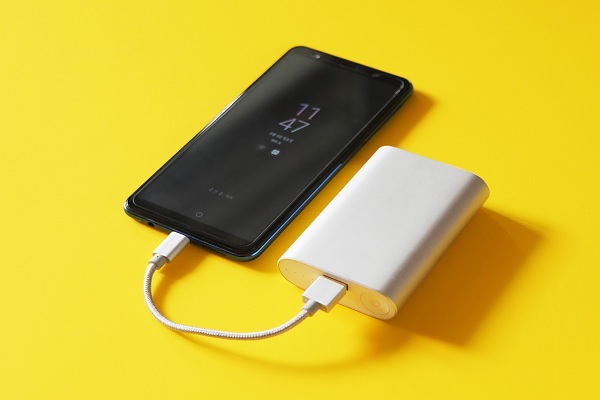
9. Fast Charging
Fast charging can be especially useful for gamers.
Instead of waiting for a phone to charge for a long period, fast charging can provide additional battery power in a shorter amount of time.
However, charging can also generate heat, so a good smartphone should have appropriate charging and thermal management systems.
10. Good Speakers and Audio
Sound can make a major difference in gaming.
Good stereo speakers can help you hear footsteps, gunfire, vehicles, and other important audio cues without immediately needing headphones.
For competitive games, accurate audio can sometimes provide useful information about what is happening around your character.
A smartphone with good speaker placement can also prevent your hands from accidentally blocking the speakers while gaming.
11. Stable Network Connectivity
Even a powerful smartphone can struggle with online games if the network connection is unstable.
A good gaming phone should provide reliable Wi-Fi and mobile network connectivity.
Low latency is particularly important for multiplayer games because delays between your actions and the game's response can affect gameplay.
12. Gaming-Friendly Software Features
Some smartphones include dedicated gaming modes that optimize the experience.
These features may allow users to:
* Block unwanted notifications
* Prioritize gaming performance
* Monitor temperature and performance
* Prevent accidental touches
* Manage calls and alerts
* Customize gaming controls
These software features can improve the overall experience, especially during competitive matches.
Is More RAM Always Better for Gaming?
Not necessarily.
A common mistake is assuming that a phone with more RAM will automatically provide higher gaming performance.
Gaming performance depends on several components working together, including the processor, GPU, cooling system, display, software optimization, and storage.
A balanced smartphone is usually a better choice than one with an impressive RAM number but weaker overall hardware.
What Should Gamers Prioritize?
If gaming is your main priority, focus on these factors in roughly this order:
1. Processor and GPU performance
2. Cooling system
3. Display refresh rate and touch response
4. Battery life
5. Software optimization
6. RAM and storage
7. Audio and connectivity
Your priorities can change depending on the games you play.
Someone playing casual puzzle games does not need the same hardware as someone playing competitive multiplayer or graphics-intensive games.
Final Thoughts
A good gaming smartphone is more than just a phone with a powerful processor or a large amount of RAM.
The best gaming experience comes from a combination of **strong performance, effective cooling, a responsive display, good battery life, fast charging, reliable connectivity, and optimized software**.
Before buying a smartphone for gaming, think about the games you actually play and the performance you need. Choosing a balanced device can provide a better experience than simply buying the phone with the biggest specifications on paper.