Tur Report As On 26th August 2026 by Amit Gupta, Kedia Advisory
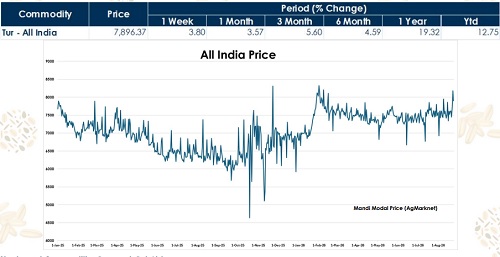
Price Performance: Tur (All India) mandi modal prices traded at 7,581.69 per quintal, gaining over 1.5% during the month as delayed monsoon and lower kharif acreage supported sentiment. Prices tested the 7,700 mark amid tightening domestic supplies. However, higher arrivals, weaker exports and expectations of improved sowing after recent rainfall capped further upside.
Domestic Supply & Production: Domestic supply remains supportive as Arhar sowing reached 24.80 lakh hectares, down 18% YoY, while all pulses sowing declined 15% to 69.23 lakh hectares. The Third Advance Estimates projected 2025-26 tur production at 35.92 lakh tonnes, down 0.88%, although recent rainfall is expected to improve sowing progress in the coming weeks.
Trade & Policy: Government policy remains supportive after the MSP was raised by 450 to 8,450 per quintal, while the 30% import duty on Yellow Peas continues supporting domestic consumption. May imports declined 17% to 74,160 tonnes, tightening supplies. However, the extension of duty-free tur imports until March 2027 remains a medium-term bearish factor.
Global & Weather Outlook: Global fundamentals remain mixed. Myanmar reduced tur production to 300,000 tonnes and increased Tur Lemon prices by $35 per tonne, while imported stocks at Mumbai and Chennai ports remain at multi-month lows. Conversely, Tanzania's 400,000-tonne bumper crop and expectations of improved sowing after recent rainfall may gradually improve global supply.

Price Performance: Tur (All India) mandi modal prices stood at 7,581.69 per quintal, rising 1.66% over one month, 1.32% over three months, 10.90% over six months and 16.25% YoY. Prices rebounded more than 13% from June lows as declining arrivals, delayed monsoon and kharif acreage concerns tightened domestic supplies, although policy measures continued to cap sharp rallies.
Domestic Supply & Production: Domestic supply remains supportive after the Third Advance Estimates projected tur production at 35.92 lakh tonnes, down 0.88% YoY. June arrivals declined over 22%, while falling APMC arrivals reflected depletion of old-crop stocks. However, arhar sowing increased 1.26% YoY to 1.61 lakh hectares, indicating improving crop progress.
Trade & Policy Support: Government policy continues to support domestic prices. Tur MSP was raised by 450 to 8,450 per quintal, while the 30% duty on yellow peas strengthened domestic demand. April imports declined 14% to 86,089 tonnes. However, the extension of the free import policy until March 2027 and higher annual imports of 14.83 lakh tonnes remain medium-term bearish factors.
Weather & Global Outlook: Weather remains the key market driver. A 43% June rainfall deficit, delayed southwest monsoon and below-normal rainfall forecast of 92% of LPA have heightened production uncertainty across Karnataka and Maharashtra. Myanmar's tighter stocks and higher Tur Lemon prices support international sentiment, while Tanzania's expanding production and possible government stock releases may moderate long-term price strength.

* Tur prices gained 3.5% monthly amid uneven rainfall and strengthening festive procurement demand.
* Arhar sowing reached 43.86 lakh hectares by August 21, up 1% year-on-year.
* Jan-Aug 2026 arrivals increased 6% to 10.91 lakh tonnes year-on-year.
* Apr-Jun 2026 Tur imports declined 2% to 2.38 lakh tonnes year-on-year.
* Apr-Jun Tur exports fell 48% to 6,040 tonnes compared with previous year.
* Tur MSP increased 450, or 5.62%, to 8,450 per quintal for 2026-27.
* Extended dry spells across Marathwada and Northern Karnataka created localized moisture stress.
* Late sowing could delay peak domestic Tur arrivals toward late December or January.
* Dal millers accelerated raw Tur procurement ahead of peak festive-season demand.
* 2025-26 Tur production estimated at 35.92 lakh tonnes, declining 0.88% year-on-year.
* Government’s 30% Yellow Peas duty is supporting domestic Tur demand and substitution.
* Free Tur import policy extension through March 31, 2027 could cap upside momentum.
/ Rupee near 95.60 is increasing landed costs for African and Burmese Tur.
* Weekly stock declaration enforcement by Consumer Affairs is limiting speculative inventory accumulation.
* Myanmar Tur production forecast fell from 350,000 tonnes toward 300,000 tonnes after localized weather disruptions.
* Tanzania’s 400,000-tonne bumper crop is expanding supply to address structural Tur market deficits.
* Imported Tur liquidation or improved domestic arrivals could temporarily ease physical supply tightness.
* Buyer activity weakened at elevated prices, while pulse mills restricted purchases to immediate requirements.
Above views are of the author and not of the website kindly read disclaimer



.jpg)