The Rise of Context-Aware Gadgets That Adapt to Human Behavior
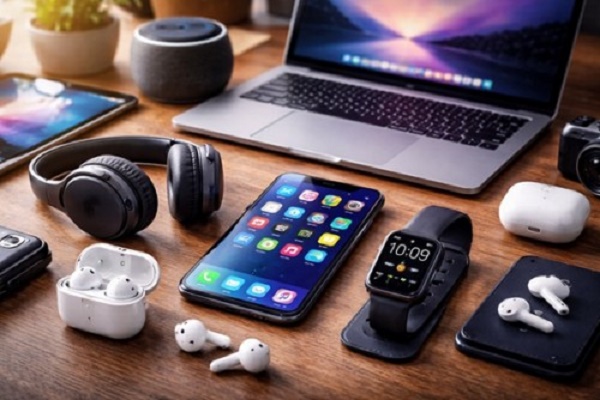
Technology is quietly moving away from being something you operate to something that understands you. The newest generation of gadgets is no longer focused only on speed, storage, or design. Instead, the focus is shifting toward awareness—devices that observe patterns, learn behavior, and adjust themselves without constant input.
This is the era of context-aware gadgets.
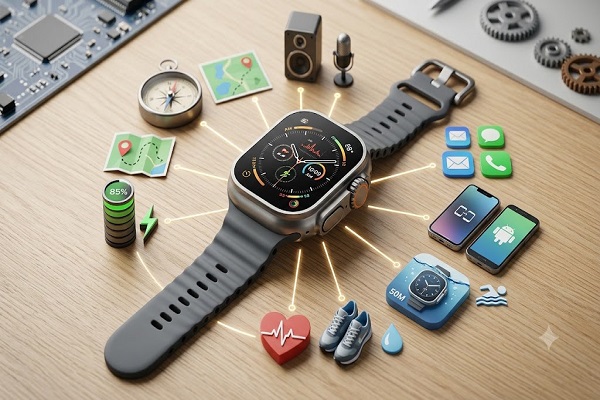
Unlike traditional devices that wait for commands, context-aware gadgets respond based on environment, habits, and usage patterns. A phone that reduces brightness when it senses fatigue in your usage cycle, earbuds that adjust noise cancellation depending on your surroundings, or a smartwatch that changes its alerts based on your stress levels—these are no longer experimental ideas. They are gradually becoming part of mainstream technology.
The core idea is simple: reduce friction between humans and machines. Instead of forcing users to repeatedly configure settings, devices now attempt to predict intent. Over time, they learn when you usually wake up, how you interact with notifications, what apps you use at specific hours, and even how your behavior changes in different locations.
This creates a new kind of convenience. The gadget starts feeling less like a tool and more like an assistant that silently adapts in the background. You don’t need to constantly adjust settings because the device is already trying to do it for you.
But this evolution is not just about comfort—it changes the relationship between humans and technology.
When a device begins to understand patterns, it also begins to interpret behavior. That raises a subtle shift in control. Instead of users fully directing the experience, the experience starts to shape itself around users. This can be helpful, but it also makes people more passive in how they interact with their devices.
There is also the question of dependency. The more a gadget adapts, the less effort a user needs to put into managing it. Over time, this convenience can reduce awareness of how the system is actually functioning. People may stop noticing the settings altogether because everything “just works.”
Another important layer is data. For a gadget to adapt intelligently, it needs to observe. This means tracking usage patterns, movement, preferences, and sometimes even emotional cues through sensors. While this data is often used locally or within secure systems, it still raises concerns about how much a device should know in order to be helpful.
Despite these concerns, the direction of innovation is clear. Context-aware computing is becoming the foundation of modern gadget design. Companies are no longer just building features; they are building behavior models. The goal is not just efficiency, but anticipation.
In the future, gadgets may not even feel like separate devices. They may blend into the environment, adjusting sound, light, notifications, and interfaces based on who is present and what is happening. The idea of manually controlling everything could gradually fade, replaced by systems that respond continuously and quietly in the background.
What makes this shift significant is not just the technology itself, but the change in expectation. Users are slowly beginning to expect devices to understand them without explanation. And once that expectation becomes normal, there is no going back to purely manual control.
The rise of context-aware gadgets is ultimately a shift from interaction to adaptation. Technology is no longer waiting for instructions—it is learning how to behave around you.
And in that shift, the definition of a “smart device” is quietly being rewritten.