Technology Trends That Could Define the Next Decade
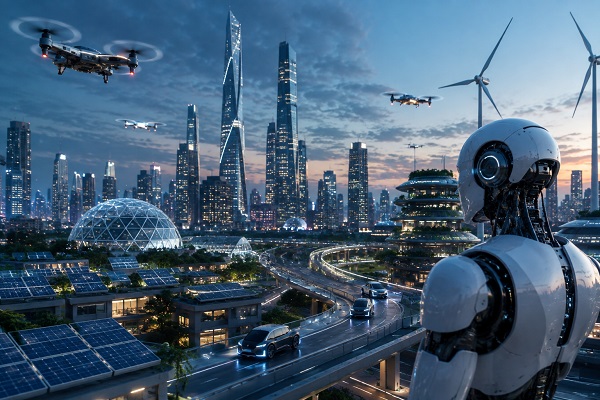
Technology is evolving at an extraordinary pace, transforming how people work, communicate, travel, shop, and manage their everyday lives. The next decade could bring major changes across artificial intelligence, robotics, connectivity, computing, healthcare technology, and consumer electronics.
1. Artificial Intelligence Everywhere
Artificial intelligence is likely to become a standard part of everyday digital experiences. AI could increasingly assist with search, writing, education, customer service, software development, business decisions, and personal productivity.
2. AI Agents and Autonomous Software
The next generation of AI may move beyond answering questions and start completing multi-step tasks. AI agents could schedule appointments, analyse information, manage workflows, write software, and coordinate different digital services with limited human intervention.
3. Humanoid Robots
Advances in robotics could make humanoid robots increasingly capable of performing useful tasks. Industries such as manufacturing, logistics, hospitality, and potentially home services could benefit from robots that can operate in environments designed for humans.
4. Quantum Computing
Quantum computing could eventually solve certain complex problems that are extremely difficult for conventional computers. Potential applications include drug discovery, materials science, optimisation, and advanced cryptography.
5. Next-Generation Connectivity
Connectivity is expected to continue improving beyond today's 5G networks. Future communication technologies could provide faster speeds, lower latency, and better connectivity for autonomous vehicles, smart cities, industrial systems, and connected devices.
6. The Expansion of Edge Computing
Instead of sending every piece of data to distant cloud servers, edge computing processes information closer to where it is generated. This can reduce latency and become increasingly important for autonomous machines, industrial automation, gaming, and real-time AI applications.
7. Spatial Computing and Mixed Reality
Augmented reality, virtual reality, and mixed reality could become more practical and mainstream. Lightweight smart glasses may eventually complement smartphones by displaying information directly within a user's surroundings.
8. Smart Glasses
Smart glasses could become one of the next major consumer technology categories. Future devices may combine cameras, AI assistants, navigation, translation, communication, and contextual information in a wearable format.
9. Autonomous Vehicles
Self-driving technology continues to develop, particularly in controlled environments. Autonomous vehicles could gradually transform transportation, logistics, delivery services, and public mobility as technology and regulations evolve.
10. Electric and Software-Defined Vehicles
Cars are increasingly becoming technology platforms rather than purely mechanical machines. Software updates, connected services, advanced driver-assistance systems, AI-powered features, and electric powertrains could define the next generation of vehicles.
11. Advanced Battery Technology
Better batteries could influence electric vehicles, smartphones, laptops, renewable energy storage, and other technologies. Improvements in energy density, charging speed, lifespan, and manufacturing could make electrification more practical.
12. Renewable Energy and Smart Grids
Technology could play a major role in building cleaner and more flexible energy systems. Smart grids, advanced batteries, solar power, wind energy, and intelligent energy-management systems could work together to improve energy efficiency.
13. Biotechnology and Digital Healthcare
Technology and biology are increasingly converging. AI-assisted drug discovery, precision medicine, wearable monitoring, and advanced diagnostics could transform how diseases are detected and treated.
14. ersonalised Digital Experiences
AI could make digital products increasingly personalised. Apps, educational platforms, entertainment services, and shopping experiences may adapt more closely to individual preferences and behaviour.
15. Cybersecurity and Digital Identity
As more aspects of life move online, cybersecurity will become increasingly important. New approaches to authentication, encryption, digital identity, and fraud detection could help protect individuals and organisations from increasingly sophisticated threats.
16. Sustainable Technology
The technology industry is likely to face growing pressure to reduce energy consumption, electronic waste, and resource usage. More efficient processors, recyclable materials, repairable devices, and sustainable manufacturing could become important priorities.
17. The Growth of Automation
Automation could transform repetitive tasks across industries. Rather than affecting only factories, automation may increasingly influence offices, logistics, finance, customer support, retail, and other service sectors.
18. Personal AI Assistants
AI assistants could become more deeply integrated into smartphones, computers, cars, homes, and wearable devices. Instead of simply responding to commands, they may understand context and proactively help users manage everyday tasks.
19. Internet of Things
The Internet of Things could continue connecting homes, vehicles, workplaces, factories, and cities. More devices may communicate with each other automatically, creating increasingly intelligent digital environments.
20. The Rise of Human-Centred Technology
Despite rapid technological progress, the most successful innovations may be those that make technology easier and more natural to use. Simple interfaces, accessibility, privacy, security, and human control are likely to become just as important as raw technological capability.
Conclusion
The next decade could be defined by the convergence of **AI, robotics, advanced computing, connectivity, biotechnology, clean energy, and automation**. Some technologies may develop faster than expected, while others may take longer to reach mainstream adoption. What is clear is that technology will continue to influence how people work, communicate, travel, learn, and live. The biggest transformation may not come from a single invention, but from multiple technologies working together.