Taj Mahal Night View Experience
Taj Mahal Night View Experience: A Magical Moonlit Wonder
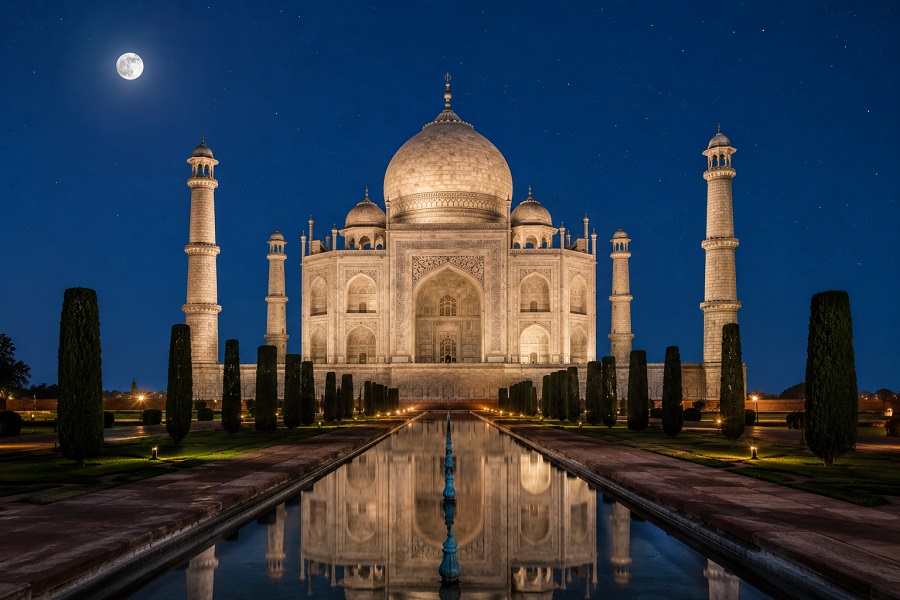
The Taj Mahal in Agra is already one of the most iconic monuments in the world, but seeing it at night under a full moon takes the experience to another level. The white marble structure glows softly under moonlight, creating a calm, almost surreal atmosphere that feels very different from the daytime crowds.
Night viewing is limited and carefully regulated, which makes it even more special for visitors who get the chance.
What Makes the Night View of Taj Mahal Special
The Taj Mahal changes completely after sunset. Instead of bright sunlight and busy tourist movement, you experience:
Soft silver reflection on white marble
Quiet surroundings with minimal crowd
Peaceful Yamuna river backdrop
Cool night breeze over the monument
Romantic and serene atmosphere
The marble appears to shift colors slightly depending on moonlight intensity, giving it a dreamlike look.
Night Viewing Timings and Access
Night viewing of the Taj Mahal is usually allowed on specific nights:
Full moon night
Two nights before and two nights after full moon
Limited time slots (around 30–60 minutes per batch)
Important points:
Advance ticket booking is required
Limited number of visitors per session
Security checks are strict
Photography rules may vary depending on regulations
Best Viewing Spots Inside the Complex
During night viewing, visitors are usually allowed into the outer garden areas, where you can see the monument clearly.
Best viewpoints include:
Main entrance garden (Diana bench view)
Yamuna-facing side for reflection shots
Central pathway view aligned with the dome
Side marble platforms for wide-angle views
Each angle offers a different mood of the monument under moonlight.
Experience of Visiting at Night
A night visit to the Taj Mahal is not about sightseeing alone. It is more about feeling the atmosphere:
Silence replaces daytime crowds
The monument feels more intimate and emotional
The reflection in water adds depth to the view
Cooler air enhances comfort during exploration
Security-controlled calm environment
Many visitors describe it as a once-in-a-lifetime experience.
Photography Tips for Night Viewing
Taking photos at night can be challenging, but rewarding:
Use a tripod if allowed
Increase ISO carefully for low light
Focus on symmetry of the dome
Capture reflections in water channels
Avoid flash photography (usually restricted)
Even smartphone cameras can capture stunning shots with steady hands.
Nearby Stay Options for Night Visit
If you are planning a night viewing experience, staying nearby is ideal:
Hotels near Taj Ganj area
Riverside heritage hotels
Luxury resorts in Agra city
Budget stays within 2–3 km radius
Staying close helps you reach early and avoid travel stress during limited entry timings.
Best Time for Night Visit
Although night viewing is tied to the lunar calendar, the best seasons are:
October to March: Clear skies and pleasant weather
Winter nights: Best visibility and comfort
Avoid monsoon: Cloud cover may reduce visibility
Travel Tips for Visitors
Book tickets in advance (they sell out quickly)
Carry valid ID proof
Arrive at least 30–45 minutes early
Keep mobile phones charged for photography
Follow all security instructions strictly
Final Thoughts
The Taj Mahal night view is not just a tourist activity; it is an emotional experience. The combination of moonlight, silence, and timeless architecture creates a rare moment where history feels alive. If you ever get the chance, it is one of the most unforgettable sights in India.