SOPA Expects Soybean Acreage to Surpass Last Year by Amit Gupta, Kedia Advisory
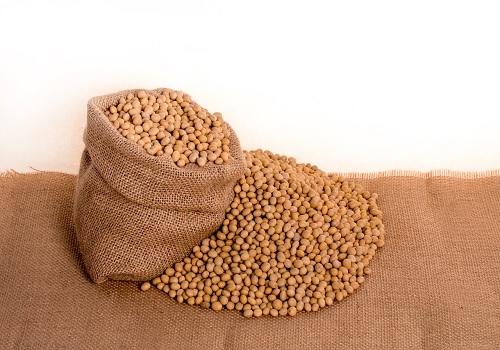
Soybean sowing has accelerated across key producing states despite a delayed monsoon, with the Soybean Processors Association of India (SOPA) expecting total acreage to exceed last year's level. Adequate rainfall in Madhya Pradesh has significantly improved planting progress, while Maharashtra is expected to catch up as soil moisture improves. SOPA estimates soybean acreage at 28.9 lakh hectares as of June 30, considerably higher than official government figures due to reporting delays. Attractive soybean prices have encouraged many farmers to switch back from maize. However, final production will largely depend on rainfall distribution during the remainder of the monsoon season.
Key Highlights
- SOPA expects soybean acreage in 2026 to exceed last year's planting level.
- Soybean sowing has accelerated in Madhya Pradesh following improved monsoon rainfall.
- SOPA estimates acreage at 28.9 lakh hectares, well above official government data.
- Higher soybean prices have encouraged farmers to shift back from maize cultivation.
- Final soybean production will depend on rainfall distribution over the next three months.
Soybean sowing has gathered momentum across India's major producing regions as improved monsoon rainfall supports planting activity after a delayed start to the season. The Soybean Processors Association of India (SOPA) expects soybean acreage during the 2026 kharif season to exceed last year's level, driven by favorable prices and improving weather conditions.
According to SOPA's rapid survey, soybean planting had reached approximately 28.9 lakh hectares by June 30, substantially higher than the Agriculture Ministry's estimate of 6.9 lakh hectares. The industry body attributed the large difference to a reporting lag of seven to ten days in official government data, stating that field-level sowing has progressed much faster than reflected in official statistics.
Madhya Pradesh, India's largest soybean-producing state, has witnessed strong planting progress following adequate rainfall across major growing regions. SOPA estimates soybean acreage in the state at around 15.56 lakh hectares by the end of June, compared with the government's estimate of 4.3 lakh hectares. The association expects sowing across the state to be largely completed by July 15 if favorable weather conditions continue.
Planting progress in Maharashtra remains comparatively slower because of inadequate soil moisture, although SOPA expects sowing to accelerate over the next two weeks with additional rainfall. The association estimates soybean acreage in Maharashtra at 8.45 lakh hectares, while Rajasthan has already completed around 35-40% of its targeted soybean area.
Higher soybean prices have played a significant role in encouraging farmers to expand cultivation. Many growers who shifted to maize during the previous season have returned to soybean cultivation due to improved profitability. However, industry officials caution that while acreage is expected to increase, overall production will ultimately depend on the spatial and temporal distribution of monsoon rainfall during the remaining kharif season.
Improving monsoon rainfall and favorable market prices have accelerated soybean sowing, positioning acreage to exceed last year's level, although timely rainfall remains crucial for achieving higher production.
Above views are of the author and not of the website kindly read disclaimer