South Korea develops tech for world's 2nd-fastest 370 kph high-speed train
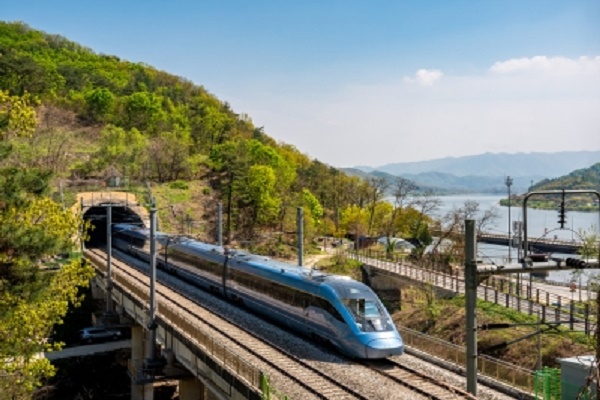
The government has completed the development of core technologies for a next-generation high-speed train capable of operating at 370 kilometers per hour (kph), making it the world's second-fastest high-speed train in terms of operating speed, the transport ministry said on Monday.
The technologies for the envisioned train, named EMU-370, have a technically designed maximum speed of 407 kph. It was developed under a national research and development (R&D) program, according to the ministry, reports Yonhap news agency.
The government plans to begin manufacturing the first vehicles next year and conduct test operations starting in 2030, with commercialisation expected after 2031.
When commercialised, the EMU-370 would rank second globally in commercial operating speed, following China's CR450, which is currently undergoing test operations at 400 kph ahead of planned commercial service in 2027.
Major countries, such as France, Germany and Japan, currently operate high-speed trains at speeds of around 320 kph, according to the ministry.
The project ran from April 2022 to December 2025 and was led by the Korea Railroad Research Institute, with seven public and private organisations participating.
A total of 22.5 billion won (US$15.23 million) was invested, including 18 billion won from the government and 4.5 billion won from the private sector, according to the ministry.
Meanwhile, South Korea could become a "strategic partner" in rebuilding war-torn Ukraine, a ranking senior official of the European country said, highlighting Seoul's strengths in high-speed rail, smart mobility and green energy technologies that he said will be crucial to transforming Ukraine's infrastructure.
Oleksii Kuleba, deputy prime minister for restoration who also serves as minister of communities and territories development, stressed that Ukraine faces destruction on a scale unseen in Europe since World War II, with more than 300,000 buildings damaged or destroyed and recovery in the transport sector alone estimated to cost US$78 billion.
During a recent working visit to Seoul, Kuleba held meetings with officials from the Export-Import Bank of Korea and the Economic Development Cooperation Fund (EDCF) to discuss financing for Ukraine's plan to purchase 20 Korean-made high-speed electric trains.