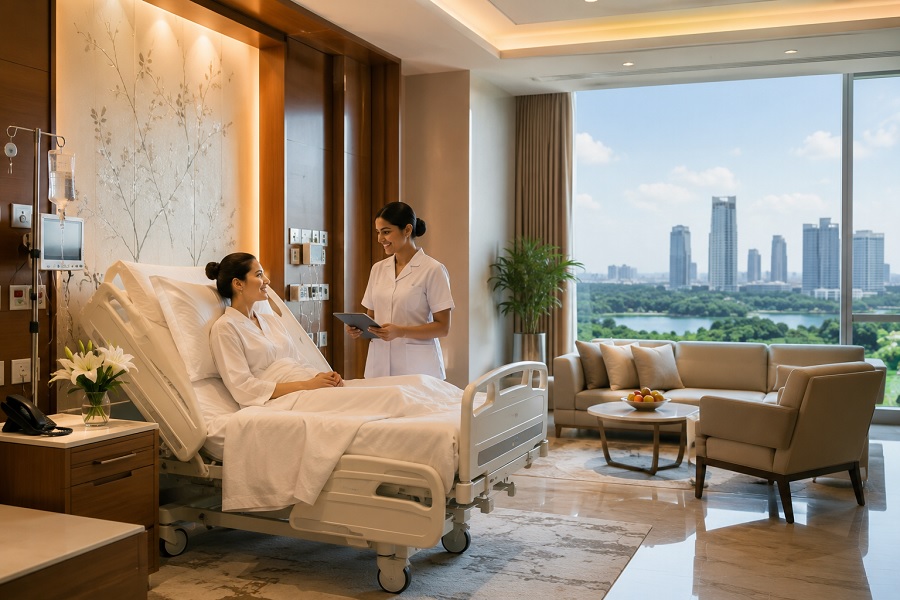
Luxury Healthcare Travel 2026: Exclusive Medical Services, Premium Accommodation and Personalised Support

Luxury Medical Tourism: Premium Healthcare and Hospitality Services in 2026
Introduction
Luxury medical tourism is an emerging segment of international travel that combines medical treatment with premium hospitality, personalised patient care, and comfortable recovery experiences. It allows patients to explore healthcare services in destinations that offer modern medical facilities, experienced healthcare professionals, dedicated patient support, and high-quality accommodation.
In 2026, medical travellers increasingly look beyond treatment costs when planning healthcare journeys. They may also consider hospital accreditation, specialist expertise, communication support, privacy, travel convenience, accommodation, and arrangements for family members accompanying them.
India is an important destination to consider for medical tourism because it offers a range of hospitals, specialist services, private healthcare facilities, and hospitality options across major cities. Destinations such as Delhi, Mumbai, Chennai, Bengaluru, Hyderabad, and Kochi have healthcare institutions that serve domestic and international patients.
Luxury medical tourism is not simply about staying in an upscale hotel. It involves coordinating the patient's healthcare journey, from initial consultations and treatment planning to accommodation, transport, follow-up appointments, and recovery support.
With appropriate planning and careful selection of healthcare providers, luxury medical tourism can offer a more organised and comfortable experience for patients travelling for medical care.
What Is Luxury Medical Tourism?
Luxury medical tourism refers to travelling to another city or country to obtain medical services while accessing premium hospitality and personalised travel support.
Depending on the healthcare provider and destination, services may include private hospital rooms, international patient coordinators, multilingual assistance, airport transfers, accommodation arrangements, personalised meal options, and post-treatment follow-up coordination.
Medical procedures may range from planned specialist consultations and diagnostic services to surgery, dental care, rehabilitation, and other treatments. The availability of these services varies by hospital, and not every facility offers the same level of hospitality or international patient support.
The main objective is to coordinate healthcare and travel arrangements while maintaining appropriate medical standards, patient safety, privacy, and continuity of care.
Why Is Luxury Medical Tourism Growing in 2026?
1. Demand for Personalised Patient Services
Some patients prefer dedicated assistance with appointments, documentation, communication, accommodation, and transportation. International patient departments may help coordinate these arrangements before and during a medical visit.
2. Access to Specialist Healthcare
Medical travellers may research destinations offering relevant medical specialists, advanced diagnostic equipment, specialised treatment departments, and multidisciplinary care.
Patients should assess the credentials of individual doctors and the suitability of the proposed treatment rather than relying only on a destination's reputation.
3. Comfortable Hospital Accommodation
Private rooms and premium inpatient facilities may provide additional privacy, space for an accompanying family member, and convenient access to hospital services. These facilities are subject to availability and may involve additional charges.
4. Convenient Travel Arrangements
Medical tourism providers may coordinate airport pickups, local transportation, hotel reservations, appointment schedules, and interpretation services. These arrangements can reduce logistical difficulties for patients travelling from outside the destination.
5. Recovery and Rehabilitation Support
Depending on the procedure, recovery may involve hospital monitoring, outpatient appointments, rehabilitation, or temporary accommodation near the treating hospital.
A comfortable environment can support the practical aspects of recovery, but accommodation and hospitality cannot replace necessary medical supervision.
Popular Luxury Medical Tourism Destinations in India
1. Delhi NCR
Delhi and the National Capital Region offer a wide range of private hospitals, specialist clinics, diagnostic facilities, and accommodation options.
International patients may find coordinated services for appointments, travel documentation, hospital admission, and interpretation, depending on the provider.
Popular healthcare interests: Specialist consultations, cardiac care, orthopaedics, oncology, and other hospital-based treatments.
Hospitality advantages: Premium hotels, serviced apartments, transport services, and international air connectivity.
2. Mumbai, Maharashtra
Mumbai is a major healthcare and business centre with private hospitals, specialist medical facilities, and a broad hospitality sector.
Patients can research hospitals offering international patient support alongside accommodation and transport options. Medical travellers should account for city traffic when arranging appointments and airport transfers.
Popular healthcare interests: Specialist medical care, cancer treatment, cardiac services, orthopaedics, and diagnostic consultations.
Hospitality advantages: Luxury hotels, serviced residences, private transport, and international connectivity.
3. Chennai, Tamil Nadu
Chennai has a well-established healthcare sector and attracts patients seeking specialist medical consultations and treatment.
The city offers hospitals, diagnostic facilities, rehabilitation services, and a variety of accommodation choices. Patients should confirm the exact services available through the chosen hospital's international patient department.
Popular healthcare interests: Cardiac care, orthopaedics, specialist surgery, and multidisciplinary medical services.
Hospitality advantages: Private accommodation, hotel services, transport facilities, and airport access.
4. Bengaluru, Karnataka
Bengaluru combines private healthcare institutions with a large hospitality sector and technology-enabled services.
Some providers offer assistance with online consultations, medical records, appointment coordination, and follow-up communication. Patients should verify whether these services are available for their particular treatment.
Popular healthcare interests: Specialist consultations, orthopaedics, selected surgical procedures, and diagnostic services.
Hospitality advantages: Premium hotels, serviced apartments, transport services, and digital patient support offered by participating providers.
5. Hyderabad, Telangana
Hyderabad is another destination for patients researching private hospitals and specialist treatment services.
The city offers a range of accommodation and transport options, while some healthcare providers have dedicated teams for international patients.
Popular healthcare interests: Oncology, cardiac care, specialist surgery, and other hospital-based services.
Hospitality advantages: Premium hotels, serviced accommodation, private transfers, and airport connectivity.
6. Kochi, Kerala
Kochi offers private healthcare facilities alongside hotels, serviced accommodation, and Kerala's wider wellness tourism sector.
Patients can investigate hospitals offering specialist treatment and, where medically appropriate, separately arranged rehabilitation or wellness services.
Popular healthcare interests: Specialist medical care, rehabilitation, diagnostic services, and selected surgical treatments.
Hospitality advantages: Hotels, local transport, airport access, and wellness accommodation options.
Important: These cities offer healthcare and hospitality infrastructure, but their inclusion does not establish that any particular hospital or treatment is superior. Patients should independently verify current medical credentials, accreditation, treatment suitability, and service availability.
Premium Healthcare Services in Luxury Medical Tourism
Personalised Medical Consultations
Some hospitals provide pre-arrival consultations, review medical reports, and help patients understand potential treatment pathways. The treating clinician should make the final medical assessment after reviewing the patient's individual circumstances.
Specialist Treatment Coordination
International patient teams may coordinate consultations with relevant specialists and help organise investigations, hospital admission, and treatment schedules.
Private Hospital Rooms
Depending on the facility, patients may have access to private rooms with additional space, visitor facilities, and selected hospitality services.
Diagnostic and Medical Facilities
Patients may seek hospitals offering appropriate diagnostic equipment and specialist departments. The suitability of a facility depends on the specific medical condition, required expertise, and clinical standards.
Multilingual Assistance
Interpretation and translation services can help patients understand consultations, treatment plans, consent forms, and discharge instructions.
Patients should ensure that important medical information is translated accurately and that they understand the risks, benefits, and alternatives of any proposed procedure.
Post-Treatment Follow-Up
Follow-up arrangements may include hospital reviews, remote consultations where clinically appropriate, medication guidance, and coordination with a local healthcare professional after returning home.
Luxury Hospitality Services for Medical Travellers
Premium Accommodation
Medical travellers may choose a luxury hotel, serviced apartment, or accommodation recommended by the treating hospital. The most suitable option depends on the patient's mobility, infection precautions, recovery needs, and proximity to the hospital.
Airport Transfers and Private Transportation
Pre-arranged transport can simplify travel between the airport, accommodation, and hospital. Patients recovering from surgery should obtain medical advice about the safest form of transport.
Personalised Meal Arrangements
Hotels and serviced residences may provide meals suited to different preferences. Any medically necessary dietary restrictions should be confirmed with the treating healthcare team rather than relying solely on hotel menus.
Family and Companion Support
Some providers help accompanying family members arrange accommodation, transport, hospital visits, and local information. Families should clarify visitor rules and any additional costs in advance.
Privacy and Convenience
Private accommodation, organised appointments, and coordinated transportation can make travel logistics easier. Patients should also ask how their personal information and medical records will be protected.
Popular Treatments Considered by Medical Tourists
Luxury medical tourism may involve different treatment categories, depending on the destination and the patient's needs.
1. Cardiac care: Specialist assessment and selected cardiac procedures at appropriately equipped facilities.
2. Orthopaedics: Evaluation and treatment for certain bone, joint, and mobility conditions.
3. Oncology: Specialist cancer consultations, diagnostic assessment, and treatment planning.
4. Dental care: Dental examinations and appropriate restorative or specialist dental procedures.
5. Ophthalmology: Eye examinations and selected eye treatments when clinically suitable.
6. Rehabilitation: Medically supervised recovery and functional rehabilitation programmes.
7. General specialist consultations: Appointments for second opinions, diagnostic review, or multidisciplinary evaluation.
8. Elective procedures: Selected planned procedures following individual medical assessment and informed consent.
Not every treatment is suitable for travel. Some conditions require urgent local treatment, prolonged monitoring, or specialised follow-up that makes international travel inappropriate.
How to Choose a Luxury Medical Tourism Provider
Selecting a healthcare provider requires more than comparing hotel photographs or package prices. Patients should evaluate medical quality and travel arrangements separately.
Verify hospital accreditation: Check current accreditation status directly with the relevant accrediting organisation.
Review the treating doctor's credentials: Confirm specialist qualifications, professional registration, and relevant experience.
Request a written treatment plan: Ask for the proposed treatment, expected hospital stay, follow-up requirements, and possible alternatives.
Understand the full cost: Request an itemised estimate covering professional fees, hospital charges, tests, medication, accommodation, transport, and potential additional expenses.
Ask about complications: Understand what happens if treatment takes longer than expected or a complication requires additional care.
Check infection prevention standards: Ask about the hospital's relevant safety protocols and how they apply to the planned treatment.
Confirm communication support: Check the availability of interpreters and written medical information in a language you understand.
Review privacy arrangements: Ask how medical records, identity documents, and personal information are stored and shared.
Plan follow-up care: Establish how follow-up will work after returning home and who will manage complications.
Verify travel suitability: Obtain advice from the treating clinician about flying, mobility, recovery time, and any restrictions on travel.
Costs and Budget Planning for Luxury Medical Tourism
The cost of luxury medical tourism varies considerably according to the procedure, hospital, specialist, accommodation, length of stay, and level of assistance required.
An overall budget may include:
Medical consultations and specialist fees.
Diagnostic tests and hospital charges.
Medication, medical devices, and follow-up appointments.
Flights, visa fees, and local transport.
Hotel accommodation or a serviced apartment.
Meals and expenses for accompanying family members.
Rehabilitation, nursing support, or additional recovery accommodation when required.
Contingency funds for unexpected medical or travel expenses.
Patients should request written estimates from the hospital and accommodation provider separately when possible. They should also clarify which expenses are excluded from any medical tourism package.
A lower advertised price does not necessarily represent better value, particularly if essential follow-up care or complication management is not included.
Safety and Ethical Considerations
Medical travel involves risks that are different from ordinary tourism. Patients should prioritise medical suitability, informed consent, and continuity of care over luxury services or promotional claims.
Before travelling, patients should discuss the risks of the proposed treatment with a qualified clinician. They should also consider whether travelling before or after a procedure could increase the risk of complications.
Patients considering surgery should ask about recovery time, infection prevention, blood clot risks where relevant, emergency arrangements, and the recommended interval before flying.
It is important to carry copies of medical records, test results, prescriptions, and discharge instructions. Patients should also arrange follow-up with an appropriate healthcare professional after returning home.
For international travel, check current visa requirements, medical visa eligibility where applicable, travel insurance exclusions, and any rules relating to bringing medication across borders.
The Future of Luxury Medical Tourism in 2026 and Beyond
The medical tourism sector may increasingly use digital consultations, electronic medical records, online appointment systems, and coordinated patient support to make the planning process more convenient.
Personalised travel assistance, accessible accommodation, multilingual communication, and better coordination between hospitals and recovery services may also become more important to patients.
However, technology and premium hospitality should support rather than replace qualified medical judgment. The long-term value of luxury medical tourism will depend on patient safety, transparent pricing, responsible marketing, appropriate treatment, and effective follow-up care.
Healthcare providers that communicate clearly about their capabilities, costs, limitations, and clinical outcomes can help patients make better-informed decisions.
Conclusion
Luxury medical tourism combines healthcare access with premium accommodation, personalised coordination, and convenient travel services. India offers several cities where patients can research specialist hospitals alongside a broad range of hospitality options.
From Delhi NCR and Mumbai to Chennai, Bengaluru, Hyderabad, and Kochi, medical travellers can explore different healthcare and accommodation arrangements according to their individual needs.
The most important step is to choose a qualified healthcare provider and confirm that the proposed treatment is medically appropriate. Patients should also understand the full costs, potential risks, travel restrictions, and follow-up requirements before making a decision.
By putting medical quality and patient safety first, travellers can approach luxury medical tourism with realistic expectations and a more organised healthcare journey.