Inside Luxury Hotel Security: Safety, Privacy and Modern Protection Standards
Luxury Hotel Security Reviews: What Travelers Should Know Before Booking
Luxury hotels are expected to deliver more than elegant rooms, fine dining, and personalized service. Safety, privacy, and security are also important parts of the guest experience. A Luxury Hotel Security Review examines how effectively a property protects guests, employees, personal belongings, and sensitive information while maintaining a comfortable and discreet atmosphere.
The hospitality industry continues to treat security as an ongoing priority, with hotels using policies, employee training, physical security measures, technology, and emergency procedures to protect guests and staff.
What Is a Luxury Hotel Security Review?
A Luxury Hotel Security Review evaluates the security-related aspects of a hotel during a guest's stay.
Important areas can include:
Entrance and access control
Room door security
Key-card or digital-key systems
CCTV and monitoring
Security staff
Emergency procedures
Fire safety
Guest privacy
Parking security
Elevator access
Pool and leisure-area safety
Protection of personal belongings
Cybersecurity and guest data protection
Staff security training
Emergency communication
The purpose is not simply to determine whether a hotel has visible security guards. A strong review looks at how different security measures work together.
Why Hotel Security Matters
Luxury properties often accommodate international travelers, business executives, families, celebrities, and other guests who may place a high value on privacy.
Security therefore needs to be effective without making the property feel restrictive. The ideal experience is one where guests feel comfortable and protected without constantly noticing security procedures.
The American Hotel & Lodging Association describes hotel safety and security as an area requiring ongoing attention, including policies, training, technology, and resources designed to protect guests and employees.
1. Hotel Entrance Security
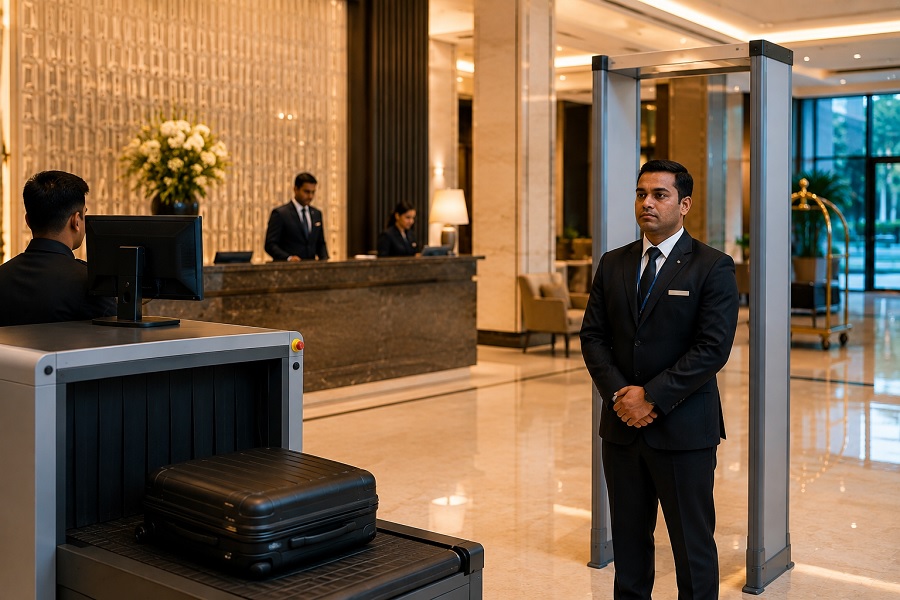
The entrance is one of the first areas to evaluate.
A good luxury hotel security review can consider whether:
Main entrances are monitored.
Reception areas have appropriate staff presence.
Unauthorized access is discouraged.
Parking entrances are monitored.
Late-night access is controlled appropriately.
Security procedures remain discreet.
The objective should be to create a welcoming arrival experience while maintaining reasonable access control.
2. Room Door Security
Guest-room security is one of the most important aspects of a hotel review.
Travelers can look at whether rooms have reliable locking systems, functioning doors, secure windows where applicable, and appropriate visitor-verification procedures.
Some hotel guest guidance recommends keeping doors and windows locked, verifying the identity of service personnel, using door viewers, and reporting suspicious activity to hotel staff.
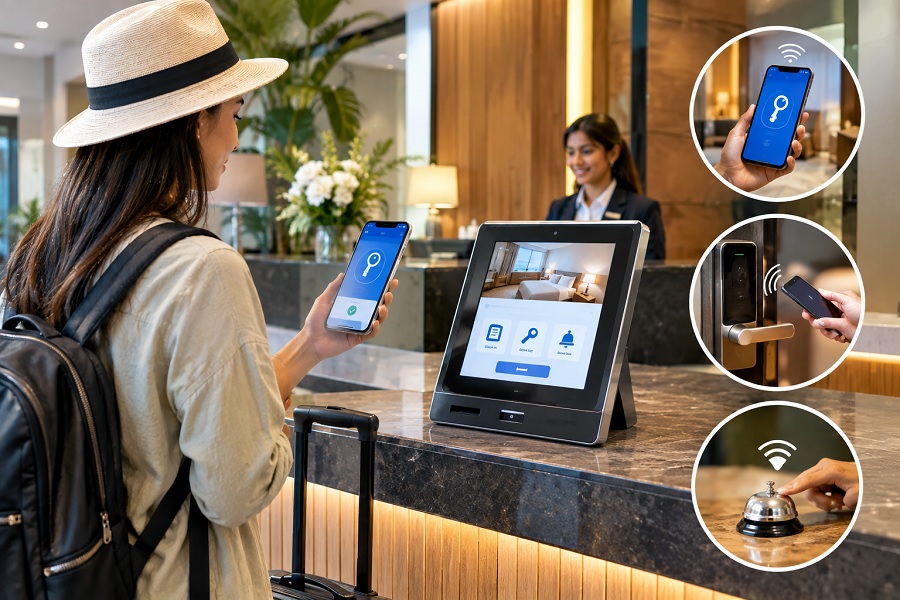
3. Key Cards and Digital Access
Modern hotels increasingly use electronic key cards and digital access systems.
A review can consider:
How quickly a lost key can be deactivated
Whether room access is appropriately restricted
Whether elevators require guest credentials
How digital keys are managed
Whether staff follow access-control procedures
Technology can improve convenience, but hotels also need appropriate controls around the systems that manage access.
4. CCTV and Monitoring
Security cameras can help hotels monitor entrances, public areas, parking facilities, and other appropriate locations.
However, surveillance should be balanced with guest privacy and applicable laws.
A good review should therefore consider not only whether cameras exist, but also whether the hotel's surveillance approach appears appropriately designed and communicated.
Hotel surveillance requirements can vary by jurisdiction. For example, AHLA's hospitality-law resources document local requirements concerning CCTV coverage and notices in certain U.S. jurisdictions.
5. Security Staff and Training
Professional security personnel can play an important role in protecting guests and responding to incidents.
A luxury hotel security review can assess whether security staff appear:
Professional
Approachable
Well-trained
Responsive
Discreet
Familiar with emergency procedures
Hotels may also use trained staff throughout different departments rather than relying exclusively on dedicated security personnel.
6. Emergency Preparedness
A high-quality hotel should have procedures for emergencies such as fires, severe weather, medical incidents, evacuations, and other unexpected events.
The American Hotel & Lodging Association emphasizes planning, response strategies, communication, and coordination with relevant authorities as important parts of hotel emergency preparedness.
Travelers can review whether emergency exits are clearly identified and whether basic instructions are available in guest rooms or other appropriate locations.
7. Fire Safety
Fire safety is a fundamental part of hotel security.
Important features can include:
Smoke detectors
Sprinkler systems
Fire alarms
Clearly marked exits
Emergency lighting
Evacuation procedures
Staff training
Accessible stairways
Hotels may provide emergency instructions inside guest rooms. Marriott guest guidance, for example, advises guests to locate emergency exits and review the room's emergency information.
8. Elevator Security
Elevator access can be an important consideration in luxury hotels.
Some properties restrict access to guest floors using room keys or other credentials. This can provide an additional layer of privacy, particularly in large properties.
However, accessibility and emergency requirements should also be considered when evaluating elevator systems.
9. Parking and Vehicle Security
Hotels with large parking facilities should consider vehicle and pedestrian safety.
A review can examine:
Lighting
Camera coverage
Access control
Staff presence
Valet procedures
Clearly marked pedestrian areas
Emergency assistance
Guests traveling with valuable vehicles may consider parking security an important part of their overall hotel choice.
10. Guest Privacy
Privacy is particularly important in luxury hospitality.
A good hotel should have clear procedures for handling guest information and limiting unnecessary disclosure.
Marriott, for example, states that guest and associate information is subject to policies restricting disclosure outside the organization except in limited circumstances.
Travelers can also consider whether hotel staff handle room numbers, visitor requests, telephone calls, and personal information discreetly.
11. Cybersecurity and Digital Privacy
Hotel security is no longer limited to physical protection.
Hotels increasingly depend on reservation systems, mobile applications, digital keys, Wi-Fi networks, payment systems, connected devices, and cloud services.
This creates additional cybersecurity considerations.
The hospitality industry has identified cybersecurity as a significant security priority because breaches can expose guest information, disrupt operations, and damage customer trust.
A luxury hotel review can therefore consider whether the property communicates clearly about digital services and privacy practices.
12. Protection of Guest Belongings
Luxury travelers may carry expensive electronics, jewelry, documents, cameras, and other valuables.
Hotel security reviews can consider the availability and usability of:
In-room safes
Front-desk safe-deposit facilities
Secure luggage storage
Controlled-access areas
Lost-and-found procedures
Guests should avoid leaving valuable belongings unattended and should follow the hotel's recommendations for storing important items.
13. Security Around Leisure Facilities
Pools, spas, gyms, restaurants, clubs, and rooftop areas also require appropriate safety procedures.
A strong review can look at:
Pool supervision
Emergency equipment
Staff availability
Restricted areas
Lighting
Access control
Clear safety instructions
This is particularly important for families traveling with children.
14. Staff Safety and Guest Safety
Hotel security is also about protecting employees.
Some hospitality organizations have introduced employee safety devices and other measures for staff who may work alone with guests in enclosed spaces. Marriott, for example, has described associate alert devices with location capabilities as part of its U.S. and Canada franchise standards.
Protecting employees can also contribute to a safer environment for guests.
15. Security During Large Events
Luxury hotels frequently host weddings, conferences, business meetings, celebrations, and other events.
Large gatherings can require additional planning, including:
Guest access management
Crowd management
Emergency response
Communication procedures
Coordination with local authorities
Event-specific security assessments
AHLA's 2026 security resources emphasize site-specific physical-security assessments and response and recovery planning for venues.
How to Rate Luxury Hotel Security
A useful review can evaluate the following categories:
Security Area What to Review
Entrance Access control and monitoring
Rooms Locks, doors and windows
Key Systems Key-card or digital access
CCTV Appropriate monitoring of public areas
Staff Training and responsiveness
Fire Safety Alarms, sprinklers and exits
Emergency Planning Response and communication
Privacy Handling of guest information
Cybersecurity Protection of digital systems
Parking Lighting and access control
Valuables Safes and secure storage
Leisure Areas Pool, gym and spa safety
Events Crowd and access management
Security for Different Types of Travelers
Families
Families may prioritize room security, pool safety, emergency procedures, elevator access, and secure common areas.
Solo Travelers
Solo travelers may place greater emphasis on controlled access, well-lit public areas, reliable reception services, and emergency assistance.
Couples
Couples often value privacy, discreet service, secure rooms, and controlled access to guest areas.
Business Travelers
Business travelers may prioritize cybersecurity, secure Wi-Fi, privacy, safe parking, and protection of business documents and devices.
Luxury Travelers
High-end travelers may expect discreet security, strong privacy controls, professional staff, secure transportation, and personalized assistance.
What Makes a Strong Luxury Hotel Security Experience?
The best hotel security is often the security guests barely notice.
A well-managed property can combine trained employees, appropriate technology, access controls, emergency planning, privacy procedures, and clear communication without creating an uncomfortable atmosphere.
Security should support hospitality rather than interfere with it.
Conclusion
Luxury Hotel Security Reviews are an important part of evaluating the overall quality of an upscale accommodation experience. A beautiful room, excellent restaurant, and impressive spa are valuable, but guests also need confidence that their personal safety, privacy, belongings, and information are being treated seriously.
Modern hotel security involves much more than security guards and cameras. It includes physical access control, room security, emergency preparedness, fire safety, staff training, privacy, cybersecurity, and responsible use of technology.
For travelers choosing a luxury hotel in 2026, security deserves to be considered alongside comfort, service, location, dining, and value. A property that combines strong security practices with discreet, professional hospitality can provide a more reassuring and complete guest experience.