India`s Water Deficit Creates a Rs 20 Lakh Crore Infrastructure Opportunity Over the Next Decade: PL Capital

According to PL Capital’s latest thematic report, Water Megatrend 2.0: Positioning for the Next Wave of Water-Led Investments, India's growing water scarcity is creating a significant long-term investment opportunity across the water and wastewater infrastructure ecosystem
India represents nearly 18% of the world’s population but has merely 4% of the world’s freshwater sources. Due to factors like growing urbanisation, fast industrialisation, the depletion of the groundwater sources, and increased agricultural use, the country is facing increasing challenges with respect to its water resources. In such a situation, the issue of water security has become one of the major national concerns and needs significant investments in treatment, recycling, distribution, and storage systems.
According to the report, the demand for water in India can be double its availability by the year 2030. Meeting this challenge might require more than Rs 20 lakh crore worth of investments in the next decade.
Commenting on the findings, Mr. Vikram Kasat, Chief Business Officer-Advisory, PL Capital, said, “Water is becoming increasingly important as one of the top strategic resources in India. In contrast to other infrastructure-related trends, which may be associated with economic cycles, the investments in water security are structural, policy-driven, and mandatory for sustainable development. Increasing urbanization, the growth of industries, and higher environmental standards provide for a long runway of growth in water purification, water reclamation and recycling, as well as in desalination and reuse facilities. We believe that the industry is now in the process of transitioning into a phase of fast-growing investments.”
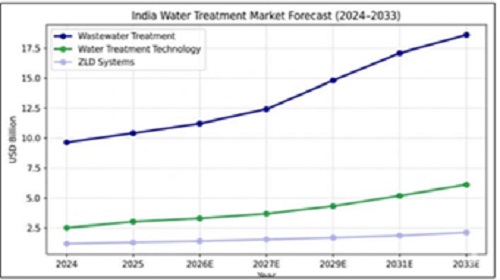
Initiatives from the government continue to keep the sector visible. Initiatives like Jal Jeevan Mission, AMRUT 2.0, and Namami Gange, as well as increased allocations through the Ministry of Jal Shakti, are making investments towards better access to clean water, improved sewerage infrastructure, and enhanced wastewater treatment.
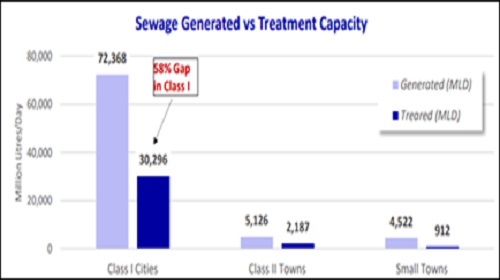
According to the report, the segment of sewage treatment is seen as the biggest opportunity segment in the larger water infrastructure ecosystem. Currently, there is an excess of 72,000 million liters of sewage per day in India and there is still a lack of capacity for treating these volumes leading to a lot of wastewater discharging into the environment. Such a huge infrastructure deficit is expected to attract investments into sewage treatment and wastewater reuse projects.
New emerging industries such as data centers, semiconductors, electronics manufacturing, green hydrogen, and specialty chemicals are expected to become major consumers of industrial ultra-pure water.
Overall, given the policies' encouragement, environmental awareness, and pressures on water resources, the report expects that the water and wastewater industry has good chances to become one of the most durable infrastructure growth themes in India for the next decade.
Above views are of the author and not of the website kindly read disclaimer