India can play a key role in linking Middle East ties
India has emerged as a country that is capable of linking the United States, Israel, the UAE and Saudi Arabia with plans for economic corridors, technological partnerships, resilient supply chains, and strategic connectivity in the Middle East region, according to an article in the Jerusalem Post.
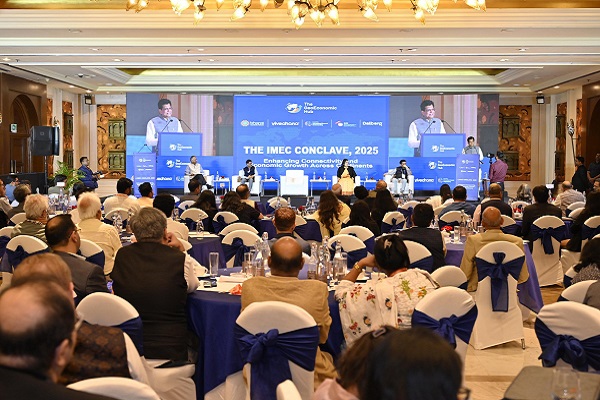
It cites the rise of the India-Israel-United Arab Emirates-United States grouping (I2U2), alongside the India-Middle East-Europe Economic Corridor (IMEC) as reflecting this potential.
“For Israel, this evolution represents far more than another diplomatic milestone. It presents an opportunity to anchor itself within a broader strategic framework that brings together Israeli innovation, Gulf investment, American leadership, and India's economic weight,” the article observes.
It points out that India enjoys strong ties with Israel, the United States, the United Arab Emirates, Saudi Arabia, and other key regional players, which gives the country a distinct strategic advantage.
“As Washington looks for dependable partners to uphold regional stability while reducing its direct military footprint, India has emerged as a trusted actor capable of maintaining strong relationships across political divides without demanding ideological alignment,” the article observes.
It highlights that India and Israel have built a partnership that extends well beyond defence procurement, as it encompasses counterterrorism, intelligence sharing, cybersecurity, agriculture, water management, artificial intelligence, space technology, healthcare innovation, and startup ecosystems.
India remains one of Israel's largest defence partners, while Israeli companies increasingly see India's technology sector as a platform for co-development rather than simply another export market, the article states.
Similarly, the United Arab Emirates and Saudi Arabia now see India not merely as a major energy consumer but as a long-term strategic partner. India offers one of the world's fastest-growing large economies, an expanding destination for investment, a dependable food-security partner, and a vast pool of skilled professionals who continue to contribute to Gulf economies.
As Riyadh pursues 'Vision 2030' and Abu Dhabi accelerates its ambitions in advanced manufacturing and technology, India's industrial growth offers natural economic complementarity, the article adds.