India's budget aims to ramp up domestic manufacturing in a volatile environment
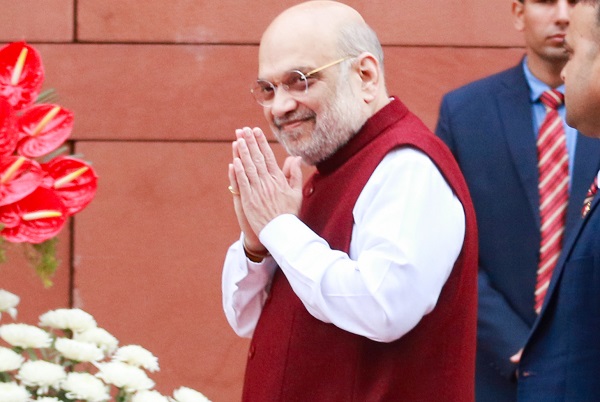
India's Finance Minister Nirmala Sitharaman presented the 2026/2027 budget to parliament on Sunday aiming to lift manufacturing and generate jobs in the world's most populous country.
Here are the highlights:
* Finance Minister says India faces disruptive external environment, must stay deeply integrated with global markets
* Says to sustain reform momentum, focus on strong finance sector and new technology
GROWTH, DEBT TO GDP, FISCAL DEFICIT
* Nominal GDP growth for 2026/27 estimated at 10% vs 8% growth estimated in 2025/26
*Economic survey report ahead of budget projects 6.8%-7.2% growth for 2026/27 vs 7.4% for the current fiscal year
* Federal government's debt to GDP ratio target for 2026/27 set at 55.6%, down from estimated 56.1% of GDP in current fiscal year
*Fiscal deficit target for 2026/27 set at 4.3% of GDP against 4.4% for current fiscal year
*Gross federal government borrowing for 2026/27 seen at 17.2 trillion rupees ($187.63 billion)
*Net federal government borrowing for 2026/27 seen at 11.7 trillion rupees
INCREASE IN SPENDING
*Proposes to increase capital spending to 12.2 trillion rupees ($133.08 billion) in 2026/27 from downwardly revised 10.96 trillion rupees in 2025/26
*Total budget spending for 2026/27 raised to 53.47 trillion rupees, from downwardly revised 49.65 trillion rupees in 2025/26
*Defence budget for 2026/27 seen at 5.95 trillion rupees vs revised 5.68 trillion rupees for 2025/26
*Education budget for 2026/27 seen at 1.39 trillion rupees vs revised 1.22 trillion rupees for 2025/26
Health budget for 2026/27 seen at 1.05 trillion rupees vs revised 946 billion rupees for 2025/26
MANUFACTURING PUSH
*To scale up manufacturing in seven sectors, push infrastructure
* To develop India as global pharma manufacturing hub
* To allocate 100 billion rupees for bio-pharma over 5 years
* Proposes to increase 400 billion rupees spending for semi-conductor manufacturing
* Proposes to develop seven high-speed rail corridors
* Proposes spending 200 billion rupees for carbon emission cutting programmes over 5 years
* Proposes to set up 100 billion rupees growth fund to support small businesses
REVENUE RECEIPTS
* Net federal tax receipts seen at 28.67 trillion rupees in 2026/27 vs revised 26.75 trillion rupees in 2025/26
* Dividends from Reserve Bank of India, financial institutions seen at 3.16 trillion rupees in 2026/27 vs revised 3.05 trillion rupees in 2025/26
ECONOMIC REFORMS
* To set up high level committee to suggest banking reforms
* Proposes allowing people outside India to invest in equity of listed companies
* To increase investment limit for individual PROIs (Persons resident outside India) to 10% from 5%
* Overall investment limit for all PROIs raised to 24% from 10%
* Proposes new framework with suitable access to funds and derivatives on corporate bond indices
* Foreign firms using India-based data centres for global cloud services get tax holiday until 2047
*Non-residents supplying capital goods or equipment to toll manufacturers in specific zones to get 5-year income tax exemption
HIKE IN TAXES
*Proposes to raise the securities transaction tax (STT)on futures to 0.05% from 0.02% and to 0.15% from 0.1% on options
CUT IN IMPORT TARIFFS
* Proposes to raise limit for duty free imports for processing seafood exports to 3%
*Extend Basic customs duty (BCD) exemption to capital goods used to manufacture lithium ion batteries
*Provide BCD exemption to capital goods for processing critical minerals in India
*Tariffs on nuclear power inputs and renewable-energy critical minerals scrapped, from current rate of 7.5%
* Import tariffs on 17 cancer drugs scrapped
* Tariff on all dutiable goods imported for personal reduced to 10% from 20%
FUNDS FOR STATES
* Federal government to share 41% of common tax pool with states for 2026/31 period, as recommended by the finance commission
($1 = 91.6710 Indian rupees)